

Most innovative routing and switching solution
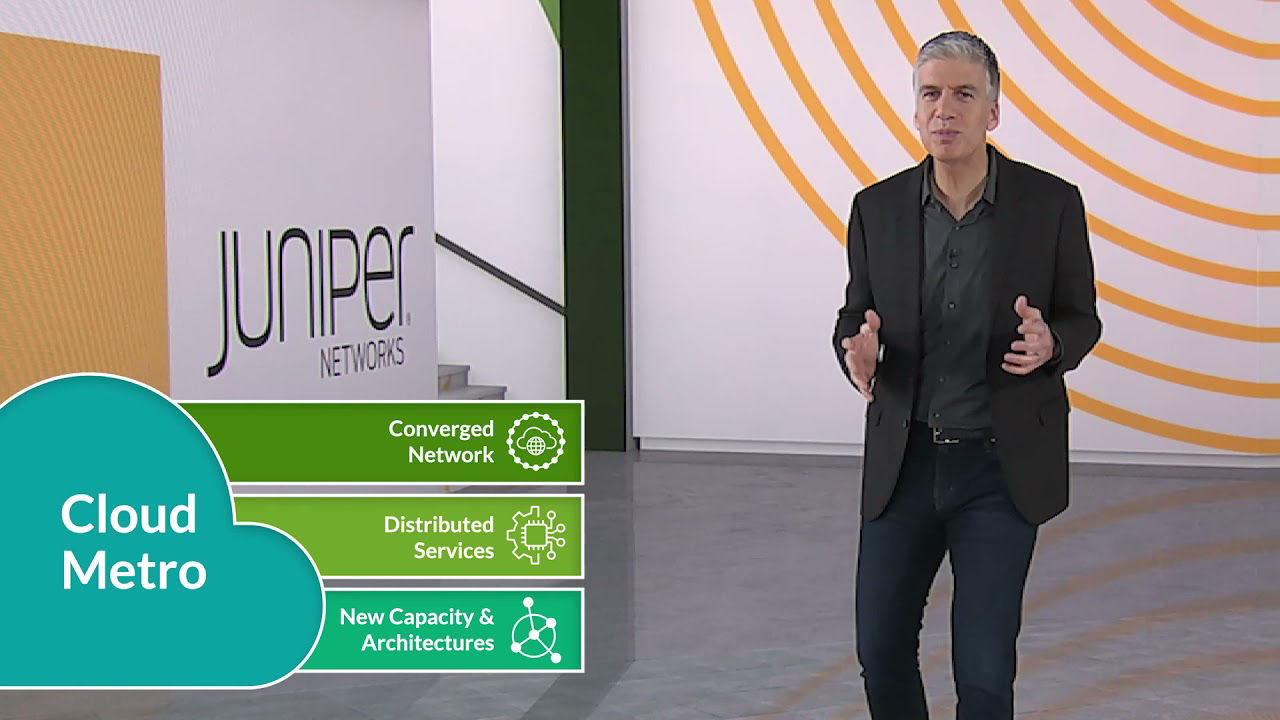
Juniper Networks Cloud Metro earns the "Editor's Choice" Leading Lights Awards 2022, enabling service providers to build a sustainable future.

Solutions
Featured solutions AI Campus and branch Data center WAN Security Service provider Cloud operator Industries
Welcome to the NOW Way to Wi-Fi
Take your networking performance to new heights with a modern, cloud-native, AI-Native architecture. Only Juniper can help you unleash the full potential of Wi-Fi 7 with our AI-Native platform for innovation.

AI Data Center Networking
Juniper’s AI data center solution is a quick way to deploy high performing AI training and inference networks that are the most flexible to design and easiest to manage with limited IT resources.
Enterprise AI‑Native Routing
Juniper's Ai-Native routing solution delivers robust 400GbE and 800GbE capabilities for unmatched performance, reliability, and sustainability at scale.
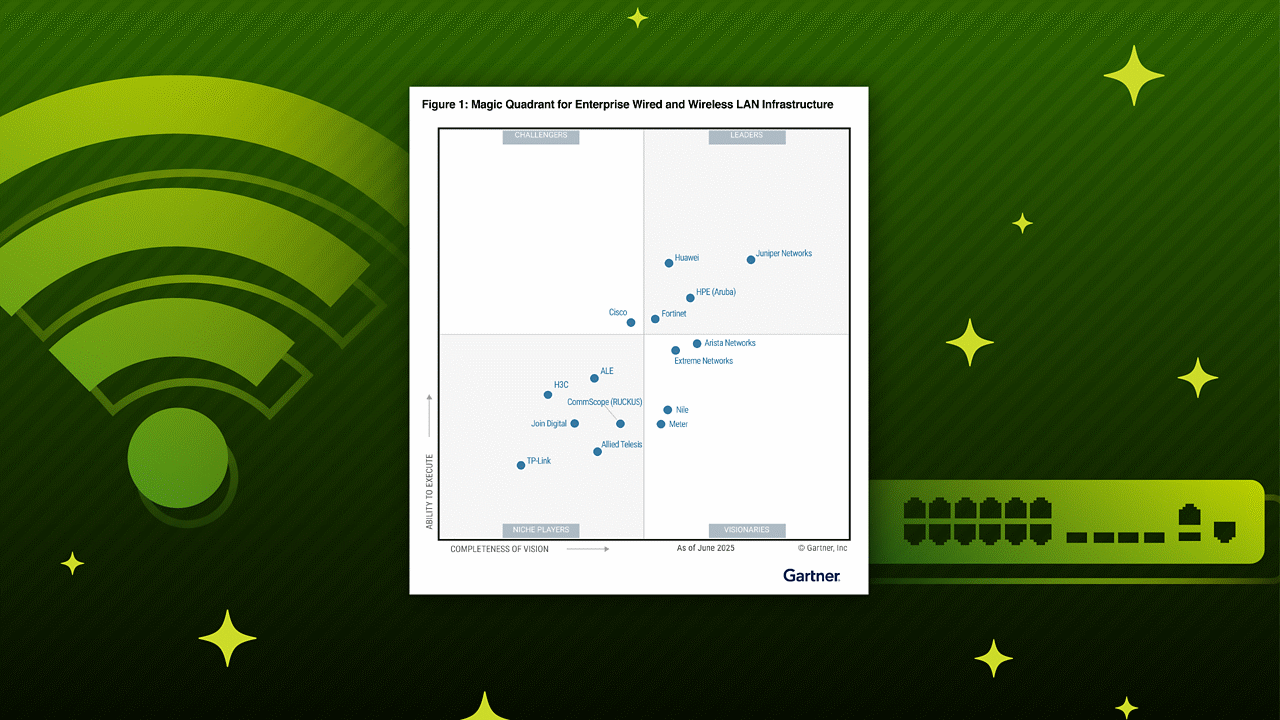
Gartner® Magic Quadrant™ Leader
Gartner® has named Juniper a Leader in the 2025 Magic Quadrant™ for Enterprise Wired and Wireless LAN Infrastructure.

Ops4AI Lab
Visit our lab in Sunnyvale, CA and see our AI data center solution for yourself. You can try out your own model’s functionality and performance, too.
Enterprise AI‑Native Routing
Juniper's Ai-Native routing solution delivers robust 400GbE and 800GbE capabilities for unmatched performance, reliability, and sustainability at scale.

Shaping Student Experiences: The NOW Way to Build Higher Education Networks
Juniper Networks CIO Sharon Mandell and a virtual summit of C-level IT leaders from prestigious institutions discuss ongoing efforts to support digital transformation on campus.

AI-Native Healthcare Networking
Sudheer Matta, SVP Product Management at Juniper Networks, Philip Bradley, Digital Health Strategist at HIMSS Analytics, and other healthcare IT leaders discuss the challenges to deliver quality patient care and the role of AI-native networking.

AI-Native Networks for Scalable Retail Success
Sanjoy Dey, VP of Product Marketing at Juniper, and global retail leaders share how Juniper is redefining IT infrastructure for the industry’s future.
Products
Wireless access Wired access SD-WAN / SASE Routing and switching Security Marvis AI Management software Network operating system Blueprint for AI-Native Acceleration Optics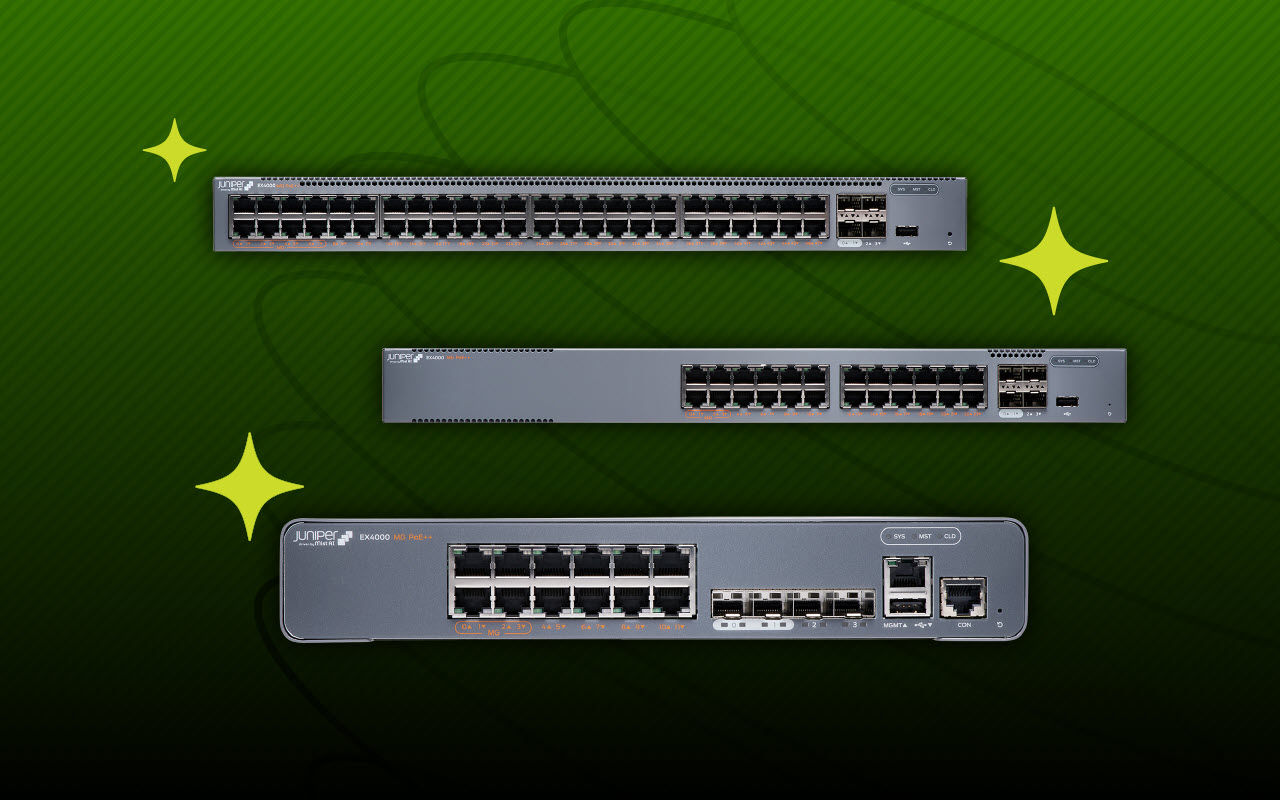
Next-gen AI-Native EX4000 line of switches
Lack of AI innovation from your current networking vendor slowing you down? Embrace Juniper’s cloud-native, AI-Native access switches that support every level and layer, across nearly every deployment.

The Q&AI Podcast
Delivering practical solutions and enriching discussions, this podcast series is a vital resource for those seeking an in-depth exploration of AI's transformative potential.
Services
Services
Juniper AI Care Services Revolutionize Your Service Experience
Our industry-first AI-Native services couple AIOps with our deep expertise across the full network life cycle. You can move from reactive response to proactive insight and action.
Juniper AI Data Center Deployment Services Optimize Your AI Model Runs
We use our expertise and validated designs to help design, deploy, validate and tune networks, including GPUs and storage, to get the most from your AI infrastructure operation.
Support and Documentation
Support and Documentation
The Juniper Support Portal (JSP) mobile app is now available!
Get Juniper support anytime, anywhere with the JSP mobile application, now available for Android and iOS!
Learn
About Juniper Training Events The Feed Resources Technology learning topics Thought leadership and insights
Trust Center
The trust center is the source of truth for our customers, partners, and the industry.
Gartner® Magic Quadrant™ Leader
Gartner® has named Juniper a Leader in the 2025 Magic Quadrant™ for Enterprise Wired and Wireless LAN Infrastructure.

Juniper certification and training news
Executive insights
Dive deep with leading experts and thought leaders on all the topics that matter most to your business, from AI to network security to driving rapid, relevant transformation for your business.

Leadership voices
Juniper Networks’ leaders operate on the front lines of creating the network of the future. Take a look around to see what’s on their minds.

Bob Friday Talks
Join Bob as he ventures into all the knowns -- and -- unknowns -- of AI.

Solutions & Technologies
Juniper Networks Cloud Metro earns the "Editor's Choice" Leading Lights Awards 2022, enabling service providers to build a sustainable future.
Juniper’s Cloud Metro solution is uniquely AI-enabled, cloud-delivered, and integrated with zero trust security and active assurance testing and monitoring. Our solution delivers future-proof performance while lowering power consumption by up to 77 percent and reducing device onboarding time from hours to minutes.

With a unique chassis design and adaptive power innovation, Juniper Cloud Metro routers reduce total cost of ownership (TCO) by 53 to 71 percent with the industry’s highest capacity per slot, greatest port density, and the ability to support XR and ZR/ZR+ coherent optics on every port concurrently.

Support all residential, business, and mobile services on a single converged network platform, with both scale-out and scale-up options.
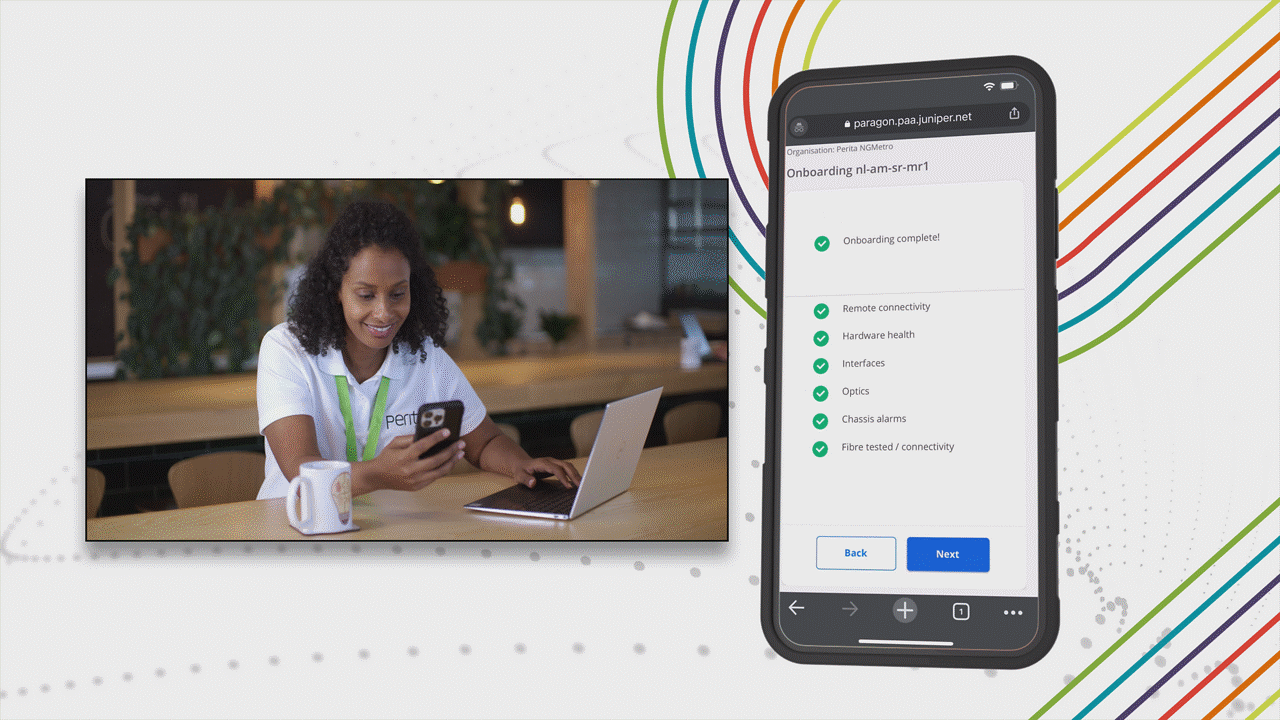
AI-enabled Juniper Paragon™ Automation as a Service validates hardware and software authenticity, images the latest software, secures zero-touch configuration and provisioning, checks device health and network performance, and updates inventory so your cloud metro devices are fully ready for service in minutes.

Juniper Paragon Active Assurance agents are a test and monitoring feature embedded in all Juniper Cloud Metro routers, turning your metro network into a distributed sensor that continually measures and assures customers’ end-to-end service experiences.
Unique cryptographic digital identities are implemented with the Trusted Platform Module (TPM 2.0) across the IP services fabric, enabling device attestation and RFC-compliant secure zero-touch provisioning (sZTP). File encryption protects data at rest, and MACsec protects data in transit.
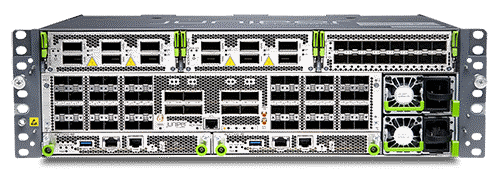
Part of the ACX7300 line, the ACX7332 and ACX7348 routers are compact, environmentally rated routers designed for multiservice applications. They combine a fixed, redundant platform with three bays of modularity for customization, scalability, high availability, and exceptional performance.
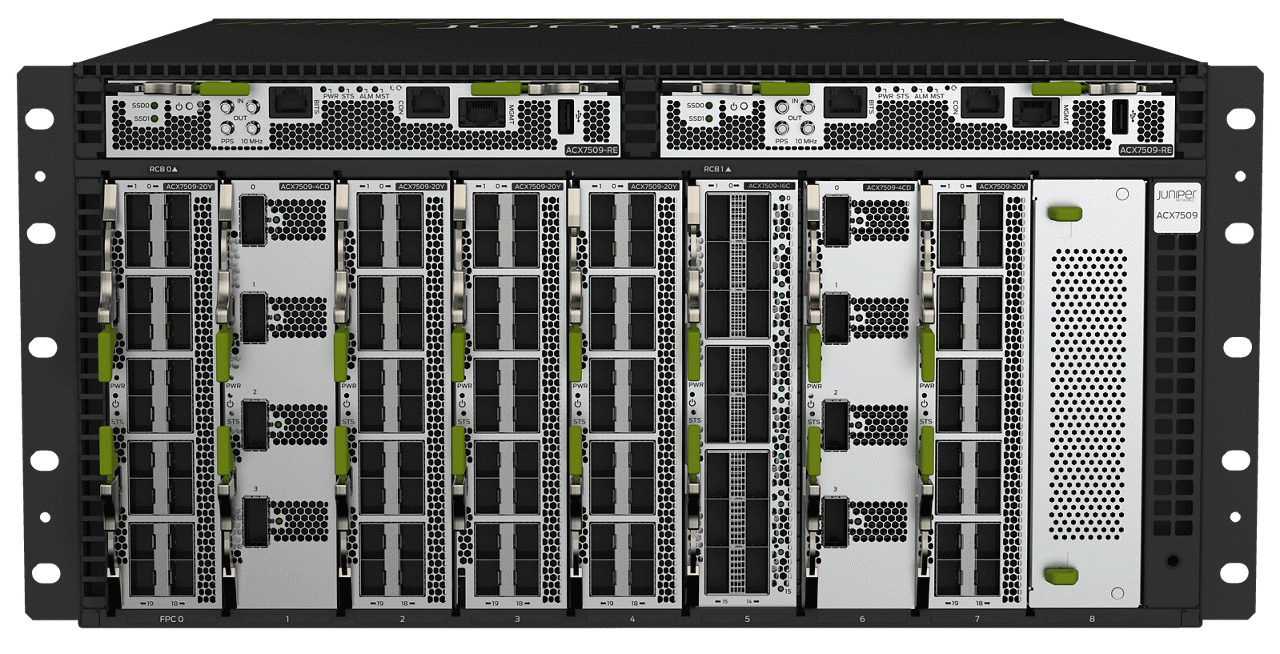
The ACX7509, part of the ACX7000 family, is a high-availability, power-efficient, and modular 5 U platform. Ideal for service providers, data centers, and large enterprises, it helps network operators deliver differentiated customer experiences.
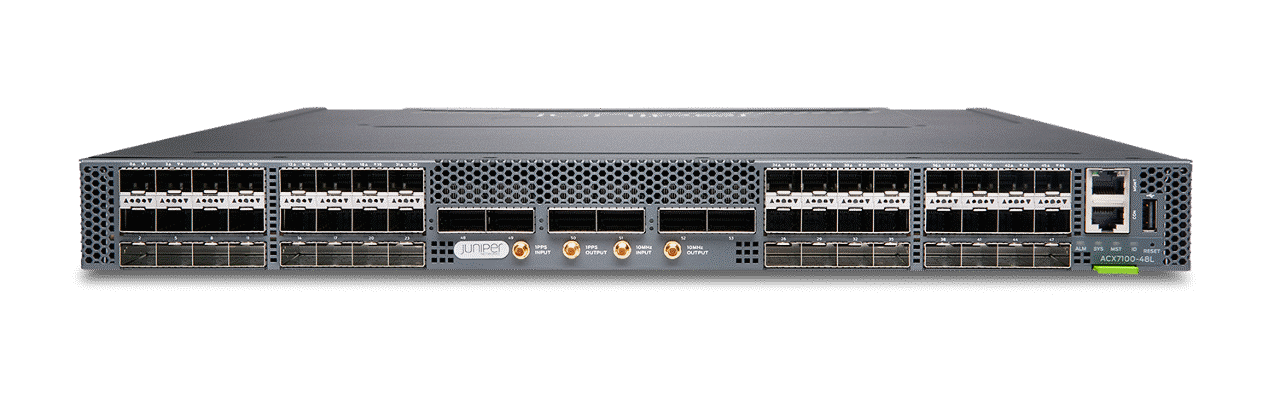
The ACX7100, part of the ACX7000 family, delivers high density and performance in a compact, 1 U footprint. Ideal for service provider, large enterprise, wholesale, and data center applications, it helps operators deliver premium customer and user experiences.

Part of the ACX7000 family, the routers provide leading access performance in an industrial-rated or high-scale 1-U footprint. Ideal for service providers, enterprises, and wholesale environments, they help deliver premium customer and user experiences.
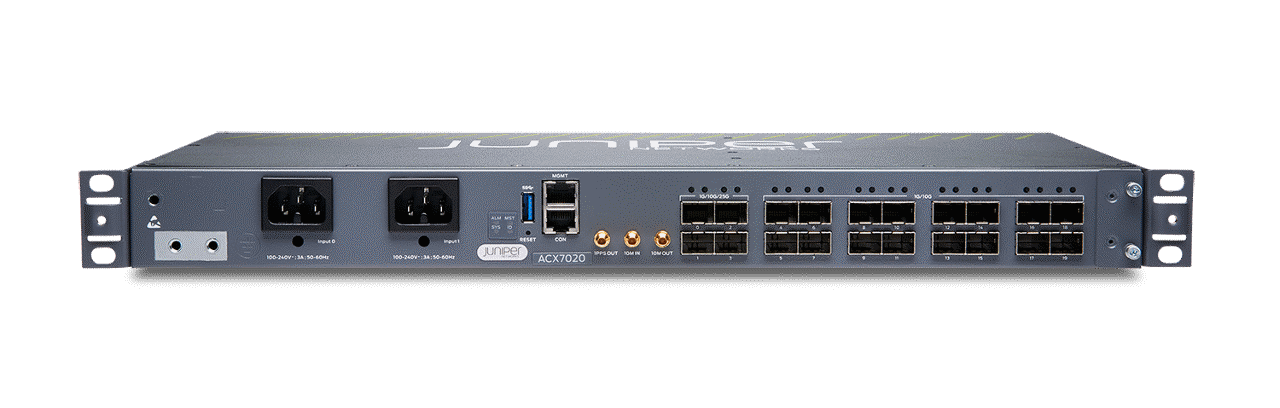
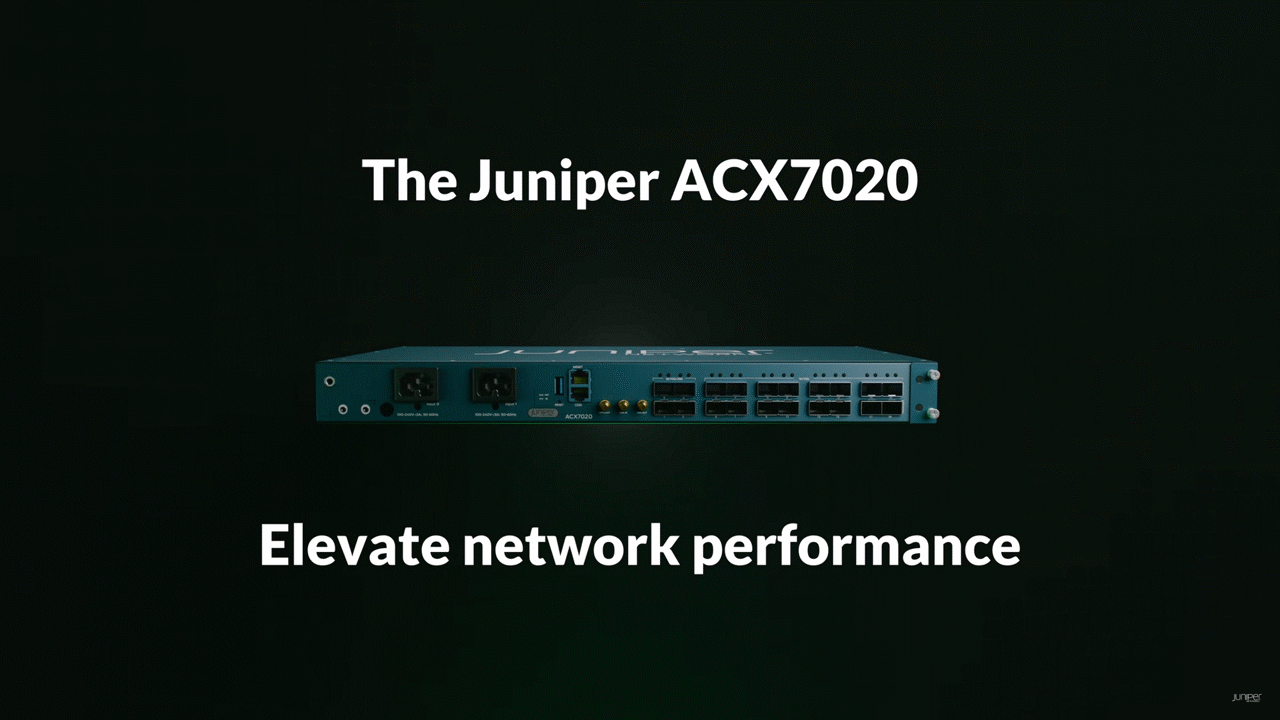
Part of the ACX7000 family, this Cloud Metro router provides leading access performance in an industrial-rated 1U footprint. Ideal for service providers, enterprises, and wholesale environments, it delivers premium customer and user experiences.
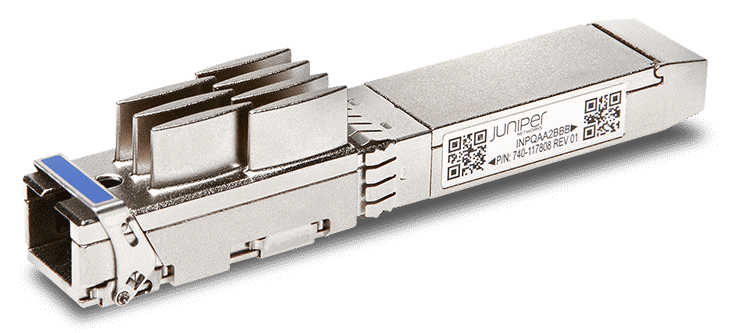
The popularity of passive optical network (PON) technology continues to grow worldwide. Juniper’s Unified PON product offers an economical, scalable path to 10G PON access and aggregation deployments that integrates easily into existing Juniper Cloud Metro networks and interoperates with third-party PON distribution equipment.
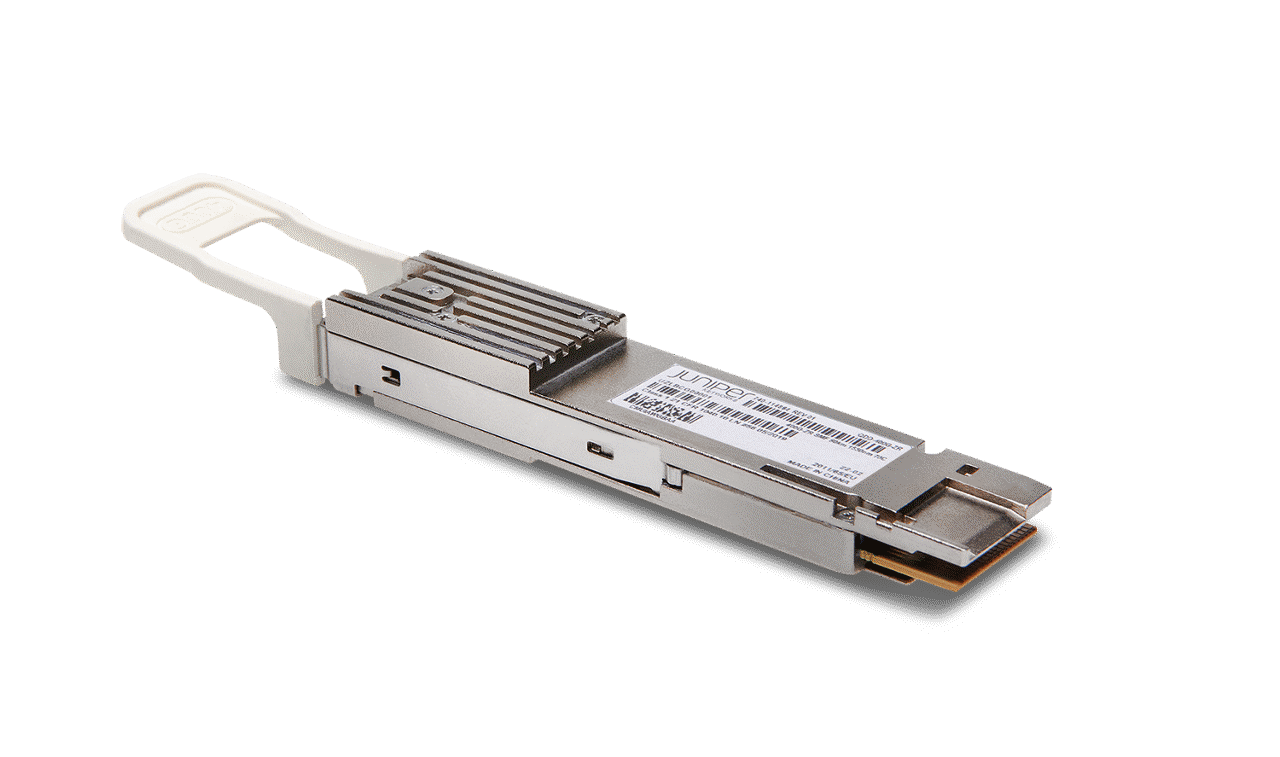
400G ZR/ZR+ and 0dBm coherent DWDM pluggable transceivers are essential to any metro network modernization strategy. Juniper’s JCO400 series delivers best-in-class performance and innovative software integrations to simplify the configuration and management of a converged packet-optical architecture.
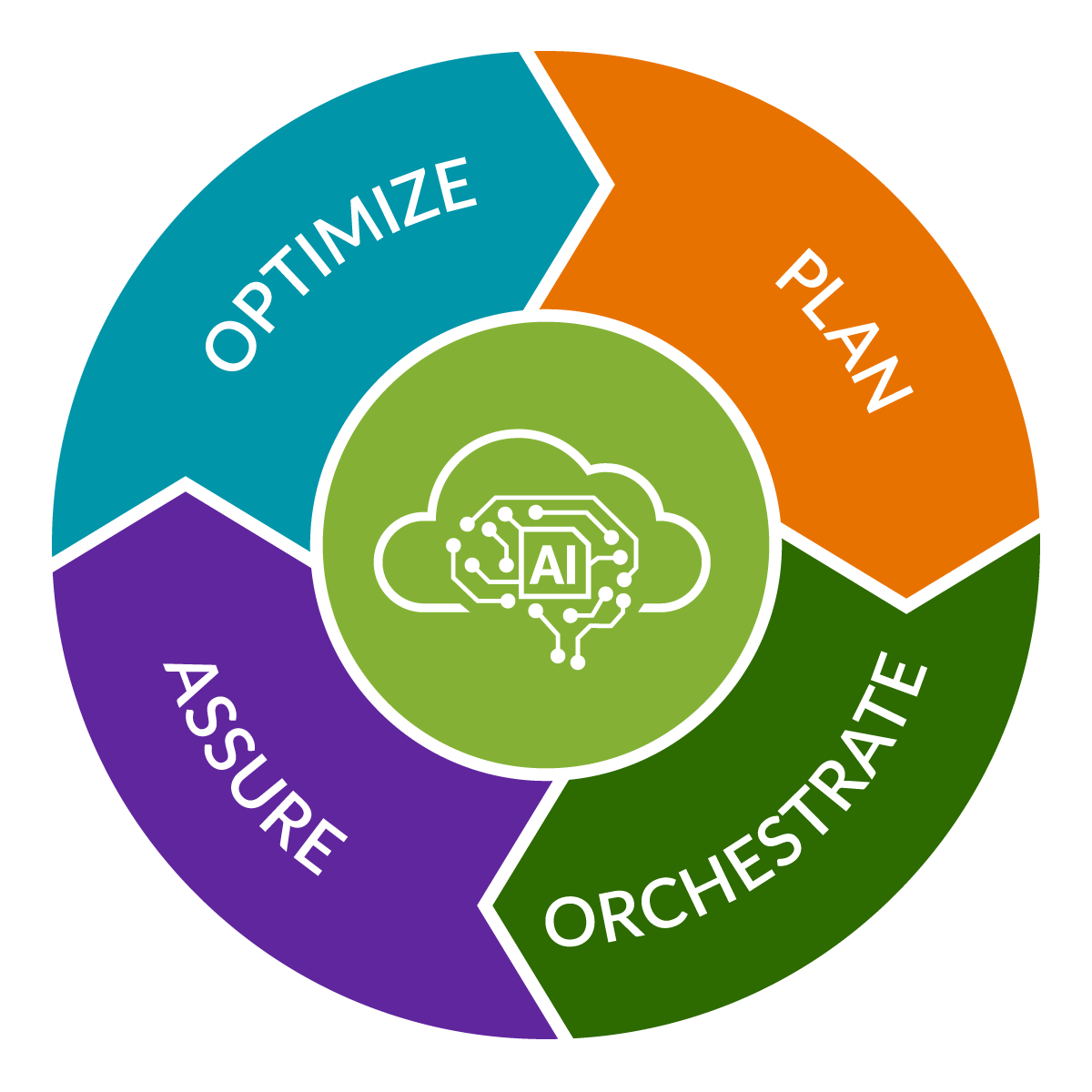
The Juniper Paragon portfolio delivers closed-loop automation, translating business intent into tangible outcomes. Paragon ensures that your customers receive assured service experiences throughout the network life cycle—from Day 0 to Day 2+.
Juniper’s open ecosystem approach to 5G unlocks the full power and potential of your network. We can help you reimagine your architecture, operations, and service experience to create new business value and compete in the coming decade.
Explore 5GThe Juniper Paragon portfolio delivers closed-loop automation, translating business intent into tangible outcomes. Paragon ensures that your customers receive assured service experiences throughout the network life cycle—from Day 0 to Day 2+.
ExploreJuniper offers the industry’s most comprehensive and high-performing 400GbE and 800GbE routing and switching platforms: PTX Series Packet Transport Routers, MX Series Universal Routing Platforms, ACX Series Routers, and QFX Series Switches. These platforms increase efficiencies throughout your infrastructure while keeping your network secure and highly customizable.
Learn moreCUSTOMER SUCCESS
Regional service providers like DQE Communications have a home-team advantage, with a nuanced understanding of local needs plus the agility to react quickly. DQE, which serves Western Pennsylvania, moved swiftly to expand its metro network services to meet the digital needs of its customers and its growing metro edge and mobile backhaul requirements.
The Cloud Metro solution is uniquely AI-enabled, cloud-delivered, and integrated with Zero Trust security and active assurance testing and monitoring. Our solution delivers future-proof performance while lowering power consumption by up to 77 percent and reducing device onboarding time from hours to minutes.
Cloud Metro is about applying cloud principles to the metro. Juniper applies these principles across systems, architectures, and operations — from how we design and build to how we operate the metro network with cloud principles.
Service providers face substantial, complex challenges in today’s market landscape. These include how to maintain long-term profitability; how to manage the volatile dynamics of the IT workforce, skillsets, and workloads; and how to respect climate change and ESG imperatives in a meaningful way—all while delivering services at scale.
Metro holds a strategic value since most of the next-generation edge services will be deployed at metro. For service providers to be able to capitalize on increasing digitalization trends and grow their business sustainably, they must differentiate to win the metro edge. And one way service providers can increase their success rates is by applying cloud principles to transform their retro metro network to Cloud Metro.
Many industry-leading products form the Cloud Metro solution, including:
Together, the portfolio and enhanced capabilities create a new model for metro network operations, systems, and architecture transformation, all aligned with a single purpose—to enable sustainable business growth.
The Juniper ACX7000 family includes sustainable, high-performance systems leveraging unique design and adaptive power innovations that deliver up to 77 percent lower power consumption, up to 64 percent better space efficiencies, and a system lifetime 4–7 years longer than leading competitive products available today.
Juniper Paragon Automation is the industry’s only AI-enabled, cloud-delivered automation portfolio for metro networks, ensuring devices are ready for service in minutes, increasing operational efficiency, and, most importantly, empowering your engineering and operations teams to deliver an amazing service experience.
Juniper AI-Enabled Device Onboarding is the first use case to be launched leveraging Paragon Automation, driving real business outcomes by significantly reducing device onboarding time.
Juniper Paragon Active Assurance is a programmable, active test and monitoring solution for physical, hybrid, and virtual networks. It turns the Cloud Metro network into a distributed sensor for assuring user experience proactively, which removes the need to deploy additional, standalone probe hardware. (To learn more, see the Juniper Cloud Metro as the Experience Sensor solution sheet.)
With the capability of emulating 5G UE/gNB, service providers can now simulate traffic for both the control plane and user plane, ensuring each 5G network slice meets expected service level agreements (SLAs). (For more details, read the Key Considerations for Assuring Differentiated, End-to-End 5G Services whitepaper.)
Zero Trust is the security principle of “never trust by default, always verify” that has been built in throughout Juniper Cloud Metro.
Unique cryptographic digital identities are implemented with the Trusted Platform Module (TPM 2.0) across the Cloud Metro IP services fabric, enabling device attestation and RFC-compliant secure zero-touch provisioning (sZTP). In addition, file encryption and MACsec are implemented to protect data at rest and data in transit.
Juniper’s 400G ZR/ZR+ coherent DWDM transceivers are essential to any metro network modernization strategy. Juniper’s JCO400 series delivers best-in-class performance and innovative software integrations to simplify the configuration and management of a converged packet-optical architecture. (Check out Juniper’s 400G solution to learn more.)
Get help with Juniper Cloud Metro by joining our community and starting a discussion in Juniper TechPosts.
The information on this page may contain Juniper's development and plans for future products, features, or enhancements ("SOPD Information"). SOPD Information is subject to change at any time, without notice. Juniper provides no assurances, and assumes no responsibility, that future products, features, or enhancements will be introduced. In no event should any purchase decision be based upon reliance of timeframes or specifics outlined as part of SOPD Information, because Juniper may delay or never introduce the future products, features, or enhancements.
Any SOPD Information within, or referenced or obtained from, this website by any person does not give rise to any reliance claim, or any estoppel, against Juniper in connection with, or arising out of, any representations set forth in the SOPD Information. Juniper is not liable for any loss or damage (howsoever incurred) by any person in connection with, or arising out of, any representations set forth in the SOPD Information.