JAMF Pro Integration
Follow these steps to create your client ID and secret on JAMF Pro, link your JAMF Pro account to your HPE Mist Networking organization, and verify the integration.
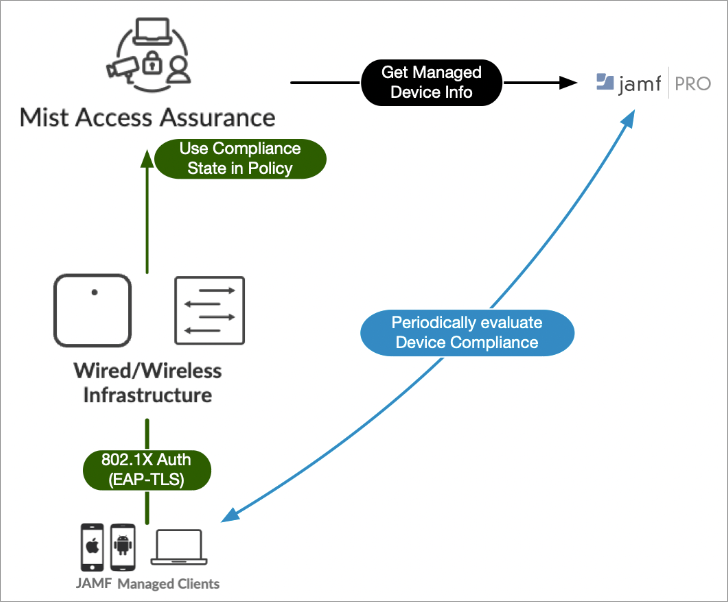
Mist Access Assurance allows you to integrate natively into JAMF Pro Endpoint Management platform for checking managed endpoint compliance state.
JAMF evaluates JAMF managed devices (MacBook, iPad, iPhone and other iOS devices) for compliance. Evaluation is done using Smart Computer Groups for MACbooks and Smart Device Groups for iPads and iOS devices for presence of antivirus, firewall status, software version, and so on. Mist Access Assurance obtains the compliance state of the devices and leverages that state in authentication policy rules to perform posture assessment.
JAMF Device Data Retrieval
Mist Access Assurance retrieves JAMF managed device data in the following manner:
-
Access Assurance uses API-based polling mechanism toward JAMF every two hours for every managed client that has been previously authenticated. Compliance states information is cached for fast retrieval.
-
Information retrieval is performed out-of-band, that is, after the authentication process to avoid any additional delays. After initial device onboarding, information is updated every two hours.
-
In case device compliance status changes, then Mist Access Assurance automatically trigger a Change Of Authorization to re-run the policy and apply respective action.
-
HPE Mist Networking access points (APs), which connect JAMF managed devices to the wireless network, must have firmware version 0.14 or higher.
Mist Access Assurance uses the following information during client authentication to match a client with a device record in JAMF:
- Non-randomized MAC address—This method can be used with EAP-TTLS or
EAP-TLS authentication. Client MAC device is matched with a device MAC present
in JAMF. For wireless profile, make sure MAC randomization or rotation is
disabled. Note:
iOS devices do not have native Ethernet NIC, so this method is only useful with iOS devices that are connected through wireless.
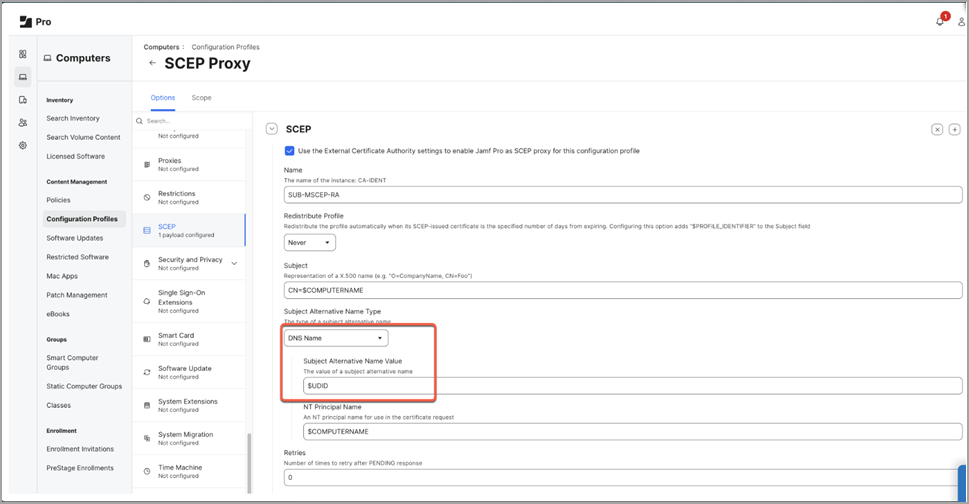
- JAMF Device UDID encoded in SAN:DNS certificate attribute. Figure 2 shows location
of UDID in configuration profile.Figure 2: Locating Unique Device ID
Create Client ID and Secret on the JAMF Pro
The screenshots from third-party applications are correct at the time of publishing. We have no way to know when or if the screenshots will be accurate at any future time. Please refer to the third-party website for guidance about changes to these screens or the workflows involved.
-
Create a role for Mist Access Assurance connector and assign the
permissions.
Figure 3: Configuring API Roles and Clients
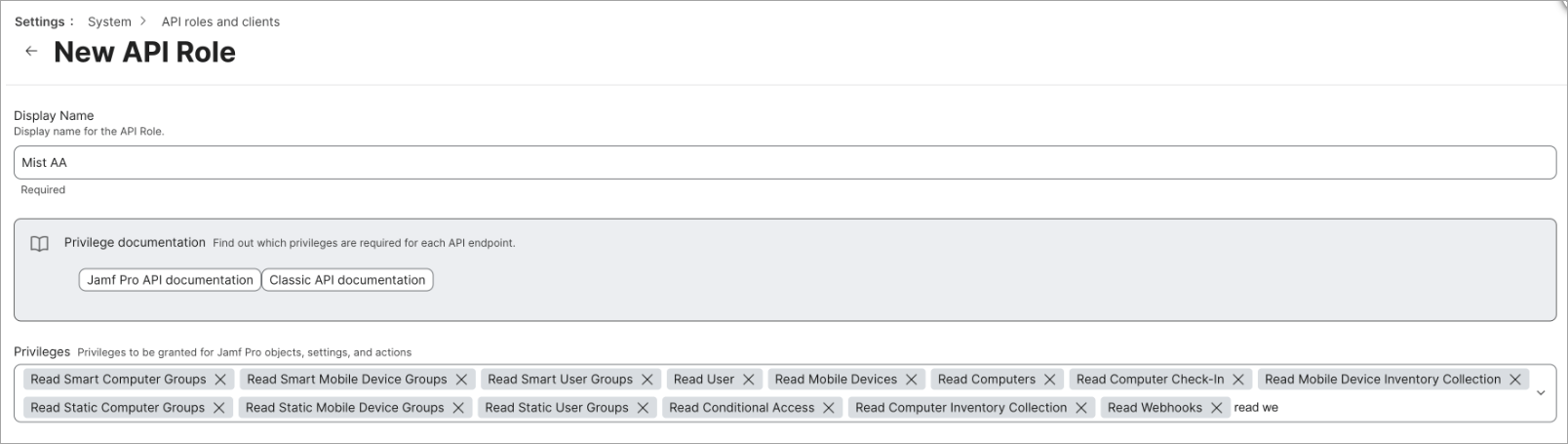 Assign the following read-only permissions:
- Read Computer Check-In
- Read Mobile Devices
- Read Computers
- Read Mobile Device Inventory Collection
- Read Static User Groups
- Read Static Computer Groups
- Read Mobile Device Self Service
- Read Conditional Access
- Read Smart Computer Groups
- Read Computer Inventory Collection
- Read Smart Mobile Device Groups
- Read Smart User Groups
- Read User
- Read Webhooks
-
Navigate to API Clients tab, and add a new client.
Figure 4: Configure New API Client
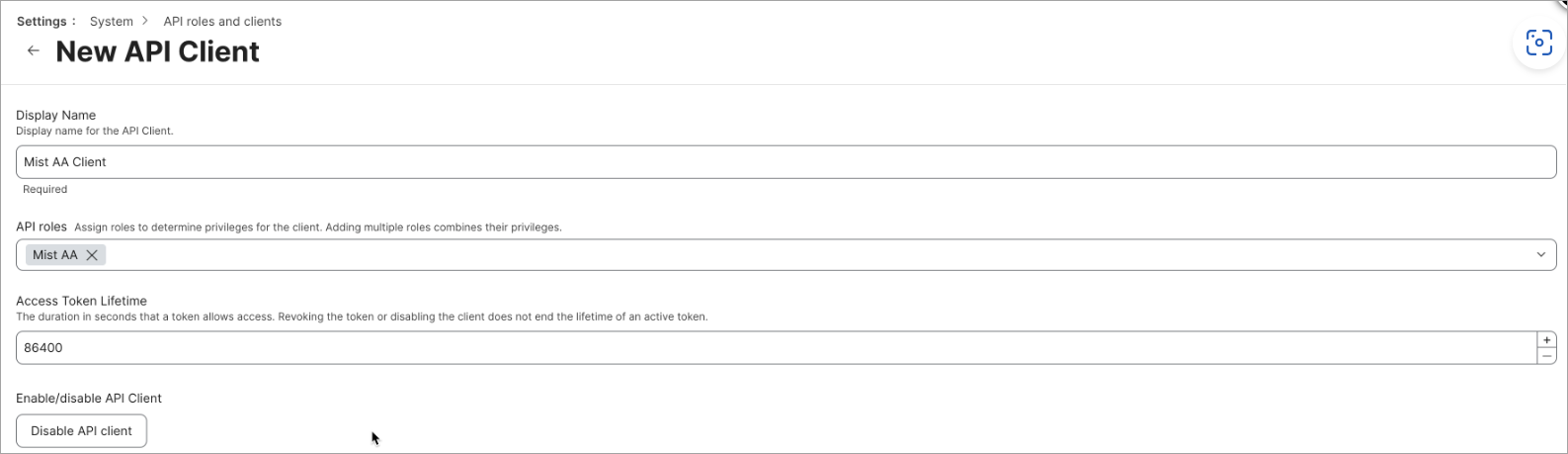 Select the API role created in the previous step and set access token refresh time (example 24 hrs). Then click Enable/disable API Client to toggle it to Enable API Client.
 -
Save the details and click Generate client secret on the next page.
Figure 5: Generate Client Secret
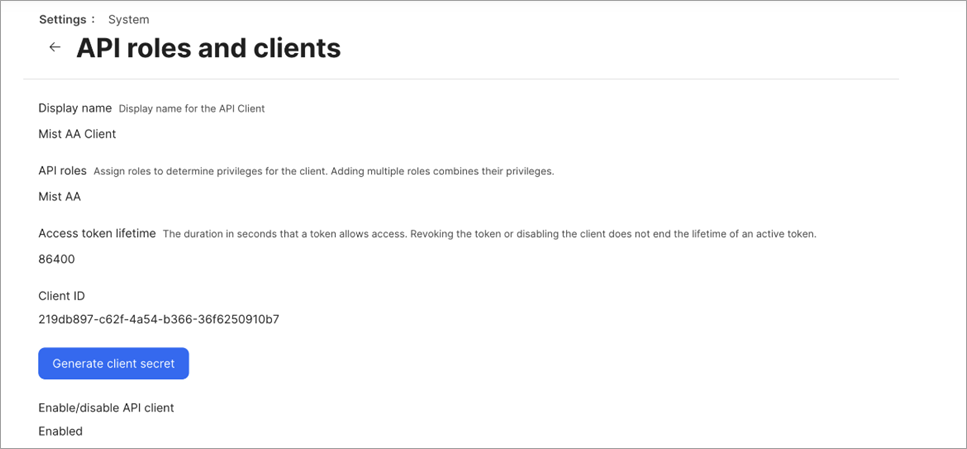
The client secret is generated.
-
Copy both Client ID and Secret and save it in safe place to retrieve
later.
Figure 6: Client Secret Details
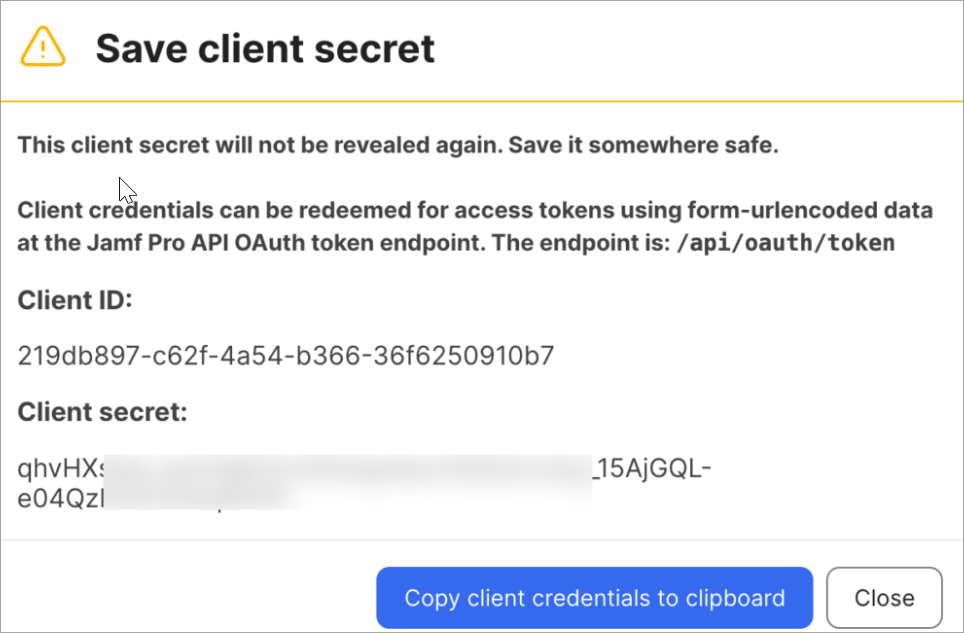
Link JAMF Pro Account to Mist Access Assurance
-
In the Identity Providers page, scroll down to Linked Account section and
click Link Account to select JAMF
Pro.
Figure 7: Linking to JAMF Pro Account
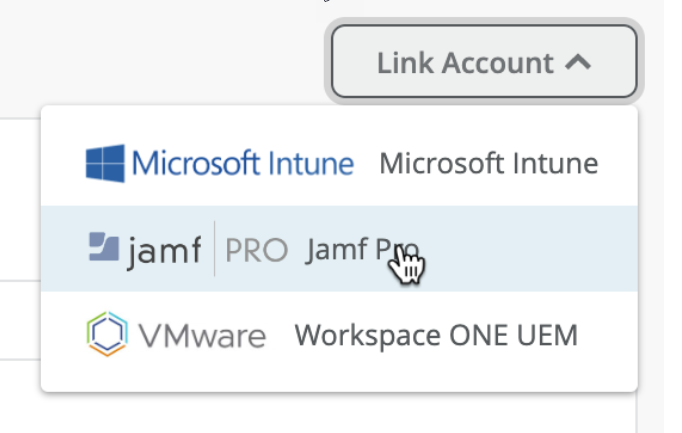
-
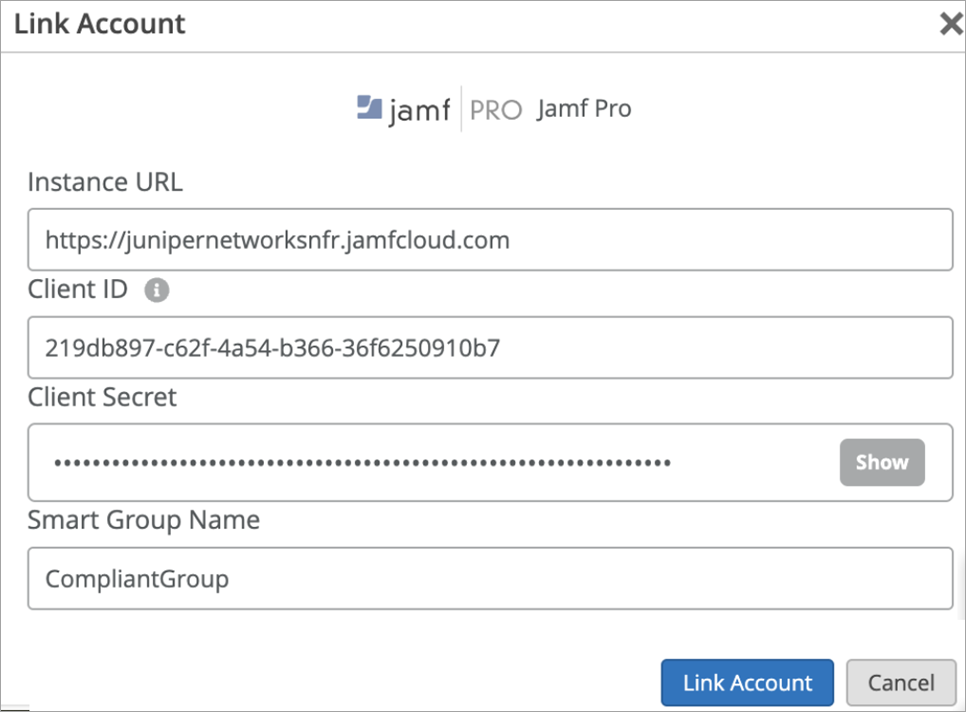
In the Link Account pop-up window, enter the details. Figure 8 shows a sample
of link account details.
Figure 8: Details for Linking JAMF Pro
- Instance URL—JAMF Pro instance URL. Example:
https://<yourjamfurl>.com.
Remove any trailing / in the Instance URL field.
- Client ID—Client ID generated while creating Client ID and Secret on the JAMF Pro dashboard.
- Client Secret—Client secret generated while creating Client ID and Secret on the JAMF Pro dashboard.
- Smart Group Name—Smart group name to match
against. JAMF Pro allows you to create groups for managed computers,
mobile devices, or users. Smart Groups (both computer and mobile
device smart groups) offer dynamic rule based matching, which allows
you to set policies such as running software, OS versions of your
managed devices. In case a client is found in JAMF and is part of
selected Smart Group then it is considered as MDM
compliant.Note: During JAMF account linking, Access Assurance validates the Smart Group name only against Computer Smart Groups in JAMF Pro. Although JAMF supports Smart Groups for both computers and mobile devices, the Smart Group must exist under Computers to complete the linking. If only mobile devices are managed, create a Computer Smart Group with the same name (a dummy group is sufficient).
- Instance URL—JAMF Pro instance URL. Example:
https://<yourjamfurl>.com.
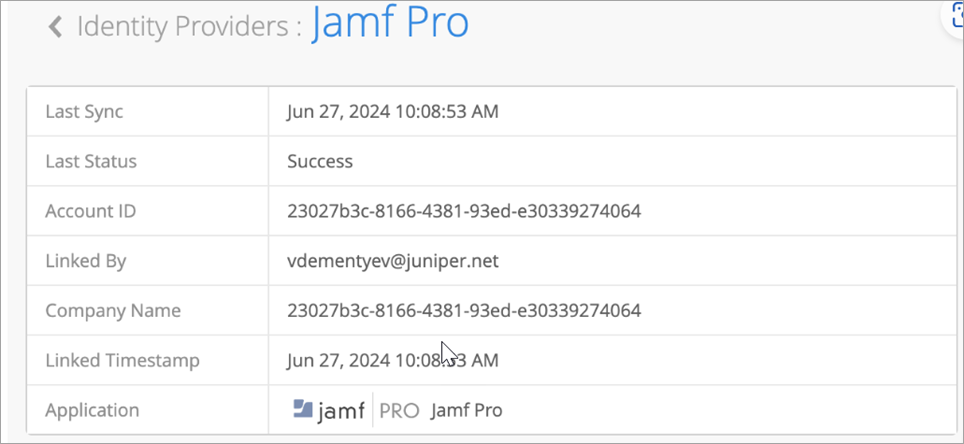
After linking is complete, you can see last sync status and time as shown in Figure 9.
Verification
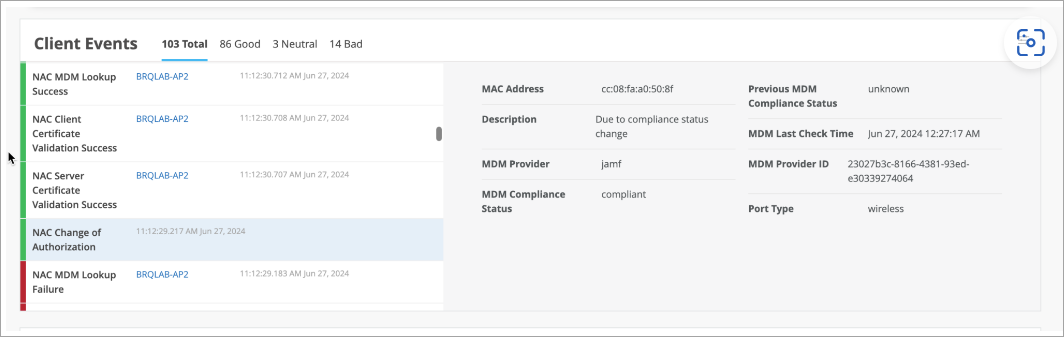
From the left menu of the HPE Mist management portal, select Monitoring > Insights > Client Events to see the information. Under Client Insights, you can see MDM lookups are performed for iOS managed devices as shown in Figure 10.
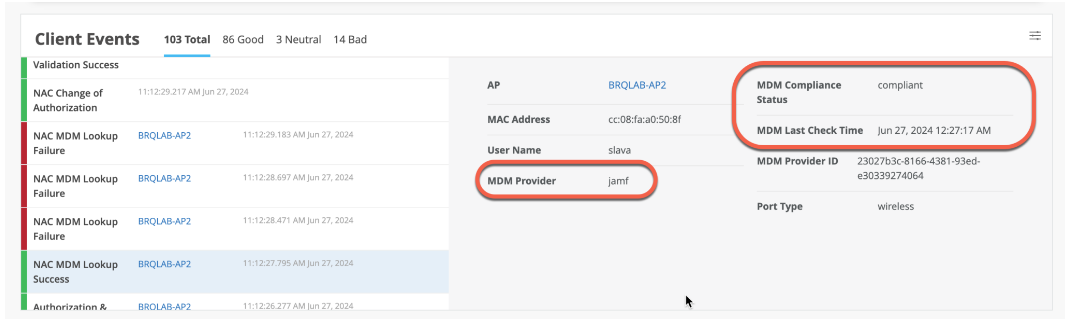
Note that during initial MDM lookup for a new client, lookup is performed post initial authentication. After MDM state changes, Mist Access Assurance initiates CoA to re-authenticate the client and apply the correct policy. Upon subsequent authentications, NAC uses MDM cache which is updated periodically to reflect any changes for every 2 hours. Figure 11 shows a sample of compliance status change.