
BGP 경로 리플렉터
BGP 경로 리플렉터 이해하기
이 주제에서는 BGP 경로 리플렉터를 사용하여 구성을 단순화하고 확장을 지원하는 방법에 대해 설명합니다.
BGP AS(Autonomous System)에서는 모든 AS 경계 라우터 간에 경로가 분산되어야 합니다. BGP(Border Gateway Protocol)는 내부 BGP(IBGP) 피어링 세션을 통해 이를 달성합니다. 기본적으로 한 IBGP 피어에서 학습한 경로는 다른 IBGP 피어에 보급되지 않습니다. 이 제한은 완전한 경로 가시성을 보장하기 위해 AS의 모든 라우터 간에 IBGP 세션의 풀 메시를 요구합니다.
그러나 풀 메시를 유지하면 구성 복잡성이 증가하고 확장성이 제한됩니다. 각각의 새로운 IBGP 피어는 AS의 다른 모든 피어와 세션을 설정해야 합니다. 풀 메시에 필요한 총 세션 수는 v * (v - 1)/2 공식을 사용하여 계산됩니다. 여기서 v 는 BGP 피어 수를 나타냅니다.
구성 오버헤드 외에도 풀 메시는 경로 확장을 증가시킬 수 있습니다. 모든 IBGP 피어는 네트워크에서 해당 위치에 대해 최적이 아닌 경우가 많더라도 모든 경로를 수신합니다.
RFC 4456에 정의된 BGP 경로 리플렉션은 IBGP 풀 메시 토폴로지의 확장성 문제를 해결합니다. 경로 리플렉터를 사용하면 경로 리플렉터(RR)로 알려진 라우터가 한 IBGP 피어에서 학습한 경로를 다른 IBGP 피어로 재배포할 수 있습니다. 이는 IBGP에서 IBGP로의 경로 보급을 방지하는 기본 BGP 규칙을 완화합니다.
경로 리플렉션은 라우팅 루프의 가능성을 도입하기 때문에 RFC 4456은 루프 방지 및 일관된 경로 선택을 보장하는 두 가지 새로운 BGP 경로 속성을 정의합니다.
-
ORIGINATOR_ID – 원래 경로를 보급한 BGP neighbor의 라우터 ID를 식별합니다. ORIGINATOR_ID 속성은 경로가 처음 반영될 때만 연결됩니다.
-
CLUSTER_LIST – 네트워크에서 전파될 때 경로를 반영한 경로 리플렉터의 클러스터 ID를 기록합니다.
이러한 속성이 BGP 최적 경로 선택에 미치는 영향에 대한 자세한 내용은 BGP 경로 선택 이해를 참조하십시오.
내부 BGP(IBGP) 풀 메시 요구 사항으로 인해 대부분의 네트워크는 경로 리플렉터를 사용하여 구성을 단순화합니다. 라우터는 경로 리플렉터를 사용하여 클러스터로 그룹화되며, 클러스터는 자치 시스템에 고유한 숫자 식별자로 식별됩니다. 클러스터 내에서 단일 라우터(경로 리플렉터)에서 각 내부 피어로의 BGP 세션을 구성해야 합니다. 이 구성을 통해 IBGP 풀 메시 요구 사항이 충족됩니다.
AS에서 경로 리플렉터를 사용하려면 하나 이상의 라우터를 경로 리플렉터로 지정합니다(일반적으로 POP당 1개). 경로 리플렉터는 내부 피어에서 학습한 경로를 다른 내부 피어로 재보급할 수 있습니다. 경로 리플렉션은 모든 내부 피어가 서로 완전히 연결되도록 요구하는 대신, 경로 리플렉터가 모든 내부 피어와 완전히 연결되면 됩니다. 경로 리플렉터와 해당하는 모든 내부 피어가 그림 1과 같이 클러스터를 형성합니다.
일부 주니퍼 네트웍스 디바이스의 경우, 경로 리플렉터를 사용하는 각 디바이스에 고급 BGP 기능 라이선스가 설치되어 있어야 합니다. 라이선스에 대한 자세한 내용은 소프트웨어 설치 및 업그레이드 가이드를 참조하십시오.
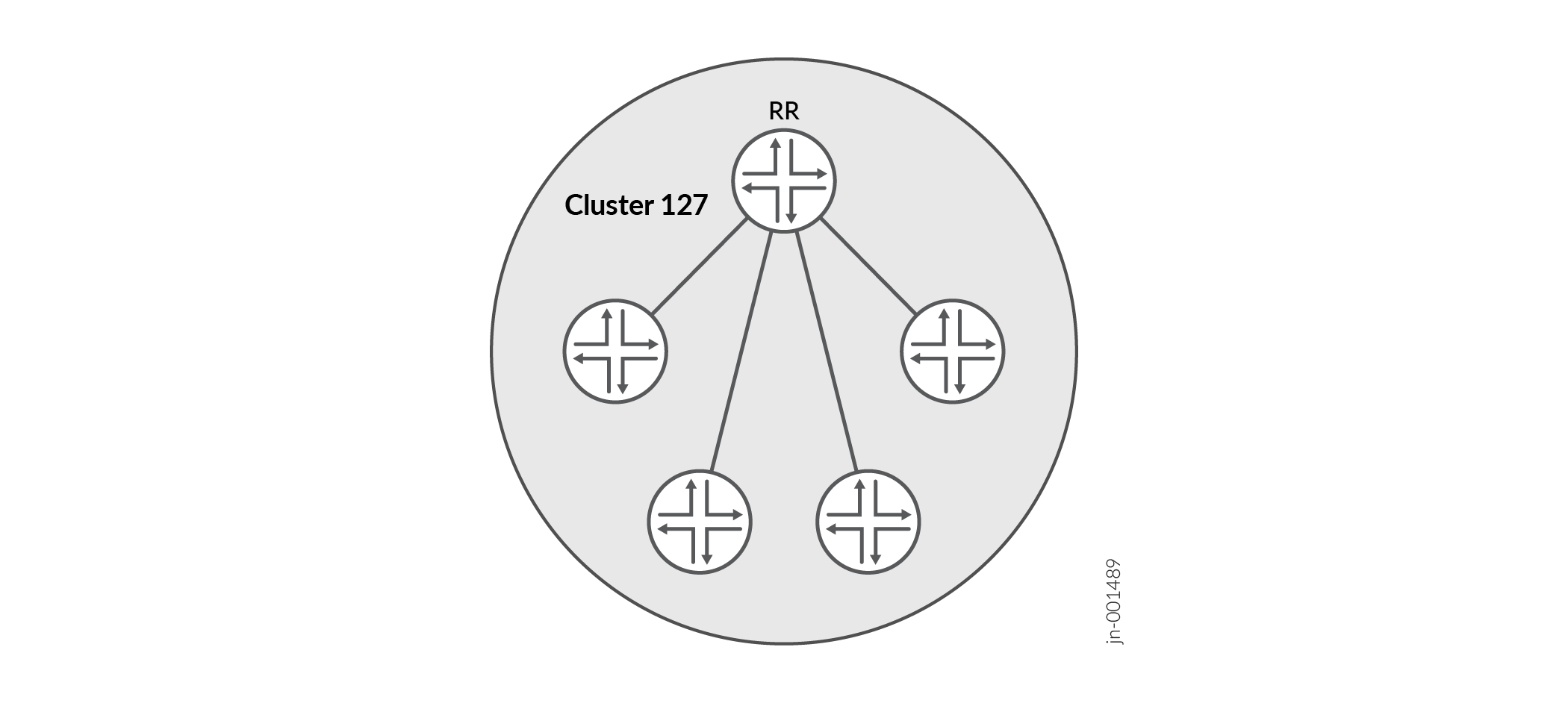
그림 1 은 Cluster 127의 경로 리플렉터로 구성된 라우터 RR을 보여줍니다. 다른 라우터는 클러스터 내에서 지정된 내부 피어입니다. BGP 경로는 내부 피어에 의해 라우터 RR에 보급됩니다. 그런 다음 RR은 해당 경로를 클러스터 내의 다른 모든 피어에 재보급합니다.
경로 리플렉터의 풀 메시를 구성하여 여러 클러스터를 구성하고 연결할 수 있습니다( 그림 2 참조).
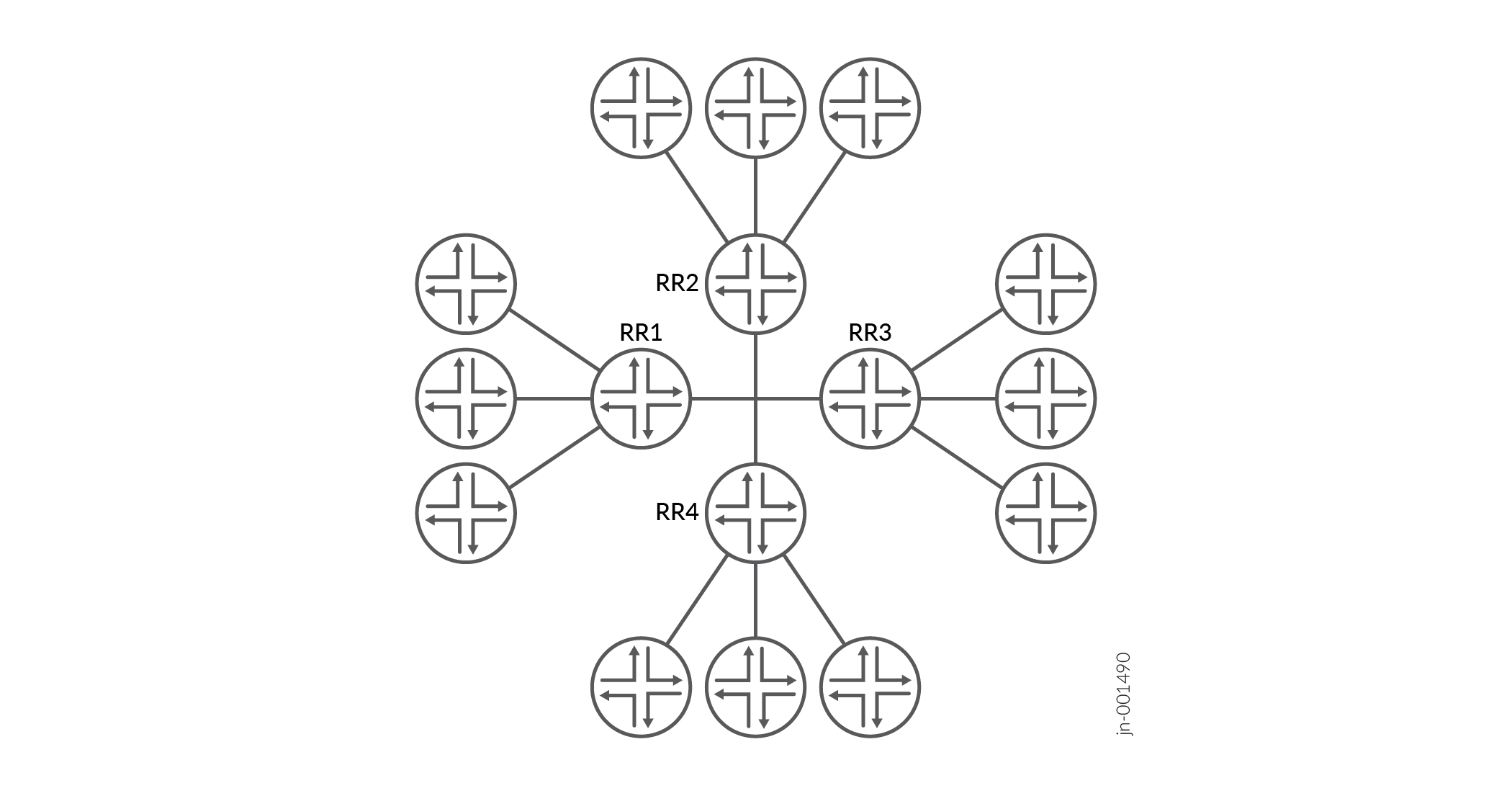
그림 2 는 경로 리플렉터 RR 1, RR 2, RR 3, RR 4를 풀 메시 내부 피어로 보여줍니다. 라우터가 경로를 RR 1에 보급하면 RR 1은 다른 경로 리플렉터로 경로를 재보급하고, 이를 통해 AS 내의 나머지 라우터에 경로를 재보급합니다. 경로 리플렉션을 사용하면 풀 메시 요구 사항으로 인해 발생하는 확장 문제 없이 경로를 AS 전체에 전파할 수 있습니다.
여러 클러스터를 지원하는 경로 리플렉터는 비클라이언트 라우터에서 동일한 클러스터 ID를 가진 경로를 허용하지 않습니다. 따라서 중복 RR에 대해 다른 클러스터 ID를 구성하여 다른 클러스터에 경로를 반영해야 합니다.
클라이언트는 경로 리플렉터에서 경로를 수신하는 IBGP 라우터입니다. 비클라이언트는 또 다른 IBGP 이웃입니다. 경로 리플렉터는 비클라이언트에서 학습한 경로를 해당 클라이언트에게만 보급하며, 비클라이언트에게는 보급하지 않습니다. 그러나 경로 리플렉터는 클라이언트에서 학습한 경로를 클라이언트와 비클라이언트 모두에 보급합니다.
그러나 클러스터가 커지면 경로 리플렉터가 있는 풀 메시와 경로 리플렉터 사이의 풀 메시를 확장하기가 어려워집니다. 이 문제를 해결하기 위해 계층적 경로 리플렉션을 위해 라우터 클러스터를 클러스터의 클러스터로 그룹화할 수 있습니다( 그림 3 참조).
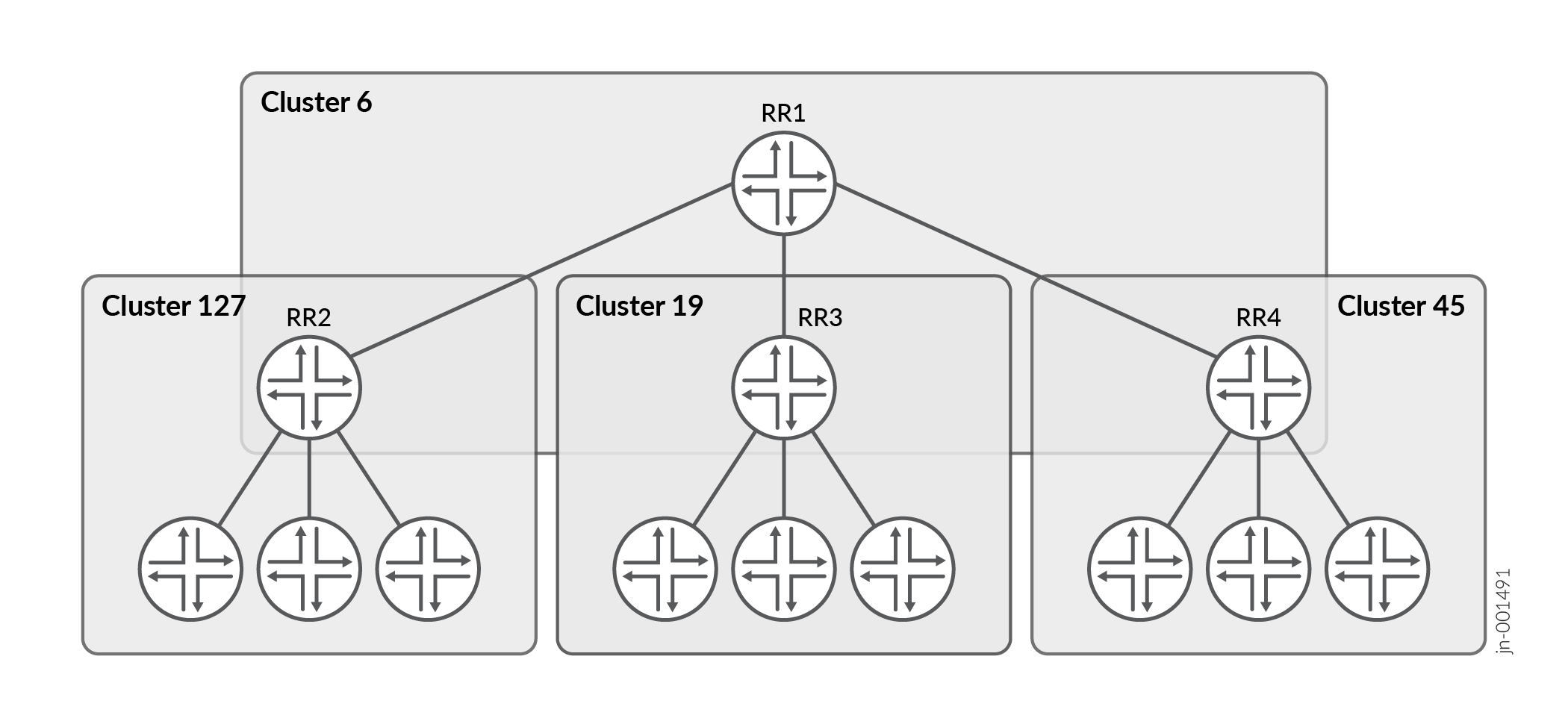
그림 3 은 RR 2, RR 3, RR 4를 각각 클러스터 127, 19, 45에 대한 경로 리플렉터로 보여줍니다. 네트워크 관리자는 이러한 경로 리플렉터를 풀 메시하는 대신 RR 1이 경로 리플렉터인 다른 클러스터(Cluster 6)의 일부로 구성했습니다. 라우터가 경로를 RR 2에 보급하면 RR 2는 자체 클러스터 내의 모든 라우터에 경로를 재보급한 다음 경로를 RR 1에 재보급합니다. RR 1은 해당 클러스터의 라우터에 경로를 재보급하고 해당 라우터는 해당 클러스터를 통해 경로를 전파합니다.
또한보십시오
비포워딩 경로 리플렉터
많은 네트워크에서 BGP 경로 리플렉터는 확장성을 개선하기 위해 구축되지만 트래픽 전달에는 직접 관여하지 않습니다. 이러한 경로 리플렉터는 데이터 포워딩에 참여하지 않고 BGP 컨트롤 플레인 기능을 유지합니다. 경로 리플렉터가 트래픽 경로에 없으면 포워딩 테이블에 반영된 경로를 설치할 필요가 없습니다. 이러한 디바이스를 비전달 경로 리플렉터라고 합니다.
다음 방법 중 하나로 비포워딩 경로 리플렉터를 구성할 수 있습니다:
-
문 사용
no-install– Junos OS 릴리스 15.1에서 소개된 이 문은no-installBGP 경로가 포워딩 테이블에 설치되지 않도록 합니다. 이 옵션은 다음 계층 수준에서 주소 패밀리별로 구성할 수 있습니다.[edit protocols bgp family family-name] set no-install
-
포워딩 테이블 내보내기 정책 사용 – 15.1 이전의 Junos OS 릴리스에서는 BGP에서 학습된 경로를 거부하는 포워딩 테이블 내보내기 정책을 구성하여 유사한 동작을 수행할 수 있습니다.
비포워딩 경로 리플렉터는 특히 대규모 서비스 프로바이더 네트워크에서 주로 컨트롤 플레인 라우터 역할을 하는 디바이스의 리소스 부하를 줄이는 데 도움이 됩니다.
예: 경로 리플렉터 구성
이 예는 경로 리플렉터를 구성하는 방법을 보여줍니다.
요구 사항
이 예제를 구성하기 전에 디바이스 초기화 이외의 특별한 구성은 필요하지 않습니다.
개요
일반적으로, IBGP는 다른 IBGP 지원 디바이스에 대한 업데이트를 다시 보급하지 않기 때문에 내부 BGP(IBGP) 지원 디바이스는 완전히 연결되어야 합니다. 풀 메시는 각 IBGP 지원 디바이스에서 여러 neighbor 문을 구성하여 달성되는 논리적 메시입니다. 풀 메시가 반드시 물리적 풀 메시인 것은 아닙니다. 풀 메시(논리적 또는 물리적)를 유지해도 대규모 구축에서 제대로 확장되지 않습니다.
그림 4 는 경로 리플렉터 역할을 하는 디바이스 A가 있는 IBGP 네트워크를 보여줍니다. 디바이스 B와 디바이스 C는 경로 리플렉터의 클라이언트입니다. 디바이스 D와 디바이스 E는 클러스터 외부에 있으므로, 클라이언트가 아닙니다.
Junos OS에서 문이 cluster 있는 BGP 그룹의 모든 이웃은 경로 리플렉터의 클라이언트로 취급됩니다. 디바이스 D와 디바이스 E는 문이 포함되지 않은 경로 리플렉터(디바이스 A)의 BGP 그룹에 배치되므로 클라이언트가 아닙니다.cluster 디바이스 D 및 디바이스 E를 리플렉터 클라이언트로 라우팅하려면 문을 포함하는 그룹으로 rr-clients 이동합니다.cluster
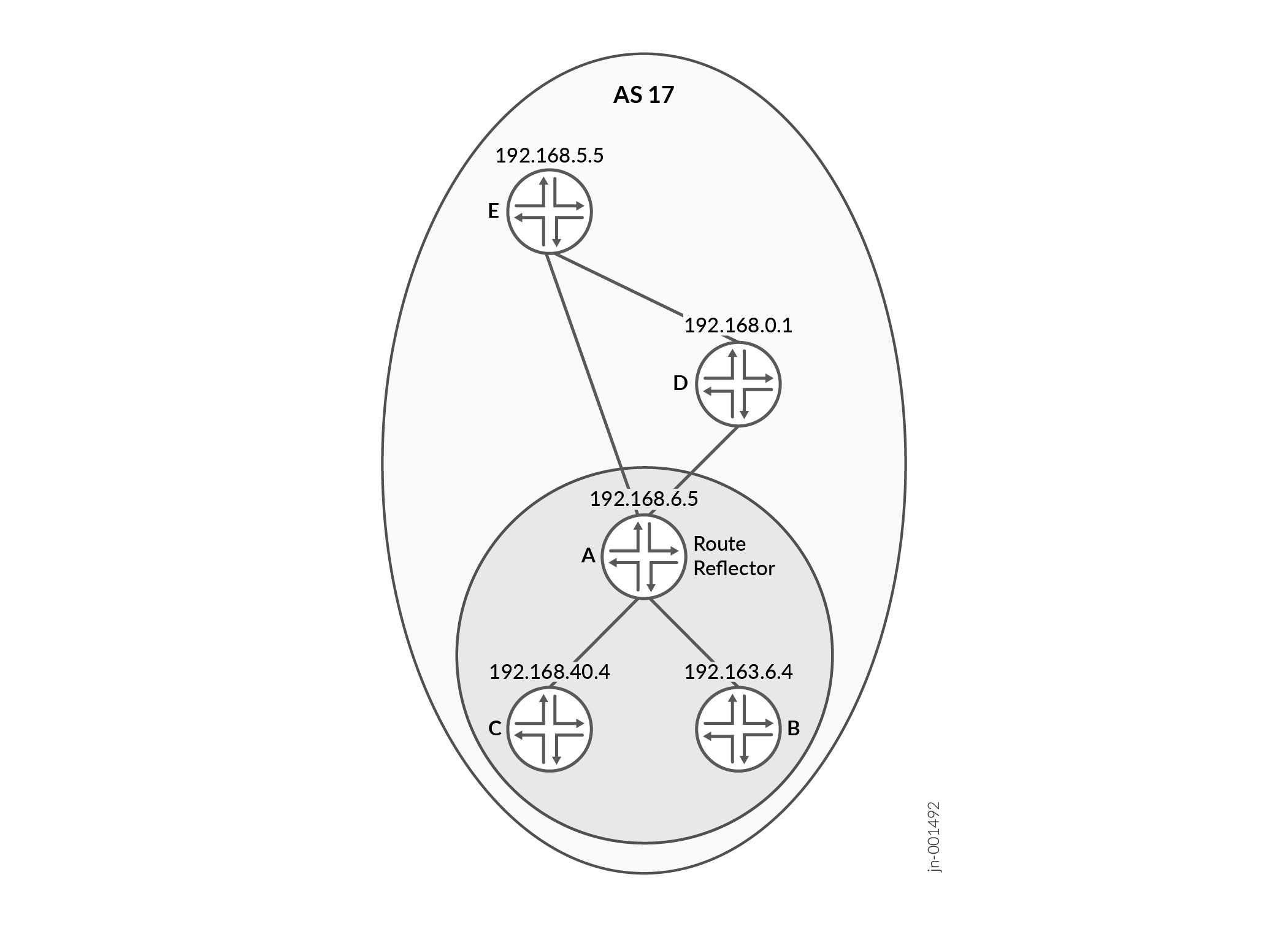 를 사용하는 IBGP 네트워크
구성
절차
CLI 빠른 구성
이 예를 빠르게 구성하려면, 아래 명령을 복사하여 텍스트 파일로 붙여 넣은 다음 모든 라인브레이크를 제거하고, 네트워크 구성을 일치하는 데 필요한 세부 사항을 변경한 다음, 계층 수준에서 [edit] 명령을 복사하여 CLI에 붙여 넣습니다.
이 예는 내보내기 정책을 사용하여 OSPF에서 학습한 경로를 BGP에 재배포합니다.send-ospf
set protocols bgp group internal-peers export send-ospf
OSPF를 BGP로 재배포하는 것은 일반적으로 경로 리플렉터 작동에 필요하지 않습니다. 여기서는 경로 리플렉터가 클라이언트에 보급할 수 있는 BGP 경로를 생성하는 데만 사용되며, 이를 통해 간단한 랩 토폴로지에서 경로 리플렉션이 어떻게 작동하는지 관찰할 수 있습니다.
프로덕션 구축에서 경로 리플렉터는 일반적으로 클라이언트에서 학습한 BGP 경로를 반영하며, 이 동작이 특별히 필요하지 않는 한 IGP 경로를 BGP로 재배포하지 않습니다.
이 예에서 라우터 D와 E는 비클라이언트 IBGP 피어이며 경로 리플렉터 클라이언트 클러스터 외부에서 일관된 경로 교환을 보장하기 위해 풀 메시로 구성됩니다.
디바이스 A
set interfaces fe-0/0/0 unit 1 description to-B
set interfaces fe-0/0/0 unit 1 family inet address 10.10.10.1/30
set interfaces fe-0/0/1 unit 3 description to-D
set interfaces fe-0/0/1 unit 3 family inet address 10.10.10.9/30
set interfaces lo0 unit 1 family inet address 192.168.6.5/32
set protocols bgp group rr-clients type internal
set protocols bgp group rr-clients local-address 192.168.6.5
set protocols bgp group rr-clients export send-ospf
set protocols bgp group rr-clients neighbor 192.163.6.4
set protocols bgp group rr-clients neighbor 192.168.40.4
set protocols bgp group rr-clients cluster 192.168.6.5
set protocols bgp group non-clients type internal
set protocols bgp group non-clients local-address 192.168.6.5
set protocols bgp group non-clients export send-ospf
set protocols bgp group non-clients neighbor 192.168.0.1
set protocols bgp group non-clients neighbor 192.168.5.5
set protocols ospf area 0.0.0.0 interface lo0.1 passive
set protocols ospf area 0.0.0.0 interface fe-0/0/0.1
set protocols ospf area 0.0.0.0 interface fe-0/0/1.3
set policy-options policy-statement send-ospf term 2 from protocol ospf
set policy-options policy-statement send-ospf term 2 then accept
set routing-options router-id 192.168.6.5
set routing-options autonomous-system 17
디바이스 B
set interfaces fe-0/0/0 unit 2 description to-A
set interfaces fe-0/0/0 unit 2 family inet address 10.10.10.2/30
set interfaces fe-0/0/1 unit 5 description to-C
set interfaces fe-0/0/1 unit 5 family inet address 10.10.10.5/30
set interfaces lo0 unit 2 family inet address 192.163.6.4/32
set protocols bgp neighbor 192.168.6.5
set protocols bgp group rr-clients type internal
set protocols bgp group rr-clients local-address 192.163.6.4
set protocols bgp group rr-clients export send-ospf
set protocols bgp group rr-clients neighbor 192.168.6.5
set protocols ospf area 0.0.0.0 interface lo0.2 passive
set protocols ospf area 0.0.0.0 interface fe-0/0/0.2
set protocols ospf area 0.0.0.0 interface fe-0/0/1.5
set policy-options policy-statement send-ospf term 2 from protocol ospf
set policy-options policy-statement send-ospf term 2 then accept
set routing-options router-id 192.163.6.4
set routing-options autonomous-system 17
디바이스 C
set interfaces fe-0/0/0 unit 6 description to-B
set interfaces fe-0/0/0 unit 6 family inet address 10.10.10.6/30
set interfaces lo0 unit 3 family inet address 192.168.40.4/32
set protocols bgp group rr-clients type internal
set protocols bgp group rr-clients local-address 192.168.40.4
set protocols bgp group rr-clients export send-ospf
set protocols bgp group rr-clients neighbor 192.168.6.5set protocols ospf area 0.0.0.0 interface lo0.3 passive
set protocols ospf area 0.0.0.0 interface fe-0/0/0.6
set policy-options policy-statement send-ospf term 2 from protocol ospf
set policy-options policy-statement send-ospf term 2 then accept
set routing-options router-id 192.168.40.4
set routing-options autonomous-system 17
디바이스 D
set interfaces fe-0/0/0 unit 4 description to-A
set interfaces fe-0/0/0 unit 4 family inet address 10.10.10.10/30
set interfaces fe-0/0/1 unit 7 description to-E
set interfaces fe-0/0/1 unit 7 family inet address 10.10.10.13/30
set interfaces lo0 unit 4 family inet address 192.168.0.1/32
set protocols bgp group non-clients type internal
set protocols bgp group non-clients local-address 192.168.0.1
set protocols bgp group non-clients export send-ospf
set protocols bgp group non-clients neighbor 192.168.6.5
set protocols bgp group non-clients neighbor 192.168.5.5
set protocols ospf area 0.0.0.0 interface lo0.4 passive
set protocols ospf area 0.0.0.0 interface fe-0/0/0.4
set protocols ospf area 0.0.0.0 interface fe-0/0/1.7
set policy-options policy-statement send-ospf term 2 from protocol ospf
set policy-options policy-statement send-ospf term 2 then accept
set routing-options router-id 192.168.0.1
set routing-options autonomous-system 17
디바이스 E
set interfaces fe-0/0/0 unit 8 description to-D
set interfaces fe-0/0/0 unit 8 family inet address 10.10.10.14/30
set interfaces lo0 unit 5 family inet address 192.168.5.5/32
set protocols bgp group non-clients type internal
set protocols bgp group non-clients local-address 192.168.5.5
set protocols bgp group non-clients export send-ospf
set protocols bgp group non-clients neighbor 192.168.0.1
set protocols bgp group non-clients neighbor 192.168.6.5
set protocols ospf area 0.0.0.0 interface lo0.5 passive
set protocols ospf area 0.0.0.0 interface fe-0/0/0.8
set policy-options policy-statement send-ospf term 2 from protocol ospf
set policy-options policy-statement send-ospf term 2 then accept
set routing-options router-id 192.168.5.5
set routing-options autonomous-system 17
단계별 절차
경로 리플렉터 구성
단계별 절차
다음 예에서는 구성 계층에서 다양한 수준을 탐색해야 합니다. CLI 탐색에 대한 정보는 Junos OS CLI 사용자 가이드의 구성 모드에서 CLI 편집기 사용을 참조하십시오.
주니퍼 네트웍스 디바이스 A를 경로 리플렉터로 사용하여 네트워크에서 IBGP를 구성하는 방법:
-
인터페이스를 구성합니다.
[edit interfaces]
user@A# set fe-0/0/0 unit 1 description to-B
user@A# set fe-0/0/0 unit 1 family inet address 10.10.10.1/30
user@A# set fe-0/0/1 unit 3 description to-D
user@A# set fe-0/0/1 unit 3 family inet address 10.10.10.9/30
user@A# set lo0 unit 1 family inet address 192.168.6.5/32
-
라우터 ID 및 AS(Autonomous System) 번호를 구성합니다.
[edit routing-options]
user@A# set router-id 192.168.6.5
user@A# set autonomous-system 17
-
경로 리플렉터 클라이언트(디바이스 B 및 디바이스 C)에 대한 BGP 그룹을 구성합니다.
클러스터 식별자와 함께 클러스터문을 구성하여 경로 리플렉터가 있는 클러스터에 클라이언트 라우터를 추가합니다. 클러스터 식별자는 모든 32비트 값이 될 수 있습니다. 이 예에서는 루프백 IP 주소를 클러스터 식별자로 사용합니다.
[edit protocols bgp group rr-clients]
user@A# set type internal
user@A# set local-address 192.168.6.5
user@A# set cluster 192.168.6.5
user@A# set neighbor 192.163.6.4
user@A# set neighbor 192.168.40.4
-
비클라이언트 피어(디바이스 D 및 디바이스 E)에 대한 내부 BGP 그룹을 구성합니다. 비클라이언트 라우터를 경로 리플렉터 클러스터 외부에 유지하도록 클러스터 명령문을 구성하지 마십시오.
[edit protocols bgp group non-clients
user@A# set type internal
user@A# set local-address 192.168.6.5
user@A# set neighbor 192.168.0.1
user@A# set neighbor 192.168.5.5
-
(선택 사항) IGP 경로를 BGP로 재배포하는 IGP 및 IGP 정책을 구성합니다. 이는 일반적인 프로덕션 요구 사항이 아니라, 간단한 랩 토폴로지에서 경로 리플렉터가 작동하는 방식을 보여주기 위해 이 예에서만 구성되었습니다.
[edit protocols ospf area 0.0.0.0]
user@A# set interface lo0.1 passive
user@A# set interface fe-0/0/0.1
user@A# set interface fe-0/0/1.3
[edit  policy-options policy-statement send-ospf term 2]
user@A# set from protocol ospf
user@A# set then accept
user@A# set protocols bgp group rr-clients export send-ospf
user@A# set protocols bgp group non-clients export send-ospf
결과
구성 모드에서 , show protocols, show policy-options및 show routing-options 명령을 show interfaces입력하여 구성을 확인합니다. 출력에 의도한 구성이 표시되지 않으면 이 예의 지침을 반복하여 구성을 수정합니다.
user@A# show interfaces
fe-0/0/0 {
    unit 1 {
        description to-B;
        family inet {
            address 10.10.10.1/30;
        }
    }
}
fe-0/0/1 {
    unit 3 {
        description to-D;
        family inet {
            address 10.10.10.9/30;
        }
    }
}
lo0 {
    unit 1 {
        family inet {
            address 192.168.6.5/32;
        }
    }
}
user@A# show protocols
bgp {
    group rr-clients {
        type internal;
        local-address 192.168.6.5;
        export send-ospf;
        cluster 192.168.6.5;
        neighbor 192.163.6.4;
        neighbor 192.168.40.4;

    }
    group non-clients {
        type internal;
        local-address 192.168.6.5;
        export send-ospf;
        neighbor 192.168.0.1;
        neighbor 192.168.5.5;
}
ospf {
    area 0.0.0.0 {
        interface lo0.1 {
            passive;
        }
        interface fe-0/0/0.1;
        interface fe-0/0/1.3;
    }
}
user@A# show policy-options
policy-statement send-ospf {
    term 2 {
        from protocol ospf;
        then accept;
    }
}
user@A# show routing-options
router-id 192.168.6.5;
autonomous-system 17;
디바이스 구성이 완료되면 구성 모드에서 들어갑니다 commit .
다른 비클라이언트 디바이스가 주니퍼 네트웍스에서 온 경우 구성 중인 클러스터 내의 각 비클라이언트 BGP 피어에 대해 이 단계를 반복합니다. 그렇지 않으면 디바이스 설명서에서 지침을 참조하십시오.
클라이언트 피어 구성
단계별 절차
다음 예에서는 구성 계층에서 다양한 수준을 탐색해야 합니다. CLI 탐색에 대한 정보는 Junos OS CLI 사용자 가이드의 구성 모드에서 CLI 편집기 사용을 참조하십시오.
클라이언트 피어 구성 방법:
-
인터페이스를 구성합니다.
[edit interfaces]
user@B# set fe-0/0/0 unit 2 description to-A
user@B# set fe-0/0/0 unit 2 family inet address 10.10.10.2/30
user@B# set fe-0/0/1 unit 5 description to-C
user@B# set fe-0/0/1 unit 5 family inet address 10.10.10.5/30
user@B# set lo0 unit 2 family inet address 192.163.6.4/32
-
라우터 ID 및 AS 번호를 구성합니다.
[edit routing-options]
user@B# set router-id 192.163.6.4
user@B# set autonomous-system 17
-
경로 리플렉터와의 BGP 인접 관계를 구성합니다.
[edit protocols bgp group rr-clients]
user@B# set type internal
user@B# set local-address 192.163.6.4
user@B# set neighbor 192.168.6.5
-
(선택 사항) IGP 경로를 BGP로 재배포하는 IGP 및 IGP 정책을 구성합니다. 이는 일반적인 프로덕션 요구 사항이 아니라, 간단한 랩 토폴로지에서 경로 리플렉터가 작동하는 방식을 보여주기 위해 이 예에서만 구성되었습니다.
[edit protocols ospf area 0.0.0.0]
user@B# set interface lo0.2 passive
user@B# set interface fe-0/0/0.2
user@B# set interface fe-0/0/1.5
[edit  policy-options policy-statement send-ospf term 2]
user@B# set from protocol ospf
user@B# set then accept
[edit protocols bgp group rr-clients]
user@B# set export send-ospf
결과
구성 모드에서 , show protocols, show policy-options및 show routing-options 명령을 show interfaces입력하여 구성을 확인합니다. 출력에 의도한 구성이 표시되지 않으면 이 예의 지침을 반복하여 구성을 수정합니다.
user@B# show interfaces
fe-0/0/0 {
    unit 2 {
        description to-A;
        family inet {
            address 10.10.10.2/30;
        }
    }
}
fe-0/0/1 {
    unit 5 {
        description to-C;
        family inet {
            address 10.10.10.5/30;
        }
    }
}
lo0 {
    unit 2 {
        family inet {
            address 192.163.6.4/32;
        }
    }
}
user@B# show protocols
bgp {
    group rr-clients {
        type internal;
        local-address 192.163.6.4;
        export send-ospf;
        neighbor 192.168.6.5;
    }
}
ospf {
    area 0.0.0.0 {
        interface lo0.2 {
            passive;
        }
        interface fe-0/0/0.2;
        interface fe-0/0/1.5;
    }
}
user@B# show policy-options
policy-statement send-ospf {
    term 2 {
        from protocol ospf;
        then accept;
    }
}
user@B# show routing-options
router-id 192.163.6.4;
autonomous-system 17;
디바이스 구성이 완료되면 구성 모드에서 들어갑니다 commit .
다른 클라이언트 디바이스가 주니퍼 네트웍스에서 제공되는 경우 구성 중인 클러스터 내의 각 클라이언트 BGP 피어에 대해 이 단계를 반복합니다. 그렇지 않으면 디바이스 설명서에서 지침을 참조하십시오.
비클라이언트 피어 구성
단계별 절차
다음 예에서는 구성 계층에서 다양한 수준을 탐색해야 합니다. CLI 탐색에 대한 정보는 Junos OS CLI 사용자 가이드의 구성 모드에서 CLI 편집기 사용을 참조하십시오.
비클라이언트 피어 구성 방법:
-
인터페이스를 구성합니다.
[edit interfaces]
user@D# set fe-0/0/0 unit 4 description to-A
user@D# set fe-0/0/0 unit 4 family inet address 10.10.10.10/30
user@D# set fe-0/0/1 unit 7 description to-E
user@D# set fe-0/0/1 unit 7 family inet address 10.10.10.13/30
user@D# set lo0 unit 4 family inet address 192.168.0.1/32
-
라우터 ID 및 AS 번호를 구성합니다.
[edit routing-options]
user@D# set router-id 192.168.0.1
user@D# set autonomous-system 17
-
경로 리플렉터 및 다른 비클라이언트 피어와의 BGP 인접 관계를 구성합니다.
[edit protocols bgp group non-clients]
user@D# set type internal
user@D# set local-address 192.168.0.1
user@D# set export send-ospf
user@D# set neighbor 192.168.6.5
user@D# set neighbor 192.168.5.5
-
(선택 사항) IGP 경로를 BGP로 재배포하는 IGP 및 IGP 정책을 구성합니다. 이는 일반적인 프로덕션 요구 사항이 아니라, 간단한 랩 토폴로지에서 경로 리플렉터가 작동하는 방식을 보여주기 위해 이 예에서만 구성되었습니다.
[edit protocols ospf area 0.0.0.0]
user@D# set interface lo0.4 passive
user@D# set interface fe-0/0/0.4
user@D# set interface fe-0/0/1.7
[edit  policy-options policy-statement send-ospf term 2]
user@D# set from protocol ospf
user@D# set then accept
[edit protocols bgp group non-clients]
user@D# set export send-ospf
결과
구성 모드에서 , show protocols, show policy-options및 show routing-options 명령을 show interfaces입력하여 구성을 확인합니다. 출력에 의도한 구성이 표시되지 않으면 이 예의 지침을 반복하여 구성을 수정합니다.
user@D# show interfaces
fe-0/0/0 {
    unit 4 {
        description to-A;
        family inet {
            address 10.10.10.10/30;
        }
    }
}
fe-0/0/1 {
    unit 7 {
        description to-E;
        family inet {
            address 10.10.10.13/30;
        }
    }
}
lo0 {
    unit 4 {
        family inet {
            address 192.168.0.1/32;
        }
    }
}
user@D# show protocols
bgp {
    group non-clients {
        type internal;
        local-address 192.168.0.1;
        export send-ospf;
        neighbor 192.168.6.5;
        neighbor 192.168.5.5;
    }
}
ospf {
    area 0.0.0.0 {
        interface lo0.4 {
            passive;
        }
        interface fe-0/0/0.4;
        interface fe-0/0/1.7;
    }
}
user@D# show policy-options
policy-statement send-ospf {
    term 2 {
        from protocol ospf;
        then accept;
    }
}
user@D# show routing-options
router-id 192.168.0.1;
autonomous-system 17;
디바이스 구성이 완료되면 구성 모드에서 들어갑니다 commit .
추가 클라이언트 또는 비클라이언트 피어가 있는 경우, 해당 인접 문을 적절한 BGP 그룹, 즉 클라이언트 그룹(문 포함 cluster ) 또는 비클라이언트 그룹(문 없음 cluster )에 추가합니다. 다른 디바이스가 주니퍼 네트웍스에서 제공되지 않는 경우 디바이스 설명서에서 지침을 참조하십시오.
검증
구성이 제대로 작동하고 있는지 확인합니다.
BGP 인접 라우터 확인
목적
BGP가 구성된 인터페이스에서 실행되고 BGP 세션이 각 neighbor 주소에 대해 설정되었는지 확인합니다.
작업
운영 모드에서 명령을 입력합니다.show bgp neighbor
user@A> show bgp neighbor
Peer: 192.163.6.4+179 AS 17    Local: 192.168.6.5+62857 AS 17
  Type: Internal    State: Established  (route reflector client)Flags: <Sync>
  Last State: OpenConfirm   Last Event: RecvKeepAlive
  Last Error: None
  Export: [ send-ospf ]
  Options: <Preference LocalAddress Cluster Refresh>
  Local Address: 192.168.6.5 Holdtime: 90 Preference: 170
  Number of flaps: 0
  Peer ID: 192.163.6.4     Local ID: 192.168.6.5       Active Holdtime: 90
  Keepalive Interval: 30         Peer index: 0
  BFD: disabled, down
  NLRI for restart configured on peer: inet-unicast
  NLRI advertised by peer: inet-unicast
  NLRI for this session: inet-unicast
  Peer supports Refresh capability (2)
  Restart time configured on the peer: 120
  Stale routes from peer are kept for: 300
  Restart time requested by this peer: 120
  NLRI that peer supports restart for: inet-unicast
  NLRI that restart is negotiated for: inet-unicast
  NLRI of received end-of-rib markers: inet-unicast
  NLRI of all end-of-rib markers sent: inet-unicast
  Peer supports 4 byte AS extension (peer-as 17)
  Peer does not support Addpath
  Table inet.0 Bit: 10000
    RIB State: BGP restart is complete
    Send state: in sync
    Active prefixes:              0
    Received prefixes:            6
    Accepted prefixes:            1
    Suppressed due to damping:    0
    Advertised prefixes:          6
  Last traffic (seconds): Received 5    Sent 3    Checked 19
  Input messages:  Total 2961   Updates 7       Refreshes 0     Octets 56480
  Output messages: Total 2945   Updates 6       Refreshes 0     Octets 56235
  Output Queue[0]: 0

Peer: 192.168.0.1+179 AS 17    Local: 192.168.6.5+60068 AS 17
  Type: Internal    State: Established  Flags: <Sync>
  Last State: OpenConfirm   Last Event: RecvKeepAlive
  Last Error: None
  Export: [ send-ospf ]
  Options: <Preference LocalAddress Cluster Refresh>
  Local Address: 192.168.6.5 Holdtime: 90 Preference: 170
  Number of flaps: 0
  Peer ID: 192.168.0.1     Local ID: 192.168.6.5       Active Holdtime: 90
  Keepalive Interval: 30         Peer index: 3
  BFD: disabled, down
  NLRI for restart configured on peer: inet-unicast
  NLRI advertised by peer: inet-unicast
  NLRI for this session: inet-unicast
  Peer supports Refresh capability (2)
  Restart time configured on the peer: 120
  Stale routes from peer are kept for: 300
  Restart time requested by this peer: 120
  NLRI that peer supports restart for: inet-unicast
  NLRI that restart is negotiated for: inet-unicast
  NLRI of received end-of-rib markers: inet-unicast
  NLRI of all end-of-rib markers sent: inet-unicast
  Peer supports 4 byte AS extension (peer-as 17)
  Peer does not support Addpath
  Table inet.0 Bit: 10000
    RIB State: BGP restart is complete
    Send state: in sync
    Active prefixes:              0
    Received prefixes:            6
    Accepted prefixes:            1
    Suppressed due to damping:    0
    Advertised prefixes:          6
  Last traffic (seconds): Received 18   Sent 20   Checked 12
  Input messages:  Total 15     Updates 5       Refreshes 0     Octets 447
  Output messages: Total 554    Updates 4       Refreshes 0     Octets 32307
  Output Queue[0]: 0

Peer: 192.168.5.5+57458 AS 17  Local: 192.168.6.5+179 AS 17
  Type: Internal    State: Established  )Flags: <Sync>
  Last State: OpenConfirm   Last Event: RecvKeepAlive
  Last Error: None
  Export: [ send-ospf ]
  Options: <Preference LocalAddress Cluster Refresh>
  Local Address: 192.168.6.5 Holdtime: 90 Preference: 170
  Number of flaps: 0
  Peer ID: 192.168.5.5     Local ID: 192.168.6.5       Active Holdtime: 90
  Keepalive Interval: 30         Peer index: 2
  BFD: disabled, down
  NLRI for restart configured on peer: inet-unicast
  NLRI advertised by peer: inet-unicast
  NLRI for this session: inet-unicast
  Peer supports Refresh capability (2)
  Restart time configured on the peer: 120
  Stale routes from peer are kept for: 300
  Restart time requested by this peer: 120
  NLRI that peer supports restart for: inet-unicast
  NLRI that restart is negotiated for: inet-unicast
  NLRI of received end-of-rib markers: inet-unicast
  NLRI of all end-of-rib markers sent: inet-unicast
  Peer supports 4 byte AS extension (peer-as 17)
  Peer does not support Addpath
  Table inet.0 Bit: 10000
    RIB State: BGP restart is complete
    Send state: in sync
    Active prefixes:              0
    Received prefixes:            7
    Accepted prefixes:            7
    Suppressed due to damping:    0
    Advertised prefixes:          6
  Last traffic (seconds): Received 17   Sent 3    Checked 9
  Input messages:  Total 2967   Updates 7       Refreshes 0     Octets 56629
  Output messages: Total 2943   Updates 6       Refreshes 0     Octets 56197
  Output Queue[0]: 0

Peer: 192.168.40.4+53990 AS 17 Local: 192.168.6.5+179 AS 17
  Type: Internal    State: Established  (route reflector client)Flags: <Sync>
  Last State: OpenConfirm   Last Event: RecvKeepAlive
  Last Error: None
  Export: [ send-ospf ]
  Options: <Preference LocalAddress Cluster Refresh>
  Local Address: 192.168.6.5 Holdtime: 90 Preference: 170
  Number of flaps: 0
  Peer ID: 192.168.40.4    Local ID: 192.168.6.5       Active Holdtime: 90
  Keepalive Interval: 30         Peer index: 1
  BFD: disabled, down
  NLRI for restart configured on peer: inet-unicast
  NLRI advertised by peer: inet-unicast
  NLRI for this session: inet-unicast
  Peer supports Refresh capability (2)
  Restart time configured on the peer: 120
  Stale routes from peer are kept for: 300
  Restart time requested by this peer: 120
  NLRI that peer supports restart for: inet-unicast
  NLRI that restart is negotiated for: inet-unicast
  NLRI of received end-of-rib markers: inet-unicast
  NLRI of all end-of-rib markers sent: inet-unicast
  Peer supports 4 byte AS extension (peer-as 17)
  Peer does not support Addpath
  Table inet.0 Bit: 10000
    RIB State: BGP restart is complete
    Send state: in sync
    Active prefixes:              0
    Received prefixes:            7
    Accepted prefixes:            7
    Suppressed due to damping:    0
    Advertised prefixes:          6
  Last traffic (seconds): Received 5    Sent 23   Checked 52
  Input messages:  Total 2960   Updates 7       Refreshes 0     Octets 56496
  Output messages: Total 2943   Updates 6       Refreshes 0     Octets 56197
  Output Queue[0]: 0
BGP 그룹 확인
목적
BGP 그룹이 올바르게 구성되었는지 확인합니다.
작업
운영 모드에서 명령을 입력합니다.show bgp group
user@A> show bgp group
Group Type: Internal    AS: 17                     Local AS: 17
  Name: rr-clients  Index: 0                   Flags: <>
  Export: [ send-ospf ]
  Options: <Cluster>
  Holdtime: 0
  Total peers: 2        Established: 4
  192.163.6.4+179
  192.168.40.4+53990

  inet.0: 0/26/16/0

Group Type: Internal    AS: 17                     Local AS: 17
  Name: non-clients     Index: 0                   Flags: <>
  Export: [ send-ospf ]
  Holdtime: 0
  Total peers: 2        Established: 4
  192.168.0.1+179
  192.168.5.5+57458
  inet.0: 0/26/16/0

Groups: 2  Peers:4     External: 0    Internal: 4    Down peers: 0   Flaps: 0
Table          Tot Paths  Act Paths Suppressed    History Damp State    Pending
inet.0                26          0          0          0          0          0
BGP 요약 정보 확인
목적
BGP 구성이 올바른지 확인합니다.
작업
운영 모드에서 명령을 입력합니다.show bgp summary
user@A> show bgp summary
Groups: 2 Peers: 4 Down peers: 0
Table          Tot Paths  Act Paths Suppressed    History Damp State    Pending
inet.0                26          0          0          0          0          0
Peer                     AS      InPkt     OutPkt    OutQ   Flaps Last Up/Dwn State|#Active/Received/Accepted/Damped...
192.163.6.4              17       2981       2965       0       0    22:19:15 0/6/1/0              0/0/0/0
192.168.0.1              17         36        575       0       0       13:43 0/6/1/0              0/0/0/0
192.168.5.5              17       2988       2964       0       0    22:19:10 0/7/7/0              0/0/0/0
192.168.40.4             17       2980       2964       0       0    22:19:14 0/7/7/0              0/0/0/0
라우팅 테이블 정보 확인
목적
라우팅 테이블에 IBGP 경로가 포함되어 있는지 확인합니다.
작업
운영 모드에서 명령을 입력합니다.show route
user@A> show route
inet.0: 12 destinations, 38 routes (12 active, 0 holddown, 10 hidden)
+ = Active Route, - = Last Active, * = Both

10.10.10.0/30      *[Direct/0] 22:22:03
                    > via fe-0/0/0.1
                    [BGP/170] 22:20:55, MED 2, localpref 100, from 192.168.40.4
                      AS path: I
                    > to 10.10.10.2 via fe-0/0/0.1
                    [BGP/170] 22:20:51, MED 3, localpref 100, from 192.168.5.5
                      AS path: I
                    > to 10.10.10.10 via fe-0/0/1.3
10.10.10.1/32      *[Local/0] 22:22:03
                      Local via fe-0/0/0.1
10.10.10.4/30      *[OSPF/10] 22:21:13, metric 2
                    > to 10.10.10.2 via fe-0/0/0.1
                    [BGP/170] 22:20:51, MED 4, localpref 100, from 192.168.5.5
                      AS path: I
                    > to 10.10.10.10 via fe-0/0/1.3
10.10.10.8/30      *[Direct/0] 22:22:03
                    > via fe-0/0/1.3
                    [BGP/170] 22:20:51, MED 2, localpref 100, from 192.168.5.5
                      AS path: I
                    > to 10.10.10.10 via fe-0/0/1.3
                    [BGP/170] 22:20:55, MED 3, localpref 100, from 192.168.40.4
                      AS path: I
                    > to 10.10.10.2 via fe-0/0/0.1
10.10.10.9/32      *[Local/0] 22:22:03
                      Local via fe-0/0/1.3
10.10.10.12/30     *[OSPF/10] 22:21:08, metric 2
                    > to 10.10.10.10 via fe-0/0/1.3
                    [BGP/170] 22:20:55, MED 4, localpref 100, from 192.168.40.4
                      AS path: I
                    > to 10.10.10.2 via fe-0/0/0.1
192.163.6.4/32     *[OSPF/10] 22:21:13, metric 1
                    > to 10.10.10.2 via fe-0/0/0.1
                    [BGP/170] 22:20:55, MED 1, localpref 100, from 192.168.40.4
                      AS path: I
                    > to 10.10.10.2 via fe-0/0/0.1
                    [BGP/170] 22:20:51, MED 3, localpref 100, from 192.168.5.5
                      AS path: I
                    > to 10.10.10.10 via fe-0/0/1.3
192.168.0.1/32     *[OSPF/10] 22:21:08, metric 1
                    > to 10.10.10.10 via fe-0/0/1.3
                    [BGP/170] 22:20:51, MED 1, localpref 100, from 192.168.5.5
                      AS path: I
                    > to 10.10.10.10 via fe-0/0/1.3
                    [BGP/170] 22:20:55, MED 3, localpref 100, from 192.168.40.4
                      AS path: I
                    > to 10.10.10.2 via fe-0/0/0.1
192.168.5.5/32     *[OSPF/10] 22:21:08, metric 2
                    > to 10.10.10.10 via fe-0/0/1.3
                    [BGP/170] 00:15:24, MED 1, localpref 100, from 192.168.0.1
                      AS path: I
                    > to 10.10.10.10 via fe-0/0/1.3
                    [BGP/170] 22:20:55, MED 4, localpref 100, from 192.168.40.4
                      AS path: I
                    > to 10.10.10.2 via fe-0/0/0.1
192.168.6.5/32     *[Direct/0] 22:22:04
                    > via lo0.1
                    [BGP/170] 22:20:51, MED 2, localpref 100, from 192.168.5.5
                      AS path: I
                    > to 10.10.10.10 via fe-0/0/1.3
                    [BGP/170] 22:20:55, MED 2, localpref 100, from 192.168.40.4
                      AS path: I
                    > to 10.10.10.2 via fe-0/0/0.1
192.168.40.4/32    *[OSPF/10] 22:21:13, metric 2
                    > to 10.10.10.2 via fe-0/0/0.1
                    [BGP/170] 22:20:55, MED 1, localpref 100, from 192.163.6.4
                      AS path: I
                    > to 10.10.10.2 via fe-0/0/0.1
                    [BGP/170] 22:20:51, MED 4, localpref 100, from 192.168.5.5
                      AS path: I
                    > to 10.10.10.10 via fe-0/0/1.3
224.0.0.5/32       *[OSPF/10] 22:22:07, metric 1
                      MultiRecv
두 개의 서로 다른 클러스터에 속하는 경로 리플렉터 이해하기
경로 리플렉션의 목적은 내부 BGP(IBGP) 라우팅 디바이스가 완전히 맞물리지 않은 경우의 루프 방지입니다. 이를 위해 RR은 일반 BGP 작동 규칙 중 하나를 위반합니다. 내부 BGP 피어에서 학습한 경로를 다른 내부 BGP 피어로 다시 보급합니다.
일반적으로 단일 RR은 단 하나의 클러스터의 구성원입니다. 예를 들어, 계층적 RR 설계에서 계층 2 RR은 계층 1 RR의 클라이언트가 될 수 있지만 서로의 클라이언트가 될 수 없다고 간주해봅시다.
그러나 두 RR이 서로의 클라이언트이고 경로가 한 클러스터에서 다른 으로 반영되는 경우 클러스터 ID 중 하나만 클러스터 목록에 포함됩니다. 이 경우 클러스터 목록에 클러스터 ID가 하나 있으면 루프 방지에 적합하기 때문입니다.
표 1 에는 반영된 경로의 클러스터 목록을 클러스터 ID로 채울 때 경로 리플렉터가 사용하는 클러스터 리플렉터가 사용하는 규칙이 요약되어 있습니다.
|
경로 리플렉션 시나리오 |
구성 |
|---|---|
|
클라이언트 중 하나에서 비클라이언트 라우터로 경로를 반영하는 경우 클라이언트 -> RR -> 비클라이언트 |
RR은 반사된 경로의 클러스터 목록에서 해당 클라이언트와 연결된 클러스터 ID를 채웁니다. |
|
비클라이언트 라우터에서 클라이언트 라우터로 경로를 반영하는 경우 비클라이언트 -> RR -> 클라이언트 |
RR은 반사된 경로의 클러스터 목록에서 해당 클라이언트와 연결된 클러스터 ID를 채웁니다. |
|
클라이언트 라우터에서 다른 클러스터에 있는 다른 클라이언트 라우터로 경로를 반영하는 경우 client1 -> RR -> client2(다른 클러스터) |
RR은 클러스터 ID를 클라이언트2에 반영하기 전에 클러스터 목록에서 클라이언트1과 연결된 클러스터 ID를 채웁니다. 클라이언트 2와 연결된 클러스터 ID가 추가되지 않았습니다. |
|
클라이언트 라우터에서 다른 AS(Autonomous System)에 있는 비클라이언트 라우터로 경로를 반영하는 경우. 예를 들어, 계층 2 RR 및 2 BGP 그룹을 구성한 경우, 하나는 RR 클라이언트용이고 다른 하나는 계층 1 RR용이며, 하나의 AS(Autonomous System)에서 다른 AS(Autonomous System)으로의 경로를 반영하고 있습니다. 클라이언트 -> RR -> 비클라이언트 (다른 AS) |
RR은 클러스터 ID가 하나의 자치 시스템에 고유하기 때문에 비클라이언트 클러스터 디바이스에 대한 경로를 반영하기 전에 클러스터 ID로 클러스터 목록을 채우지 않습니다. |
또한보십시오
예: 두 개의 서로 다른 클러스터에 속하는 경로 리플렉터 구성
이 예는 두 개의 서로 다른 클러스터에 속하는 경로 리플렉터(RR)를 구성하는 방법을 보여줍니다. 이는 일반적인 시나리오는 아니지만 일부 상황에서는 유용할 수 있습니다.
요구 사항
디바이스 인터페이스 및 내부 게이트웨이 프로토콜(IGP)을 구성합니다. 인터페이스 및 IGP 구성을 포함하는 RR 설정의 예는 예: 경로 리플렉터 구성을 참조하십시오.
개요
이 예에서 디바이스 RR1은 디바이스 R3과 디바이스 RR2 모두에 대한 경로 리플렉터입니다. 경로 리플렉터 RR1에는 두 개의 서로 다른 클러스터 ID가 할당되어 있는데, RR1-R3의 경우 10.13.1.3, RR1-RR2의 경우 10.12.1.2입니다.
디바이스 RR2는 디바이스 R4에 대한 경로 리플렉터입니다.
그림 5를 고려하십시오.
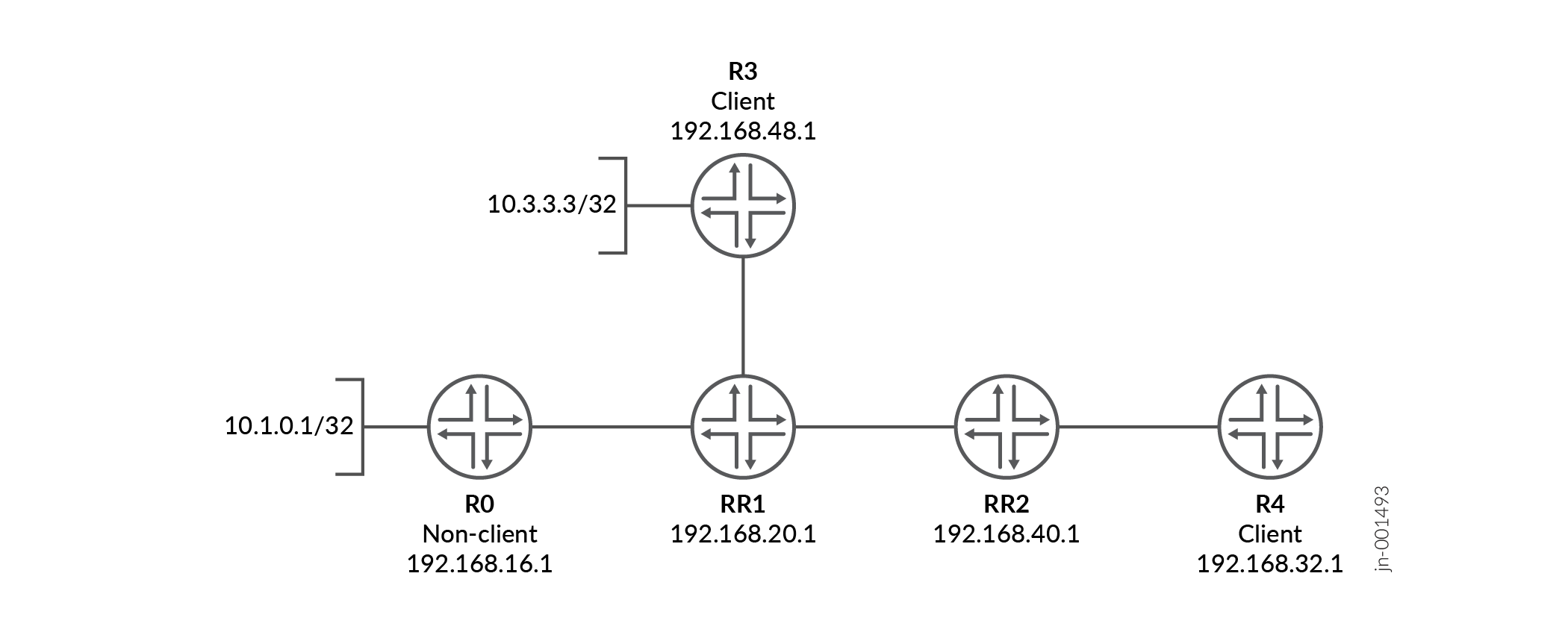 의 경로 리플렉터
이 예는 디바이스 RR1 및 디바이스 RR2의 BGP 구성을 보여줍니다.
구성
사전 요구 사항
여러 클러스터에서 BGP 경로 리플렉터를 구성하기 전에 모든 BGP 피어 사이에 IP 연결이 존재하는지 확인하십시오. 이 예에서는 최단 경로 우선(OSPF) 또는 IS-IS(같은 IGP)가 IBGP 세션에 사용되는 루프백 인터페이스 간의 도달 가능성을 제공합니다. 인터페이스 및 IGP 구성이 준비된 것으로 가정되며 여기에 표시되지 않습니다.
절차
CLI 빠른 구성
이 예를 빠르게 구성하려면, 아래 명령을 복사하여 텍스트 파일로 붙여 넣은 다음 모든 라인브레이크를 제거하고, 네트워크 구성을 일치하는 데 필요한 세부 사항을 변경한 다음, 계층 수준에서 [edit] 명령을 복사하여 CLI에 붙여 넣습니다.
디바이스 RR1
set protocols bgp group RR1_client type internal
set protocols bgp group RR1_client local-address 192.168.20.1
set protocols bgp group RR1_client cluster 10.13.1.3
set protocols bgp group RR1_client neighbor 192.168.48.1
set protocols bgp group Non_client type internal
set protocols bgp group Non_client local-address 192.168.20.1
set protocols bgp group Non_client neighbor 192.168.16.1
set protocols bgp group RR1_to_RR2 type internal
set protocols bgp group RR1_to_RR2 local-address 192.168.20.1
set protocols bgp group RR1_to_RR2 cluster 10.12.1.2
set protocols bgp group RR1_to_RR2 neighbor 192.168.40.1
디바이스 RR2
set protocols bgp group RR2_client type internal
set protocols bgp group RR2_client local-address 192.168.40.1
set protocols bgp group RR2_client cluster 10.24.2.4
set protocols bgp group RR2_client neighbor 192.168.32.1
set protocols bgp group RR2_to_RR1 type internal
set protocols bgp group RR2_to_RR1 local-address 192.168.40.1
set protocols bgp group RR2_to_RR1 neighbor 192.168.20.1
디바이스 RR1 구성
단계별 절차
다음 예에서는 구성 계층에서 다양한 수준을 탐색해야 합니다. CLI 탐색에 대한 정보는 Junos OS CLI 사용자 가이드의 구성 모드에서 CLI 편집기 사용을 참조하십시오.
디바이스 RR1 구성:
-
디바이스 R3과의 피어링 관계를 구성합니다.
[edit protocols bgp group RR1_client]
user@RR1# set type internal
user@RR1# set local-address 192.168.20.1
user@RR1# set cluster 10.13.1.3
user@RR1# set neighbor 192.168.48.1
-
디바이스 R0과의 피어링 관계를 구성합니다.
[edit protocols bgp group Non_client]
user@RR1# set type internal
user@RR1# set local-address 192.168.20.1
user@RR1# set neighbor 192.168.16.1
-
디바이스 RR2와의 피어링 관계를 구성합니다.
[edit protocols bgp group RR1_to_RR2]
user@RR1# set type internal
user@RR1# set local-address 192.168.20.1
user@RR1# set cluster 10.12.1.2
user@RR1# set neighbor 192.168.40.1
결과
구성 모드에서 명령을 입력하여 구성을 확인합니다. show protocols 출력에 의도한 구성이 표시되지 않으면 이 예의 지침을 반복하여 구성을 수정합니다.
user@RR1# show protocols
bgp {
    group RR1_client {
        type internal;
        local-address 192.168.20.1;
        cluster 10.13.1.3;
        neighbor 192.168.48.1;
    }
    group Non_client {
        type internal;
        local-address 192.168.20.1;
        neighbor 192.168.16.1;
    }
    group RR1_to_RR2 {
        type internal;
        local-address 192.168.20.1;
        cluster 10.12.1.2;
        neighbor 192.168.40.1;
    }
}
디바이스 구성이 완료되면 구성 모드에서 들어갑니다 commit .
디바이스 RR2 구성
단계별 절차
다음 예에서는 구성 계층에서 다양한 수준을 탐색해야 합니다. CLI 탐색에 대한 정보는 Junos OS CLI 사용자 가이드의 구성 모드에서 CLI 편집기 사용을 참조하십시오.
디바이스 RR2 구성:
-
디바이스 R4와의 피어링 관계를 구성합니다.
[edit protocols bgp group RR2_client]
user@RR2# set type internal
user@RR2# set local-address 192.168.40.1
user@RR2# set cluster 10.24.2.4
user@RR2# set neighbor 192.168.32.1
-
디바이스 RR1과의 피어링 관계를 구성합니다.
[edit protocols bgp group RR2_to_RR1]
user@RR2# set type internal
user@RR2# set local-address 192.168.40.1
user@RR2# set neighbor 192.168.20.1
결과
구성 모드에서 명령을 입력하여 구성을 확인합니다. show protocols 출력에 의도한 구성이 표시되지 않으면 이 예의 지침을 반복하여 구성을 수정합니다.
user@RR2# show protocols
bgp {
    group RR2_client {
        type internal;
        local-address 192.168.40.1;
        cluster 10.24.2.4;
        neighbor 192.168.32.1;
    }
    group RR2_to_RR1 {
        type internal;
        local-address 192.168.40.1;
        neighbor 192.168.20.1;
    }
}
디바이스 구성이 완료되면 구성 모드에서 들어갑니다 commit .
검증
구성이 제대로 작동하고 있는지 확인합니다.
경로 10.3.3.3에 대해 보급된 클러스터 ID 확인
목적
BGP가 구성된 인터페이스에서 실행되고 BGP 세션이 각 neighbor 주소에 대해 설정되었는지 확인합니다.
작업
운영 모드에서 명령을 입력합니다.show route advertising-protocol bgp neighbor-address
user@RR1> show route advertising-protocol bgp 192.168.40.1 active-path 10.3.3.3 extensive

inet.0: 61 destinations, 61 routes (60 active, 0 holddown, 1 hidden)
* 10.3.3.3/32 (1 entry, 1 announced)
 BGP group RR1_to_RR2 type Internal
     Nexthop: 192.168.48.1
     Localpref: 100
     AS path: [100] I
     Cluster ID: 10.13.1.3
     Originator ID: 192.168.48.1
의미
10.3.3.3/32 경로는 디바이스 RR1의 클라이언트 피어인 디바이스 R3에서 시작됩니다. 이 경로가 RR1의 클라이언트인 디바이스 RR2로 전송되면 경로에는 RR1-R3에 대한 클러스터 ID인 10.13.1.3 클러스터 ID가 첨부됩니다.
경로 10.1.0.1에 대해 보급된 클러스터 ID 확인
목적
디바이스 RR1에서 디바이스 RR2로의 경로 보급을 확인합니다.
작업
운영 모드에서 명령을 입력합니다.show route advertising-protocol bgp neighbor-address
user@RR1> show route advertising-protocol bgp 192.168.40.1 active-path 10.1.0.1/32 extensive
inet.0: 61 destinations, 61 routes (60 active, 0 holddown, 1 hidden)
* 10.1.0.1/32 (1 entry, 1 announced)
 BGP group RR1_to_RR2 type Internal
     Nexthop: 192.168.16.1
     Localpref: 100
     AS path: [100] I
     Cluster ID: 10.12.1.2
     Originator ID: 192.168.16.1
의미
10.1.0.1/32 경로는 디바이스 RR1의 비클라이언트 피어인 디바이스 R0에서 시작됩니다. 이 경로가 RR1의 클라이언트인 디바이스 RR2로 전송되면 경로에는 RR1-RR2에 대한 클러스터 ID인 10.12.1.2 클러스터 ID가 첨부됩니다.
디바이스 RR1은 다른 클러스터(디바이스 R4)의 다른 클라이언트에 보급할 때 디바이스 RR2의 인바운드 클러스터 ID를 보존합니다.
AS 경계 라우터에서의 경로 리플렉션
대부분의 구축에서 BGP 경로 리플렉터는 내부 BGP(IBGP) 라우터로만 작동합니다. 그러나 일부 네트워크 설계에서 경로 리플렉터는 ASBR(Autonomous System Border 라우터) 역할을 하고 외부 BGP(EBGP) 피어링 세션을 유지할 수도 있습니다.
Junos OS 라우터가 두 가지 역할을 모두 수행하고 EBGP 피어로부터 경로를 수신할 때, 라우터가 옵션을 cluster 사용하여 경로 리플렉터 클라이언트로 구성된 IBGP 피어에 해당 경로를 보급하는 경우 특별한 고려 사항이 적용됩니다. 이 경우 Junos OS는 IBGP 클라이언트에 경로를 반영할 때 ORIGINATOR_ID 및 CLUSTER_LIST 경로 속성을 연결합니다.
BGP 경로 리플렉션을 정의하는 RFC 4456은 EBGP를 통해 학습된 후 이중 역할 ASBR 및 경로 리플렉터에 의해 IBGP 클라이언트에 리플렉션되는 경로에 대한 예상 동작을 명시적으로 지정하지 않습니다. Junos OS는 라우팅 루프를 방지하고 자율 시스템 내에서 확정적 경로 선택을 유지하기 위해 이 시나리오에서 경로 리플렉션 속성을 일관되게 적용합니다.
AS 경계 라우터에 경로 리플렉션을 구축할 때는 라우팅 정책, 경로 선택 및 실패 시나리오를 신중하게 고려하여 반사된 경로가 의도하지 않은 라우팅 동작을 도입하지 않도록 해야 합니다.
변경 내역 표
기능 지원은 사용 중인 플랫폼과 릴리스에 따라 결정됩니다. 기능 탐색기를 사용하여 플랫폼에서 기능이 지원되는지 확인합니다.
no-install 부터 이 문은 라우팅 프로토콜 데몬(rpd)과 커널 또는 분산 방화벽 데몬(dfwd)과 같은 Junos 시스템의 기타 구성 요소 간의 상호 작용을 제거합니다.