
Webhook Message Flow
Learn how Juniper Mist sends event information with webhooks.
As opposed to clients polling and pulling information from the API, Juniper Mist pushes webhooks to a target webhook URL. There, underlying services can collect, store, or parse the message for specific data and then perform actions on the infrastructure automatically.
Not all events are aggregated. Some messages are directly sent. For the aggregated webhooks, it takes less than five seconds between when the event occurs on the network device and when the event is aggregated and sent to the destination URL.
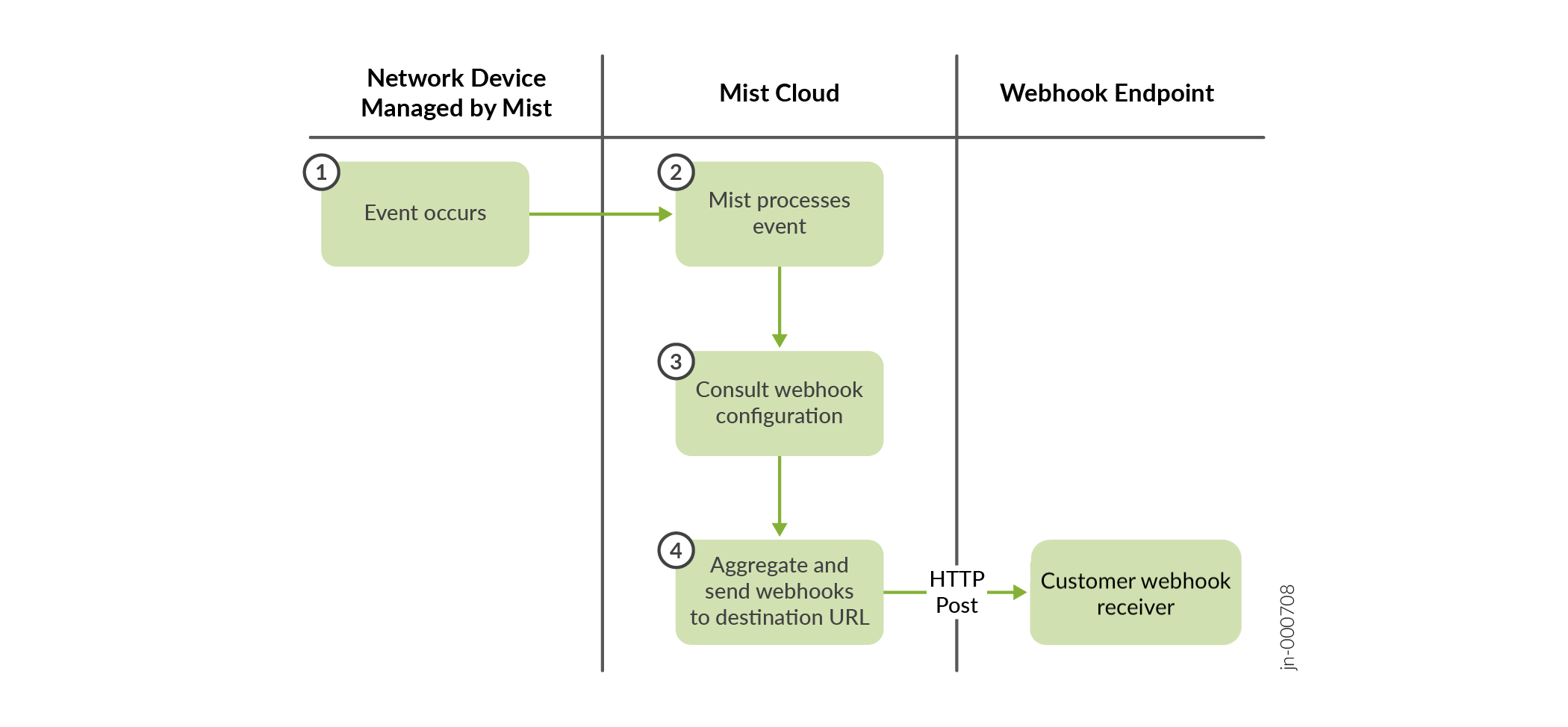
This image shows the stages of data flow for webhooks.
-
An event occurs on a network device that Juniper Mist manages.
-
Juniper Mist processes the event and checks the current webhook configuration for a match.
-
If Juniper Mist finds a match, it sends the webhook to the endpoint URL as configured.
-
If multiple events for a specific topic occur within a certain timeframe, Juniper Mist aggregates the events and sends them in a single message.