
Broadband Subscriber Management DHCPv4 Layer 3 Wholesale Topology and Configuration Elements
The network topology for the subscriber management DHCPv4 Layer 3 wholesale solution includes configuring separate routing instances for individual retailers that use a portion of the router. This solution uses a DHCPv4 relay configuration. However, you can also implement DHCPv4 Relay Proxy or DHCPv4 Local Server configuration.
To explain the concept, but to limit complexity, this solution provides a configuration with one wholesaler and only two retailers. Figure 1 illustrates a basic Layer 3 wholesale topology model from which you can expand.
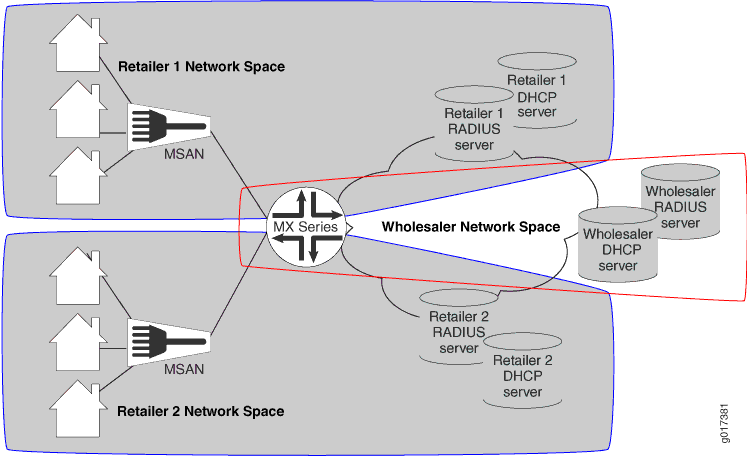
A DHCP Layer 3 wholesale network solution can use various combinations of the following configuration elements:
-
Subscriber network VLAN configuration
-
DHCPv4 configuration (DHCPv4 Relay, DHCPv4 Relay Proxy, or DHCPv4 Local Server)
-
Addressing server or addressing server access configuration (if not using DHCPv4 Local Server)
-
RADIUS server access configuration
-
Dynamic profile configuration for default (wholesaler) access
-
Dynamic profile configuration for retailer access (following subscriber redirection, if applicable)
-
Routing instance configuration for individual retailers
-
Group configuration and forwarding options for the network
-
Core network configuration