
TDM/TDC Encoding Overview
The time domain correlation (TDC) feature uses time division multiplexing (TDM) to interleave multiple data types on serial ports so that the CTP device can bond two circuits into a single data stream. Doing so allows the CTP device to carry two independent data streams on the same path through the IP network . Out of each set of 32 bits in the IP data stream, you can designate a certain number of bits for TDM functions.
The TDM/TDC feature is commonly used for telemetry applications, and is supported on CTP2000 serial interfaces.
How TDM Interleaving Works
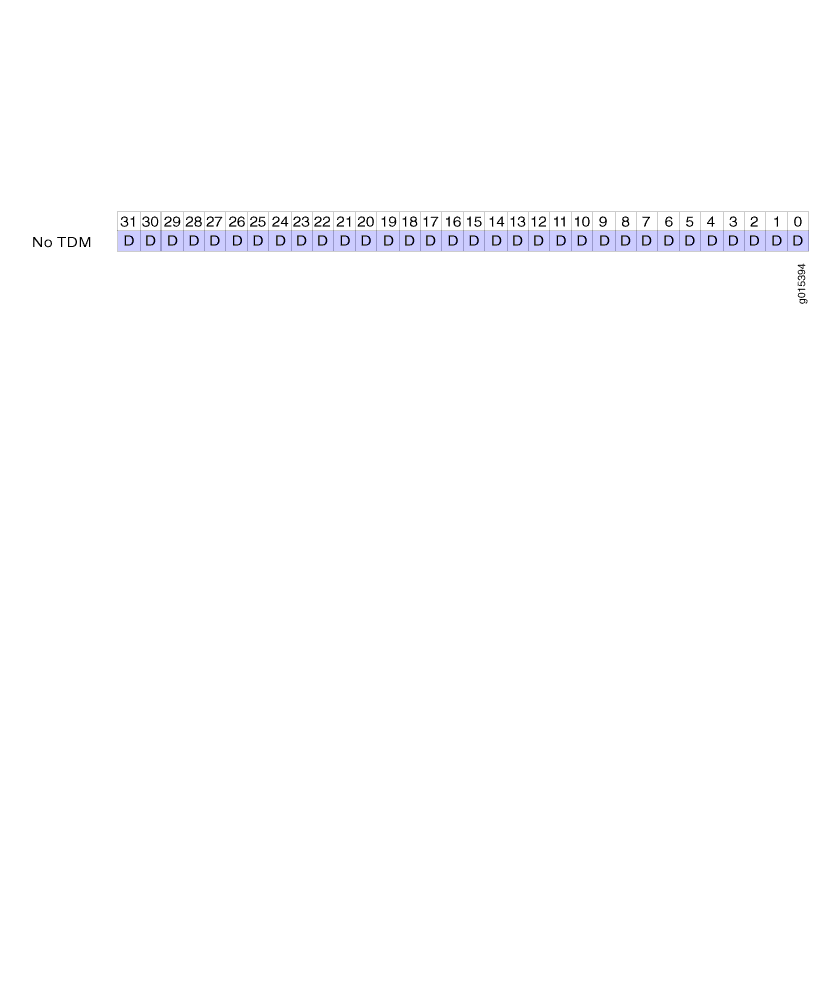
When TDM is not being used, all 32 bits in the IP data stream transport serial data on a port. For example, Figure 1 shows all 32 bits being allocated to local serial port data as indicated with the D.
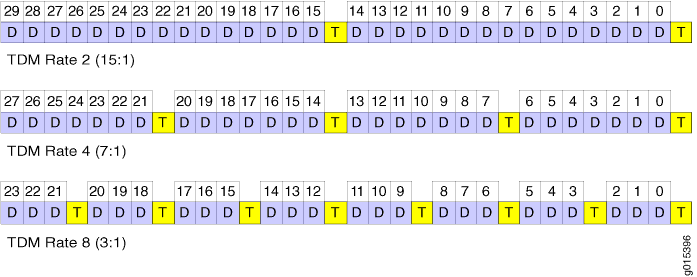
When you enable TDM, a specific number of the 32 data bits are allocated for another function. That is, another function is interleaved with the serial data. For example, in Figure 2 half of the bits (16 bits in 32) are allocated to serial port data (as indicated by D), and half of the bits are allocated to TDM (as indicated by T).

The number of bits out of 32 that are allocated to TDM is called the TDM rate. Figure 2 showed a TDM rate of 16. Figure 3 shows the bit allocation for TDM rates of 2, 4, and 8.
How the CTP Implementation of TDM/TDC Works
To use this feature, you configure two bundles on each CTP device:
A high-speed bundle that carries all traffic by interleaving multiple data sources into a single stream.
A low-speed bundle that routes clock and data signals.
The high-speed bundle oversamples the incoming clock (TT) and data (SD) from the low-speed bundle. At the remote end of the network, the embedded circuit data is recovered and exits the node on the low-speed bundle as RT and RD outputs. The direct interleaving of two bundles’ data allows TDC to be maintained between the two bundles with an accuracy of one bit time at the bundle’s data rate.
The low-speed bundle receives network-bound clock and data signals from the user equipment and inserts it into the bundle. It also transmits interface-bound clock and data from the bundle to the user equipment.

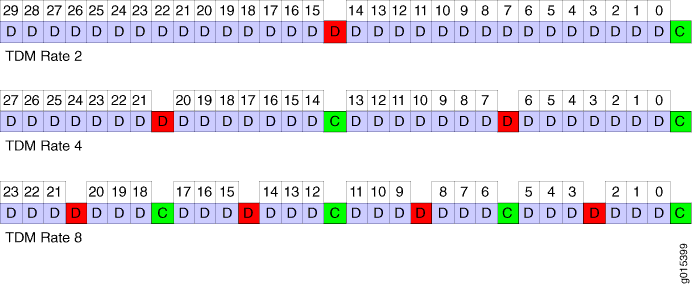
In Figure 4:
The blue D bits synchronously carry the higher-speed circuit.
The red D bits asynchronously oversample and transport the lower-speed circuit data.
The green C bits asynchronously oversample and transport the lower-speed circuit clock.
TDM Rates
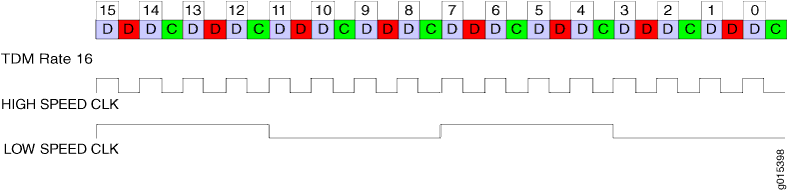
At the maximum TDM rate of 16, the CTP device can transport four low-speed bits for every eight high-speed bits as shown in Figure 5.
If the ratio of circuit speeds is higher than 8:1, then you can use lower TDM rates, which allocates fewer bits for the TDM function and therefore uses less network bandwidth. Figure 6 shows other supported TDM rates as applied to TDC.
TDM High-Speed and Low-Speed Ports
To use the TDM/TDC feature, you configure a high-speed bundle and a low-speed bundle as follows:
The high-speed bundle is configured on an even-numbered port, and it is configured for TDM encoding because it interleaves multiple data sources into a single stream.
The low-speed bundle is configured on an odd-numbered port that is one port number higher (N+1) than the high-speed port. It is configured for TDM/TDC clocking because it routes clock and data signals.
Figure 7 shows a high-speed port and low-speed port.
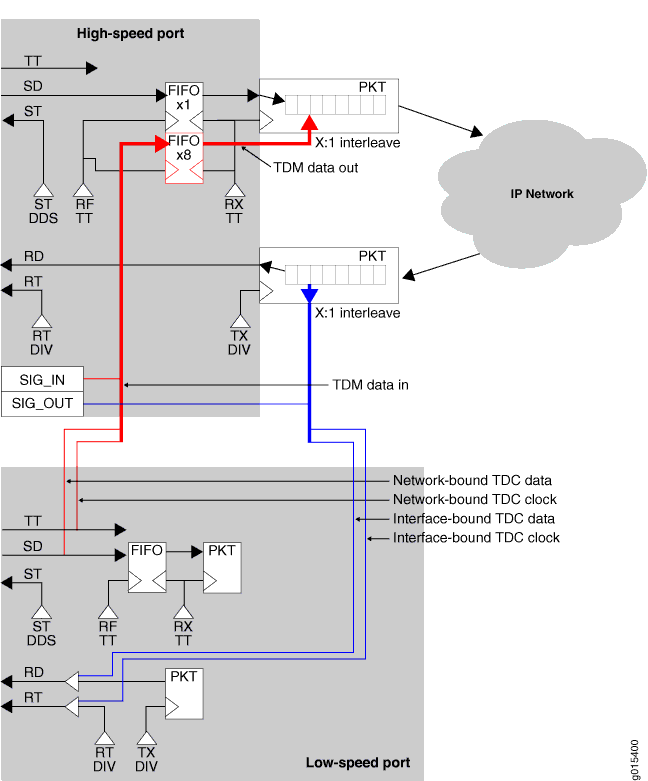
As shown in the figure:
The red path shows the network-bound path for the low-speed TDC data and clock. The low-speed port receives the clock and data signals from the user equipment, and transmits it to the transmit data jitter FIFO on the high-speed port. Once out of the FIFO, the CTP device interleaves the TDC data streams into a single packet flow for the TDM/TDC bundle.
The blue path shows the interface-bound path for the TDC data and clock. The low-speed port transmits the interface-bound clock and data from the TDM/TDC bundle to the user equipment.