Use Custom Telemetry Data in an IBA Probe
This topic describes how to configure and use custom telemetry data in an IBA probe.
We've created a custom telemetry collector service to specify data from your devices. Next, we'll ingest this data into IBA probes in your blueprint as described in Create a Probe. This process allows Apstra to visualize and analyze the data.
Types of Processors
An IBA probe, functioning as an analytics pipeline, begins with a source processor. This processor creates data and several outputs without requiring any input. The different types of source processors are described in Table 1.
You can add analytical processors to the probe for extra data analytics. These processors enhance your network's health insights as described in Table 2.
Analytical processors compile and process data to identify anomalies. The processors
calculate averages, min/max, and standard deviations. The aggregated data is
compared with expected results to check if it falls within a preset range. Anomalies
are flagged only when thresholds are exceeded for a set duration, avoiding transient
flags. A Time_In_State processor configuration supports this.
| Built-in |
Built-in processors categorize the various processors used to enable services like power monitoring. These processors determine the scope of service activation using a graph query. |
| Extensible |
Data from IBA probes is ingested by extensible collectors. This data is then collected by processors using a graph query provided by a custom service. Service keys are mapped using graph elements, depending on whether the data type is static or dynamic. This process decides the scope of telemetry collection.
|
| Graph |
Graph processors ingest data from the IBA probes source in the graph database. The processors do not consume device telemetry data.
|
|
Types of Analytical Processors |
|
|---|---|
|
Analytical Processors |
|
For detailed descriptions of all types of processors, see Probe Processor (Analytics) in the Juniper Apstra User Guide.
Create a Probe
An IBA probe, acting as an analytics pipeline, starts with a source processor. It operates in Static and Dynamic series modes with the telemetry service. Static series mode sources all keys from the graph. Dynamic series mode skips key mapping. If data like power supply isn't in the graph, a probe is created without mapping. Data ingestion into the IBA pipeline is collector-driven, not graph-driven. Subsequently, the data ingestion into the IBA pipeline is collector-driven rather than graph-driven.
Data Center and Freeform blueprints support IBA probes with the Custom Telemetry Collection.
To create a probe:
-
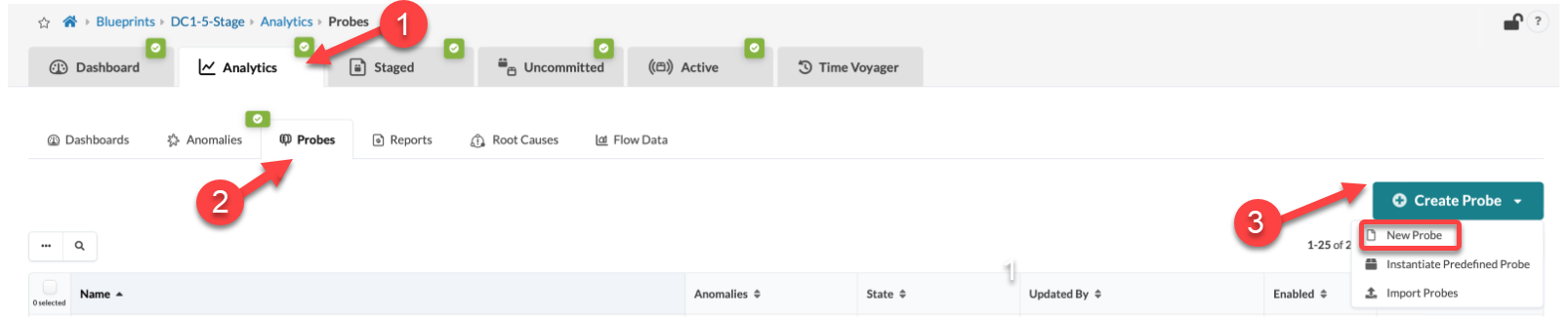
From your blueprint, navigate to Analytics >
Probes, then click Create Probe > New
Probe.
-
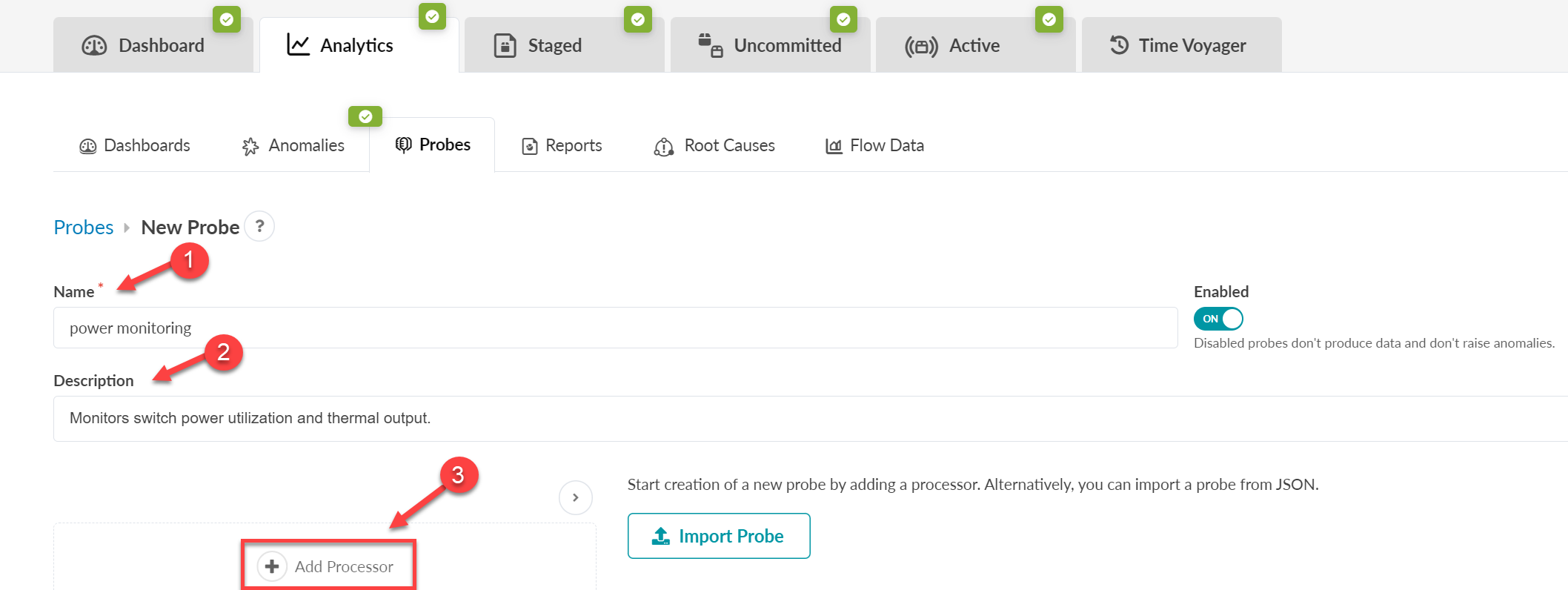
Enter a Name and Description
(in this example, power monitoring), then click
Add Processor.
-
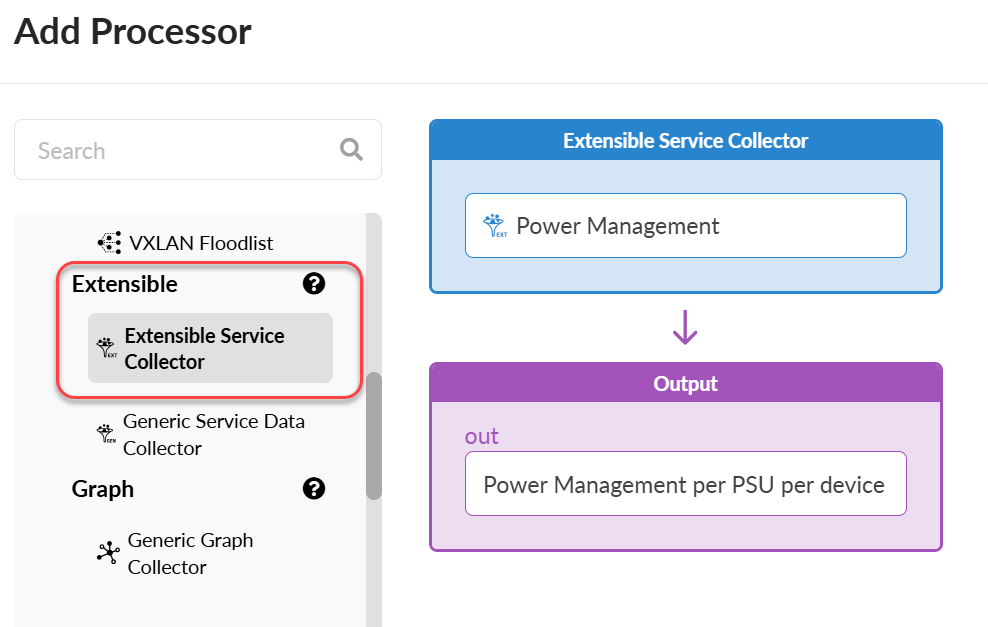
Select a processor from the Source Processors list,
then enter the collector's name and output information. In this example, we
selected the Extensible Service Collector processor
to consume the service you just created.
-
To the right of the Graph Query field click the
Select a predefined graph query button.
The Graph Query sets the blueprint's scope for the telemetry collection. If a device in the blueprint doesn't match the graph query, the telemetry collection for it won't start.
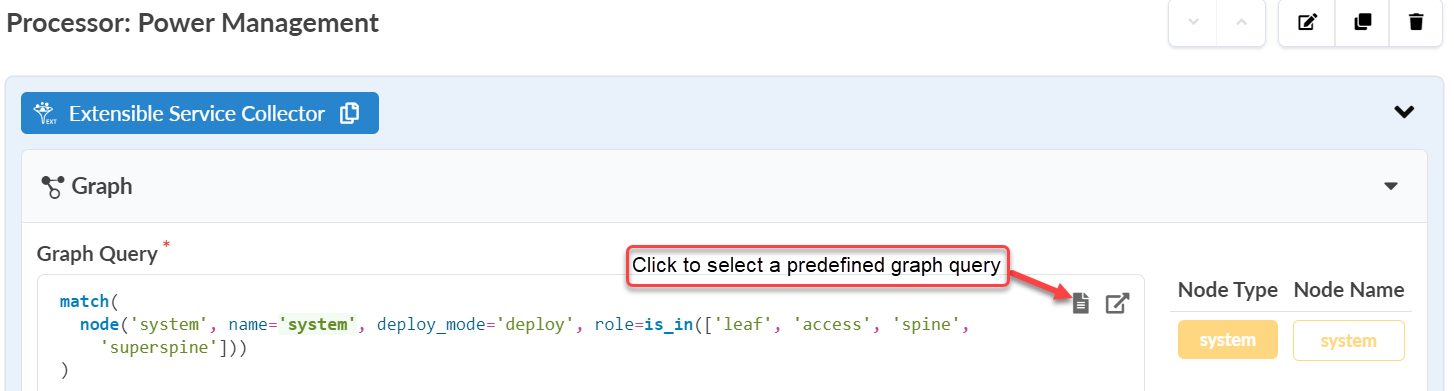
The graph query matches all system nodes in your blueprint graph database. Each managed device, whether a leaf switch or spine switch, is represented as a
systemnode in the graph.For example, in the Graph Query, the query matches all
system, type nodes. In deploy mode, these nodes have roles such asleaf,access,spine, orsuperspine. -
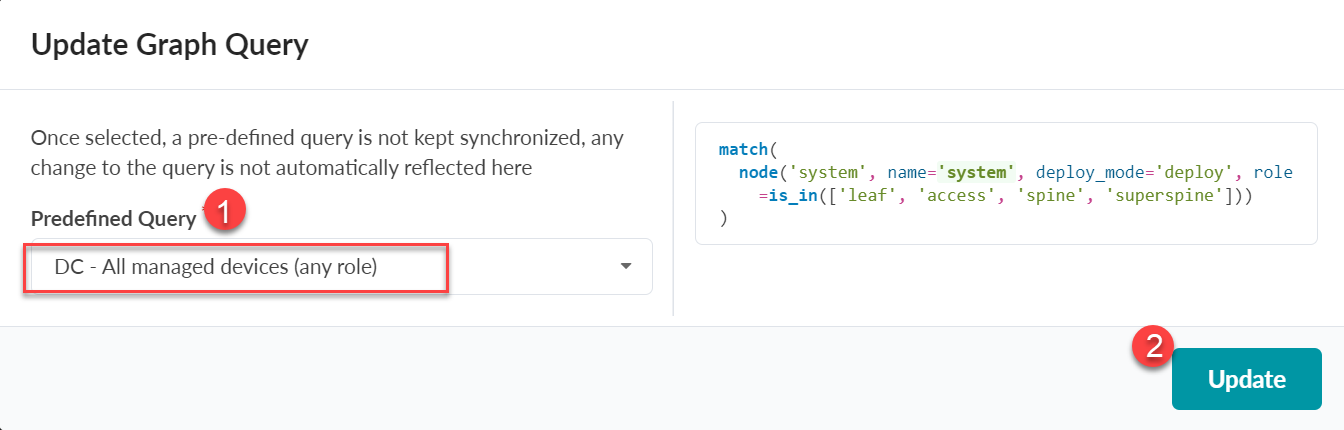
Select DC – All managed devices (any role) from the
Predefined Query drop-down, then click
Update.
-
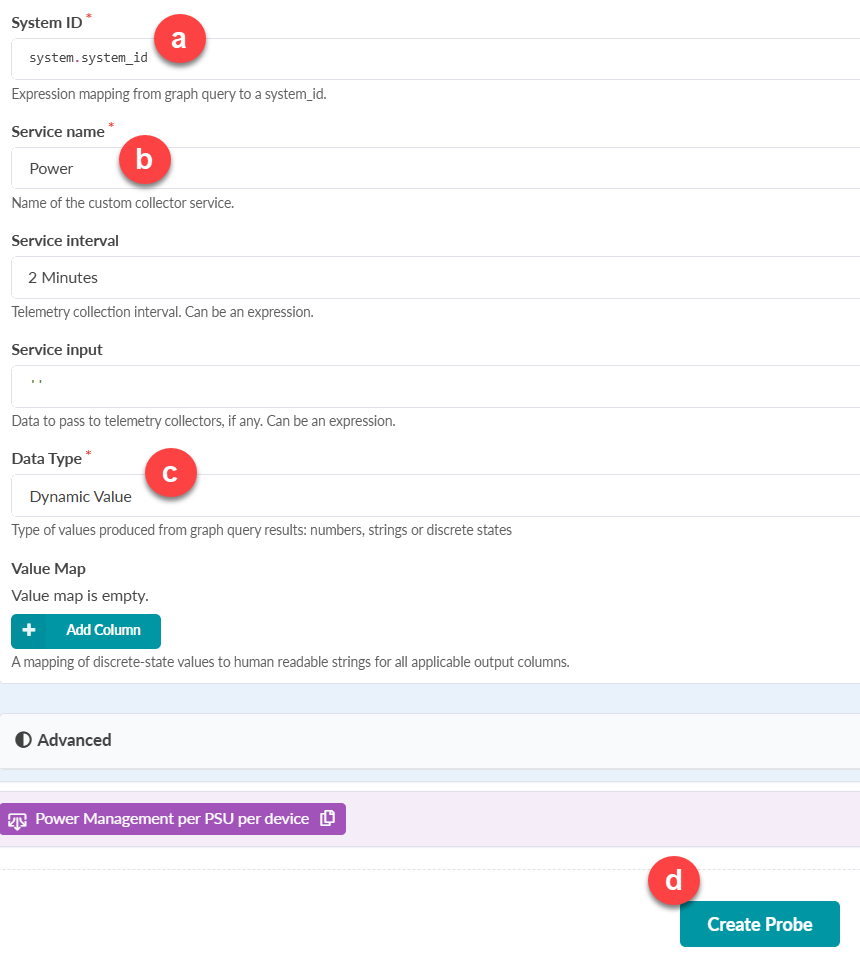
From the Processor page, specify the following:
 Well done! You successfully create a probe!
We created a working probe that collects the power consumption for every device in your network. Now let’s explore a few valuable customization options to refine your probe.
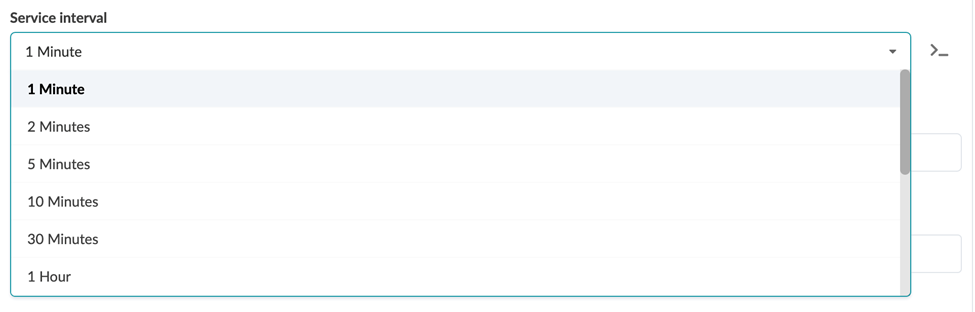
Service Interval
The telemetry collection service uses a service interval to fetch and ingest data from devices. This interval is crucial as a too aggressive one can overload your devices. The data type you collect determines the optimal interval.
Query Tag Filter
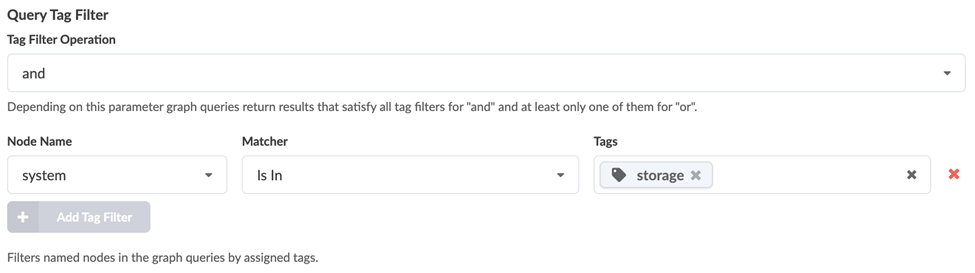
Another useful customization option is the Query Tag Filter. Let’s say you tagged some switches in your blueprint as storage for a specific monitoring use case. You can configure this filter to perform telemetry on devices with the matching tag, as shown in the following example:
Raw data from your custom telemetry collector might be difficult to interpret. Asptra, however, notifies you proactively if any anomaly is detected in your network.
In the next section, we'll enrich the power probe we created with additional processors to detect and raise anomalies.
Configure Additional Processors for Anomaly Generation
We'll set up the power probe to identify power anomalies. You can set this up individually or by adding extra processors. The probe stores anomalies in a historical database for reference. We'll further augment the probe by aggregating power readings from all of the system power supplies.
To get started:
Click the Edit button next to the power monitoring probe you created in Create a Probe.
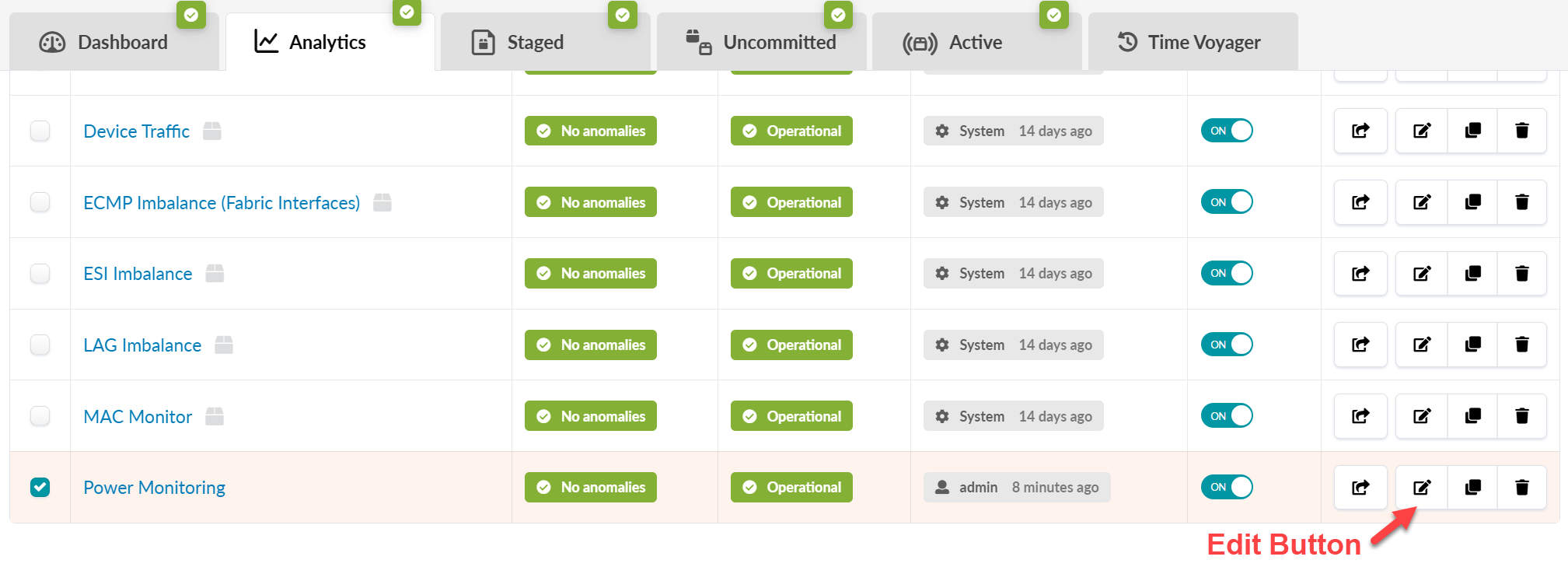
Click the Add Processor button to start adding processors.

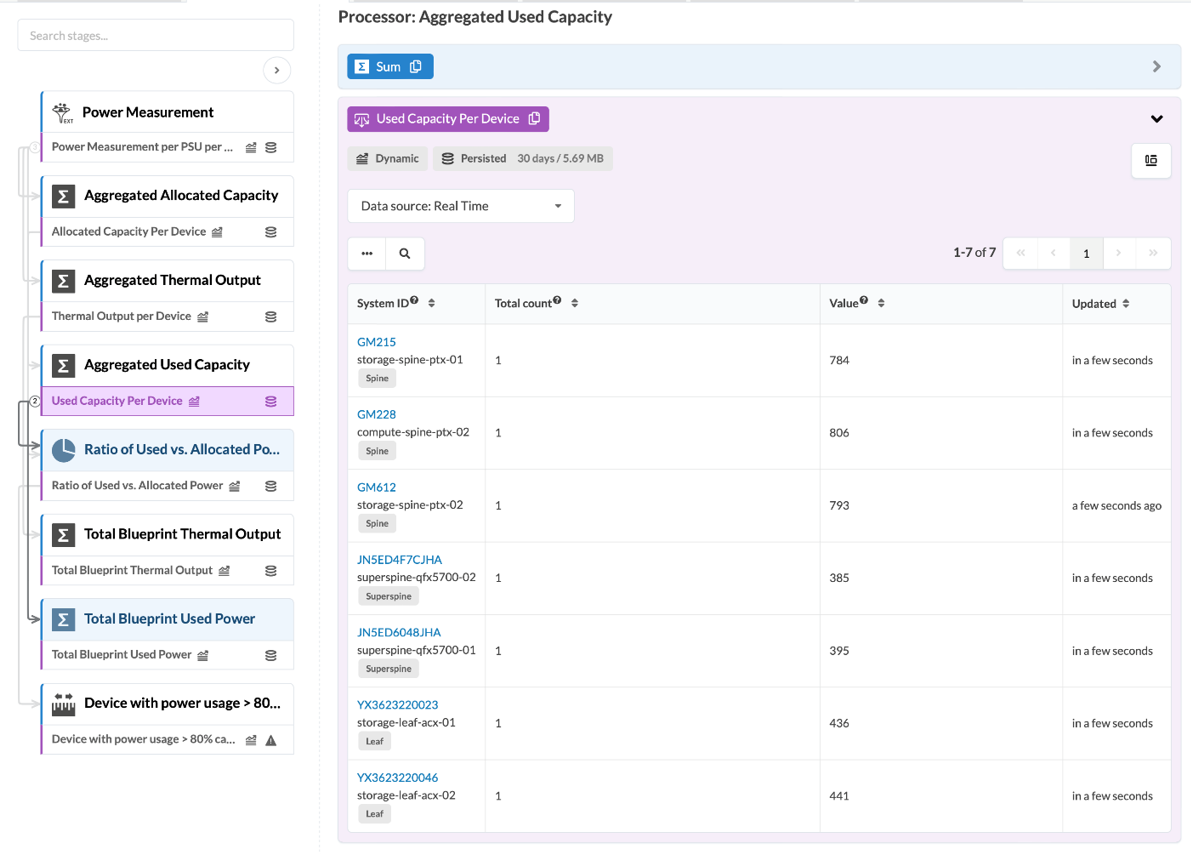
We'll now show you some examples of some different types of processors you can add to your probe. See Figure 1.
Note: Processors fall into two categories: source and analytical. Each category hold various sub-categories. Every probe requires at least one source processor. Although you can use any type of processors, most probes use analytical processors, as shown in the following examples.Figure 1: Example of Power Processors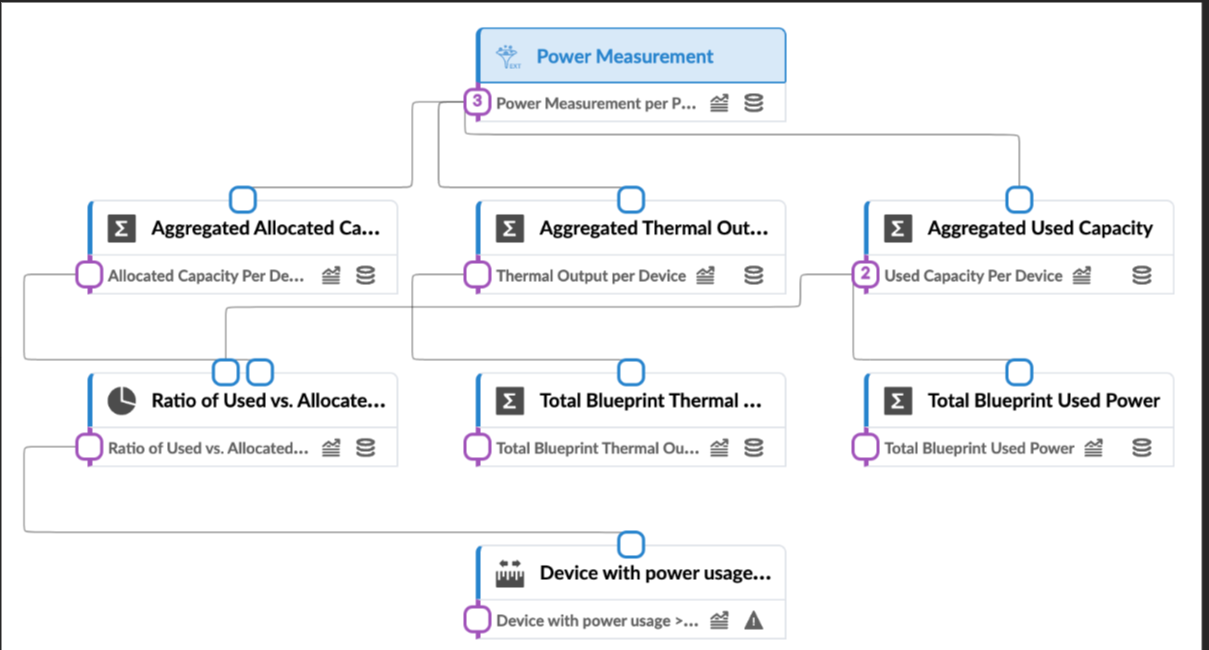
- Sum Processor to Aggregate Allocated Capacity
- Sum Processor to Aggregate Thermal Output
- Sum Processor to Aggregate Used Capacity
- Ratio Processor to Calculate the Proportion of Used Capacity to Allocated Capacity
- Sum Processor to Calculate Total Thermal Output and User Power
- Range Processor to Set Threshold Based Anomaly
Sum Processor to Aggregate Allocated Capacity
From the Analytical Processors list, under the Grouping category, select Sum. In the Sum and Output fields, enter Aggregated Allocated Capacity and Allocated Capacity Per Device.
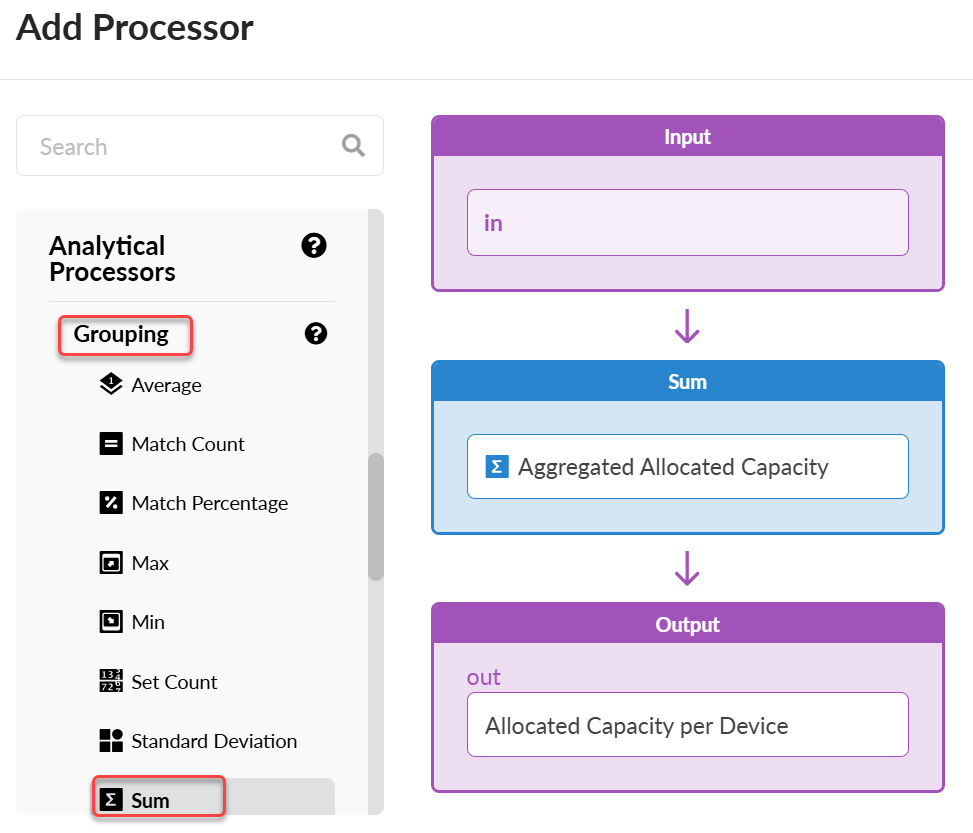
Edit the processor.
Enter Power Measurement per PSU per Device for the Stage Name and Allocated_Capacity for the Column Name. We'll then group this data by
system idto provide a consolidated view of the allocated capacity for each device's power supplies.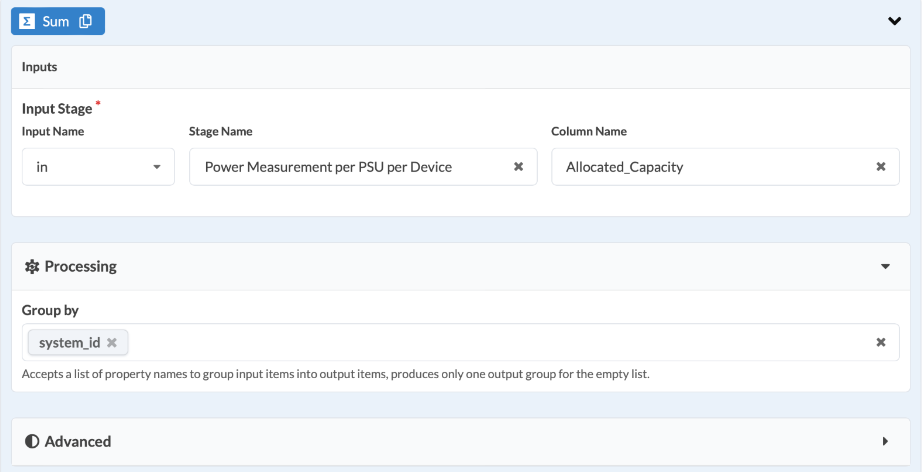
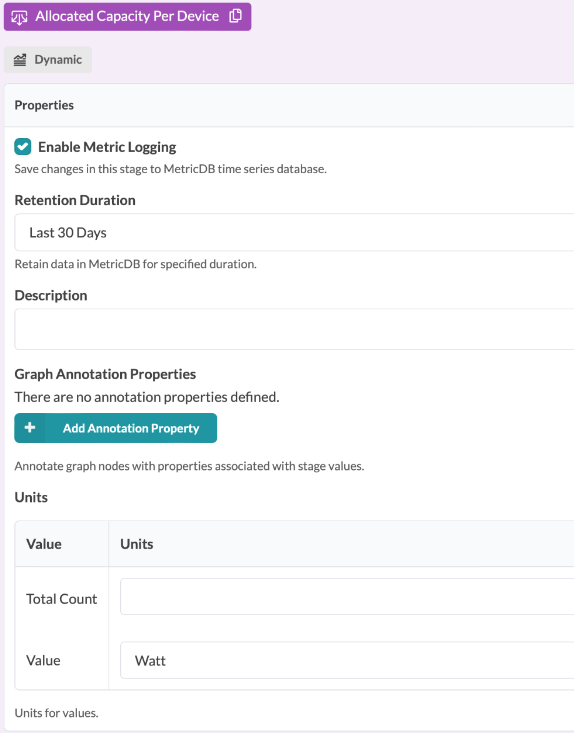
Check Enable Metric Logging to enable logging, then enter the value such as Watt, to measure the Allocated Capacity Per Device. This action allows tracking of aggregate usage history for the past 30 days.
Sum Processor to Aggregate Thermal Output
Monitoring the thermal output of devices is crucial for data center capacity planning and power usage. Knowing actual power utilization and thermal output for devices and the EVPN fabric helps the DC Manager plan capacity expansion. Thermal output data from the custom telemetry collector offers a comprehensive fabric total.
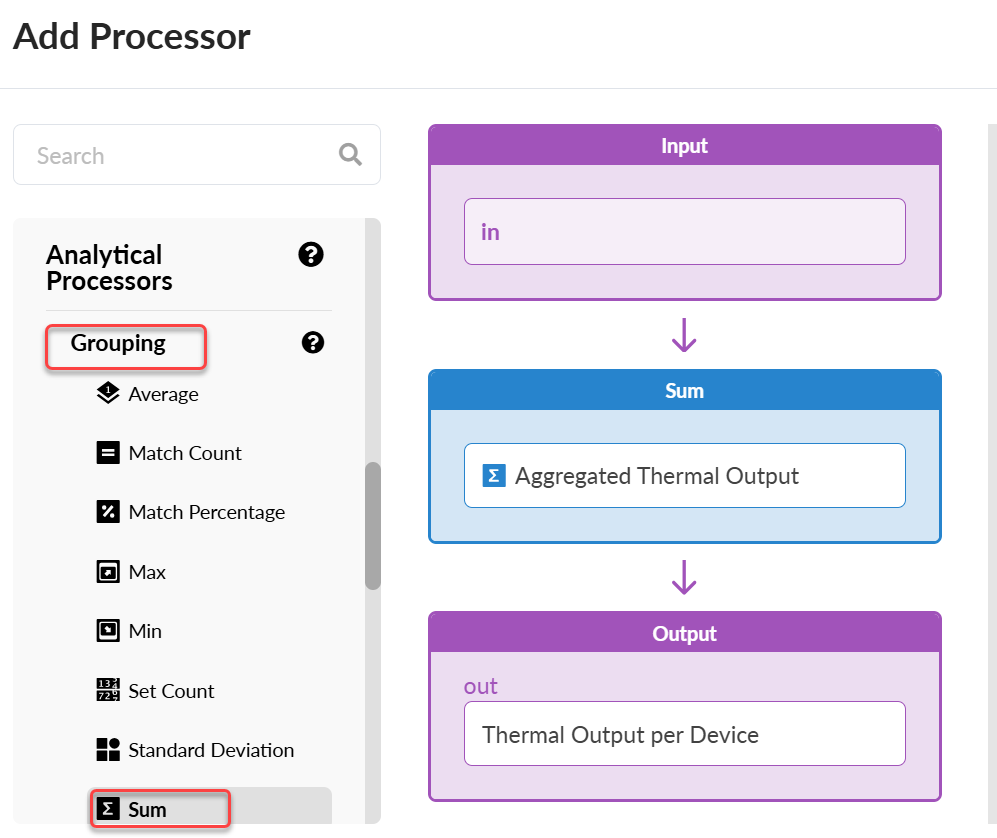
From the Analytical Processors list, under the Grouping category, select Sum. In the Sum and Output fields, enter Aggregated Thermal Output and Thermal Output Per Device.
Edit the processor.
Enter Power Measurement per PSU per Device for the Stage Name and Thermal_Output for the Column Name. We'll then group this data by
system idto provide a consolidated view of the thermal output for each device.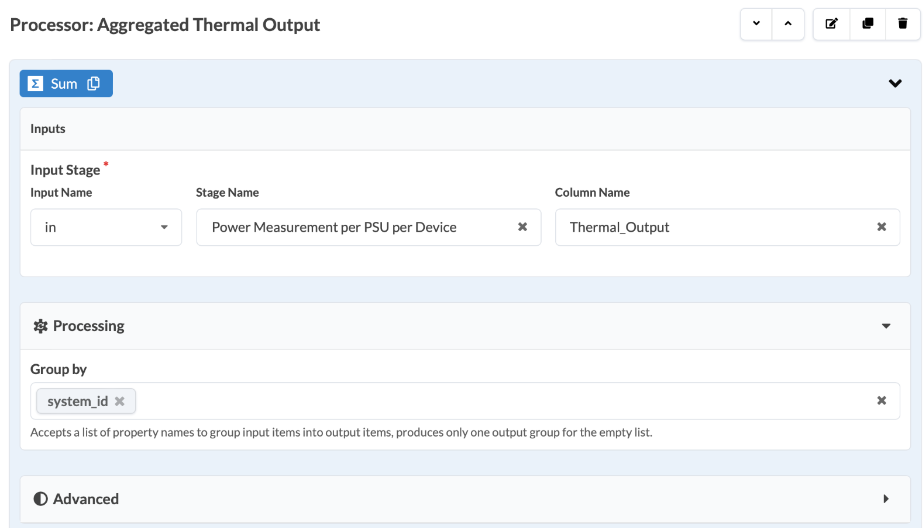
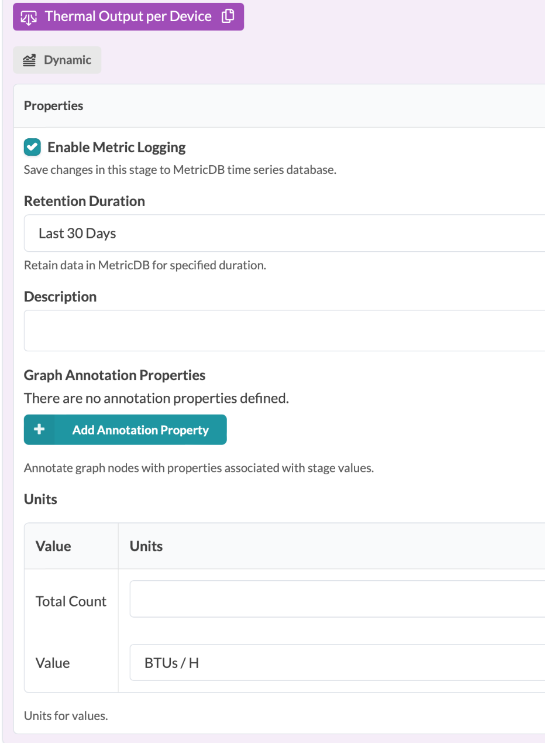
Check Enable Metric Logging to enable logging Then specify the power consumption value, such as BTUs, to measure the thermal output.
Sum Processor to Aggregate Used Capacity
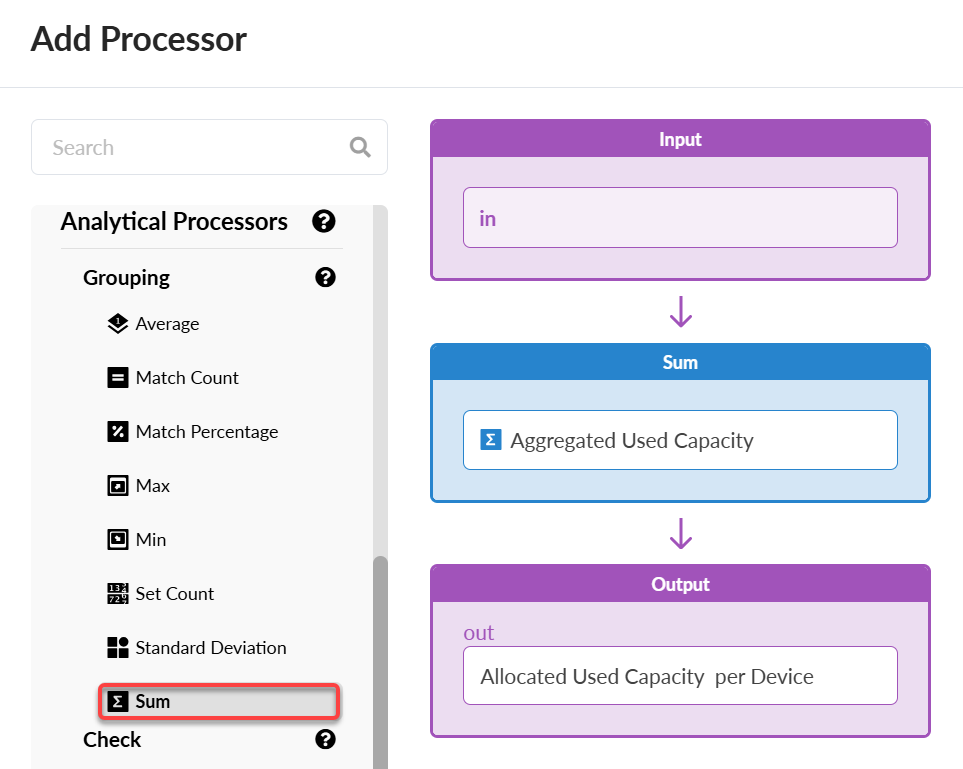
From the Analytical Processors list, under the Grouping category, select Sum. In the Sum and Output fields, enter Aggregated Used Capacity and Allocated Used Capacity per Device.
Edit the processor.
Enter Power Measurement per PSU per Device for the Stage Name and Used_Capacity for the Column Name. We'll then group this data by
system idto provide a consolidated view of the actual power usage for each device.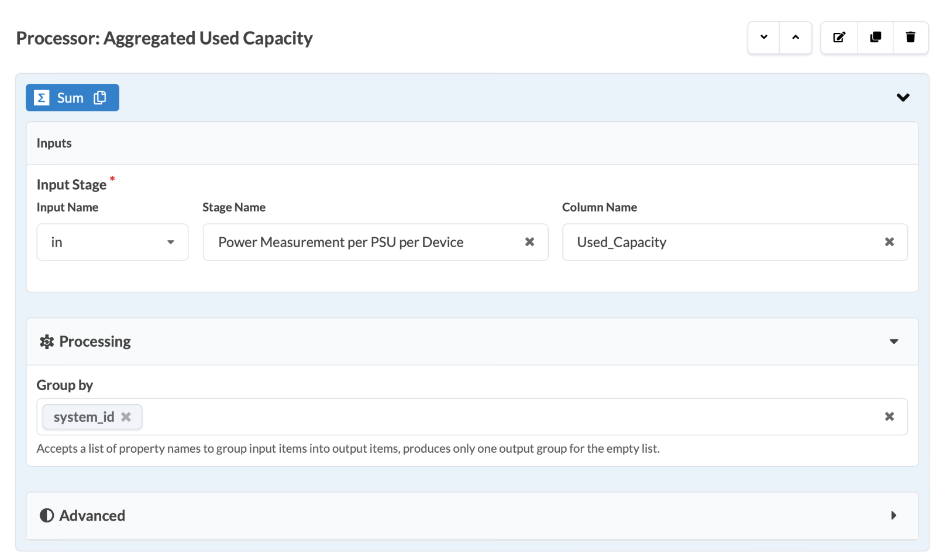
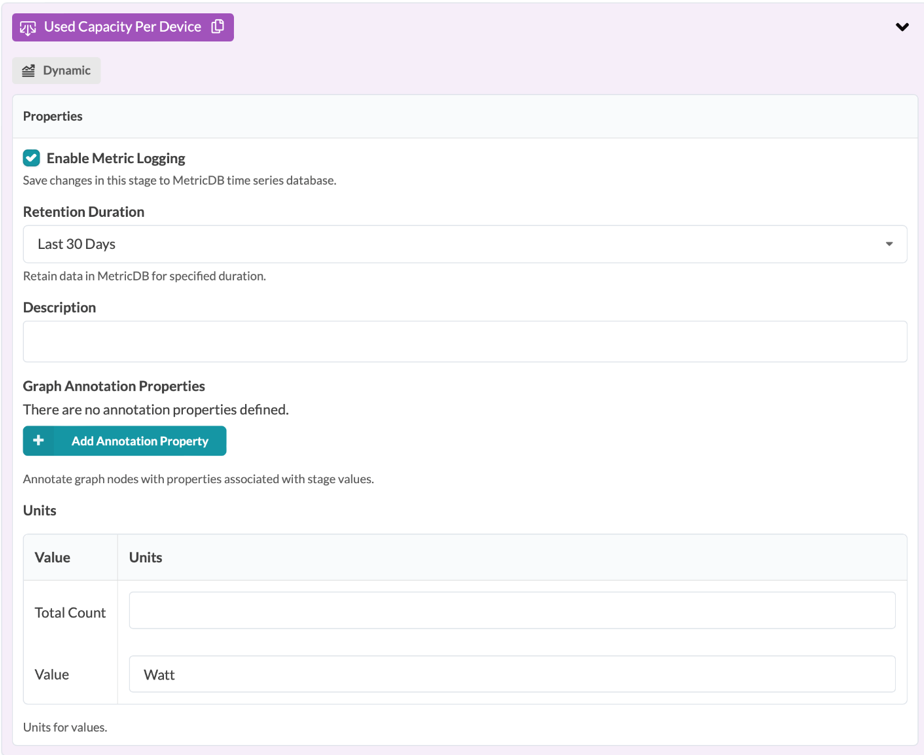
Check Enable Metric Logging to enable logging. Then specify the power consumption value, such as Watt, to measure the used capacity.
Ratio Processor to Calculate the Proportion of Used Capacity to Allocated Capacity
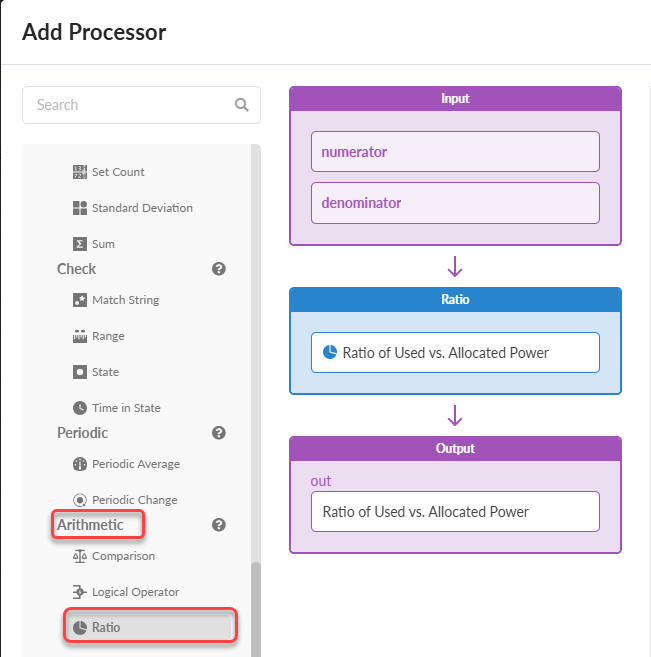
The Arithmetic processor, an Analytical processor type, calculates power usage ratios for each device. This offers a clear view of power distribution.
From the Analytical Processor list, under the Arithmetic category, select Ratio. In the Sum and Output fields, enter Ratio of Used vs. Allocated Power.
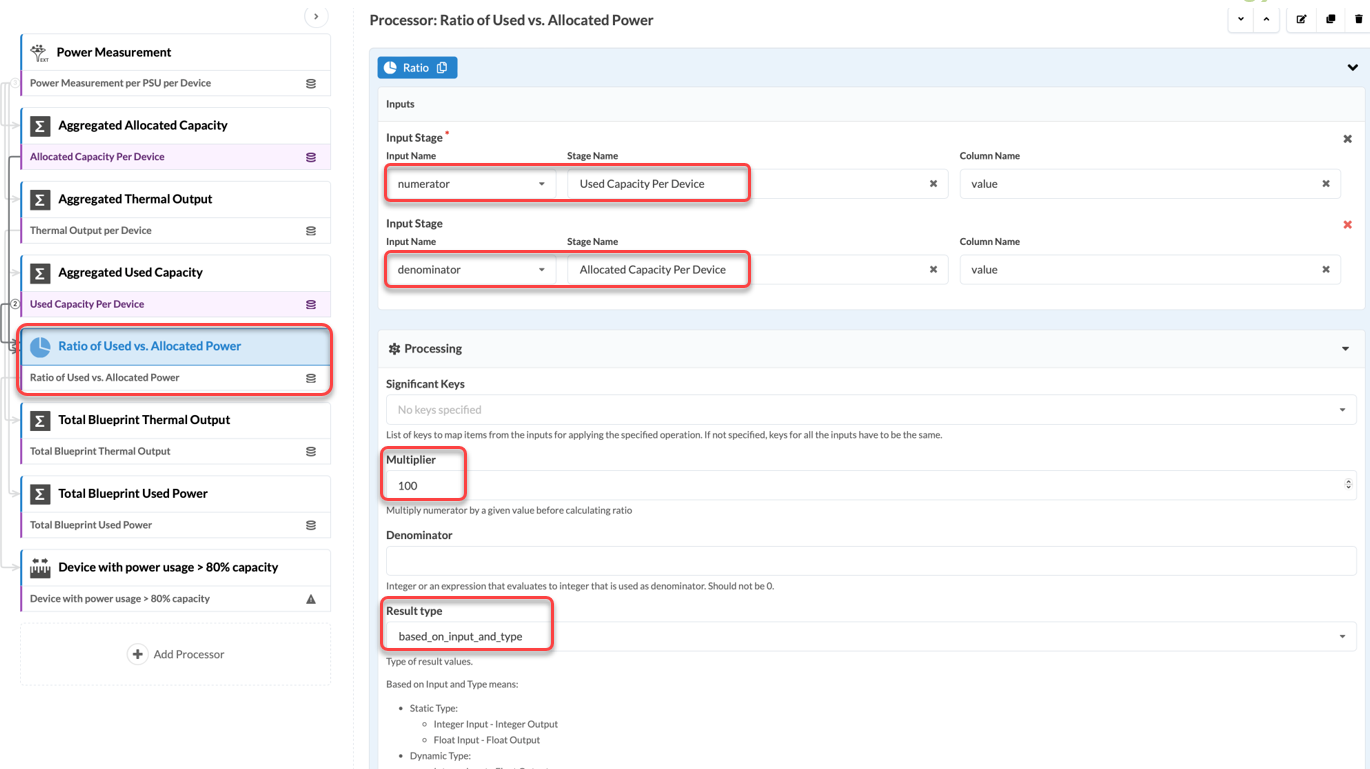
Enter Used Capacity Per Device as the numerator and Allocated Capacity Per Device as the denominator. Use 100 as the Multiplier value so that the result shows as a percentage.
Set the Result type based on input and type.
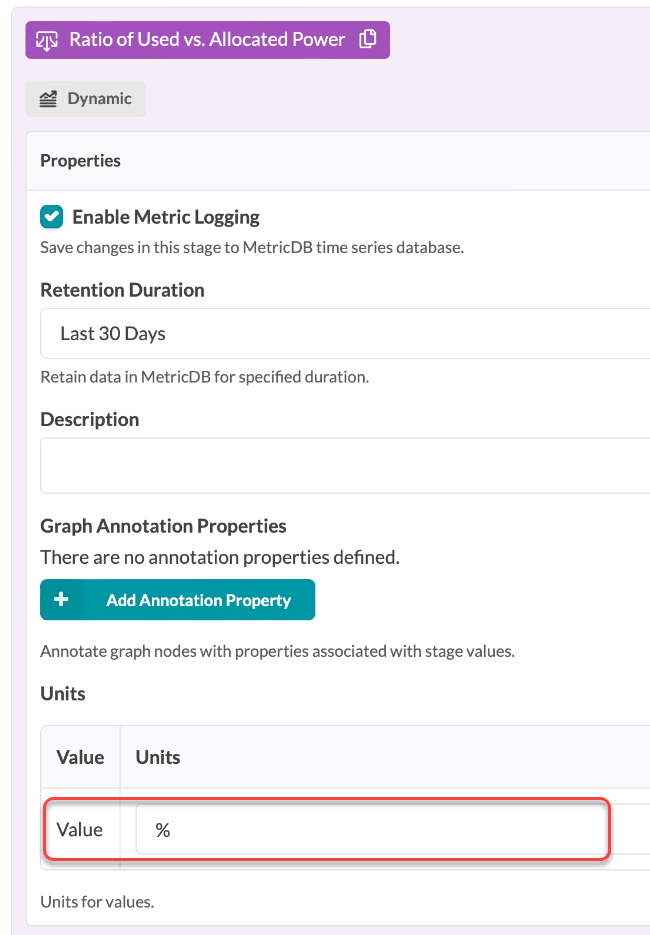
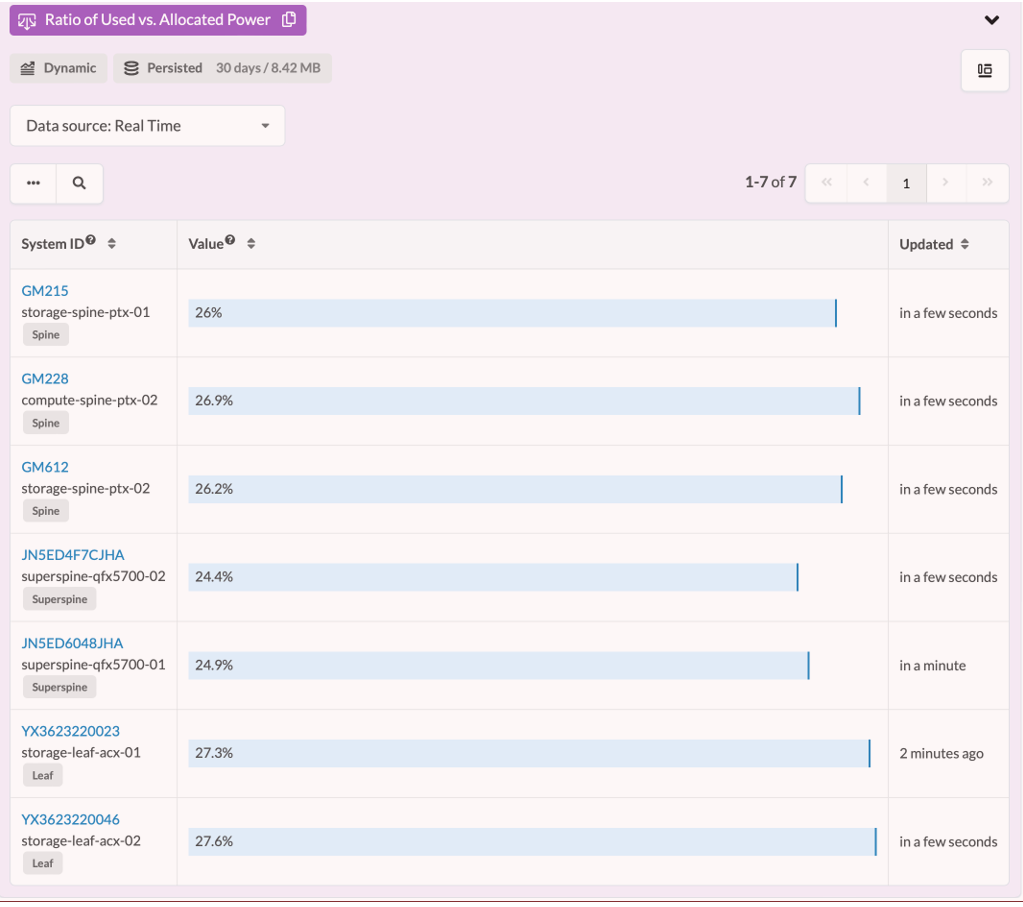
Check Enable Metric Logging to enable logging. Then specify the power consumption value in percentages (%) to measure the Ratio of Used vs. Allocated Power for each device.
Sum Processor to Calculate Total Thermal Output and User Power
For capacity planning purposes, it is useful to know the total power usage and thermal output for your entire fabric. For this information, we'll create two more Sum processors for Total Blueprint Thermal Output and Total Blueprint Used Power.
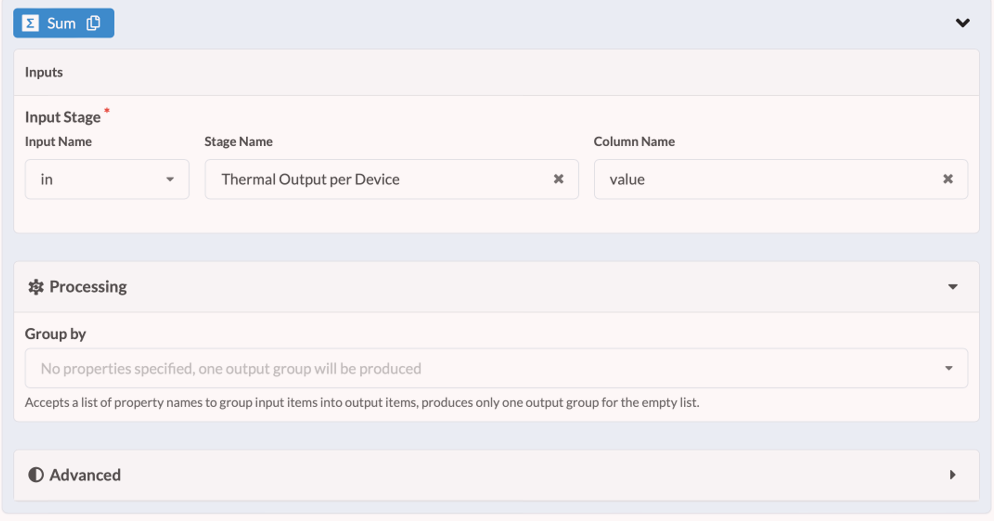
In both processors, the Group by field remains empty. This approach allows for an aggregate across the blueprint.
To add a processor for total thermal output:
From the Analytical Processor list, under the Grouping category, select Sum. In the Sum and Output fields, enter Total Blueprint Thermal Output.
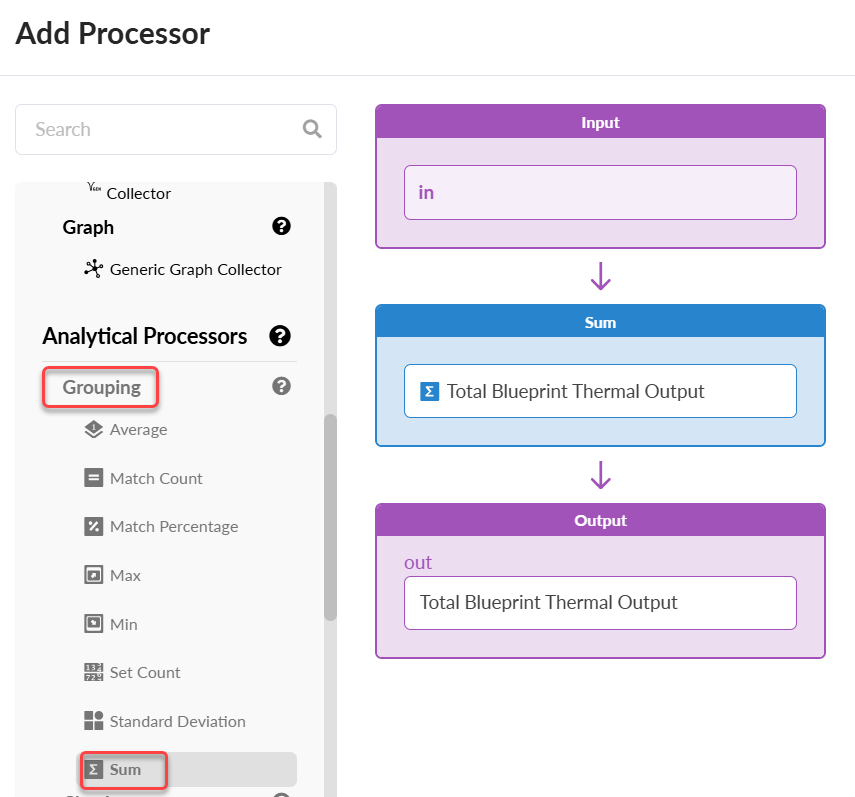
Edit the processor.
Enter Thermal Output per Device for the Stage Name and value for the Column Name.
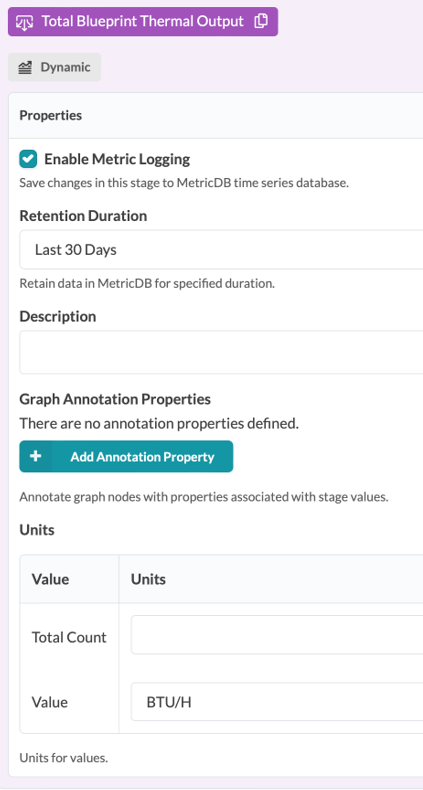
Check Enable Metric Logging to enable logging.
View your result.
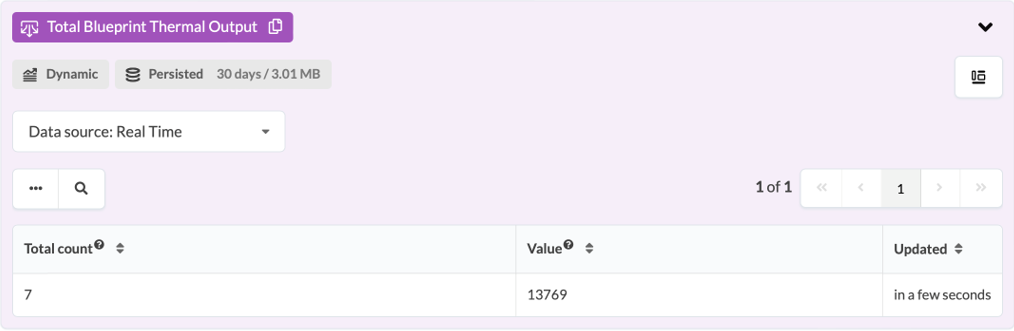
Next, we'll create a processor for Total Blueprint Used Power.
From the Analytical Processor list, under Grouping, select Sum. In the Sum and Output fields, enter Total Blueprint Used Power.
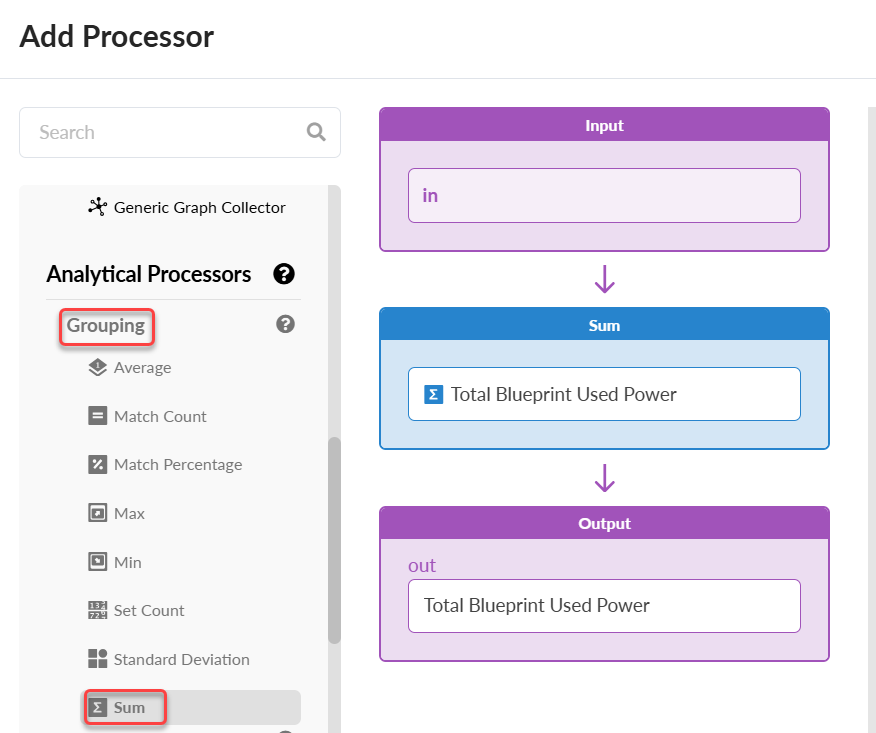
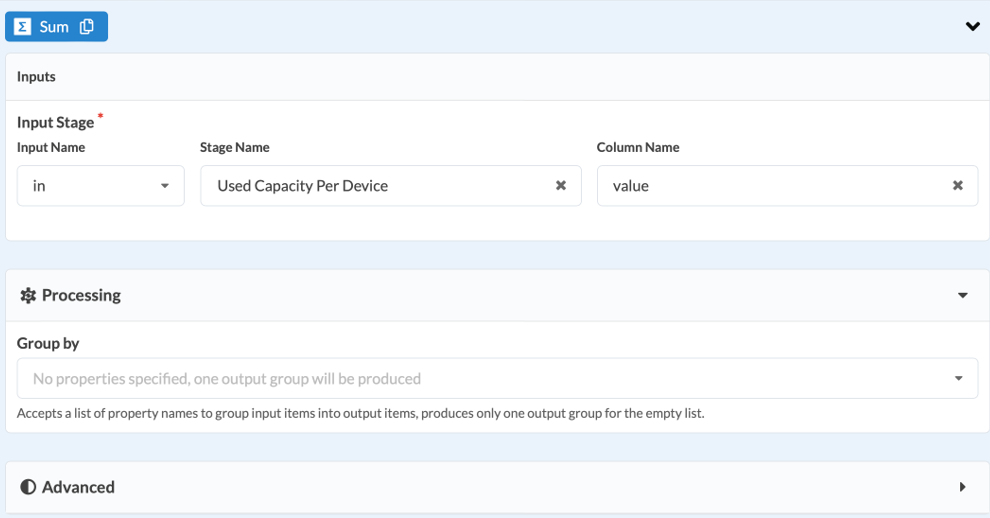
Edit the processor.
Enter Used Capacity Per Device for the Stage Name and value for the Column Name.
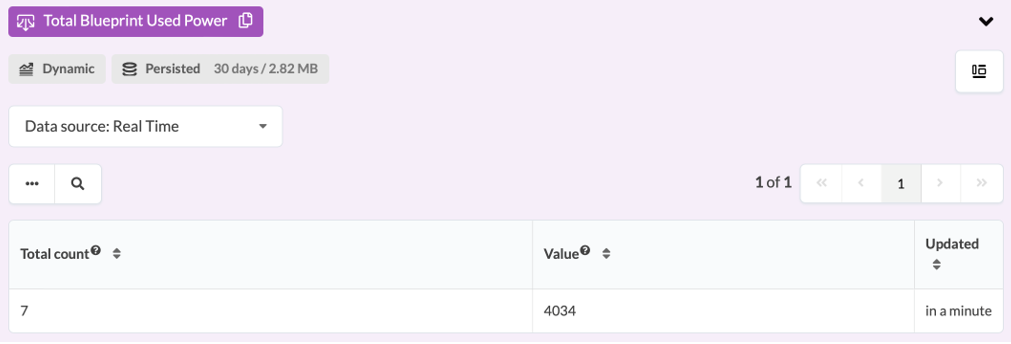
View your result.
Range Processor to Set Threshold Based Anomaly
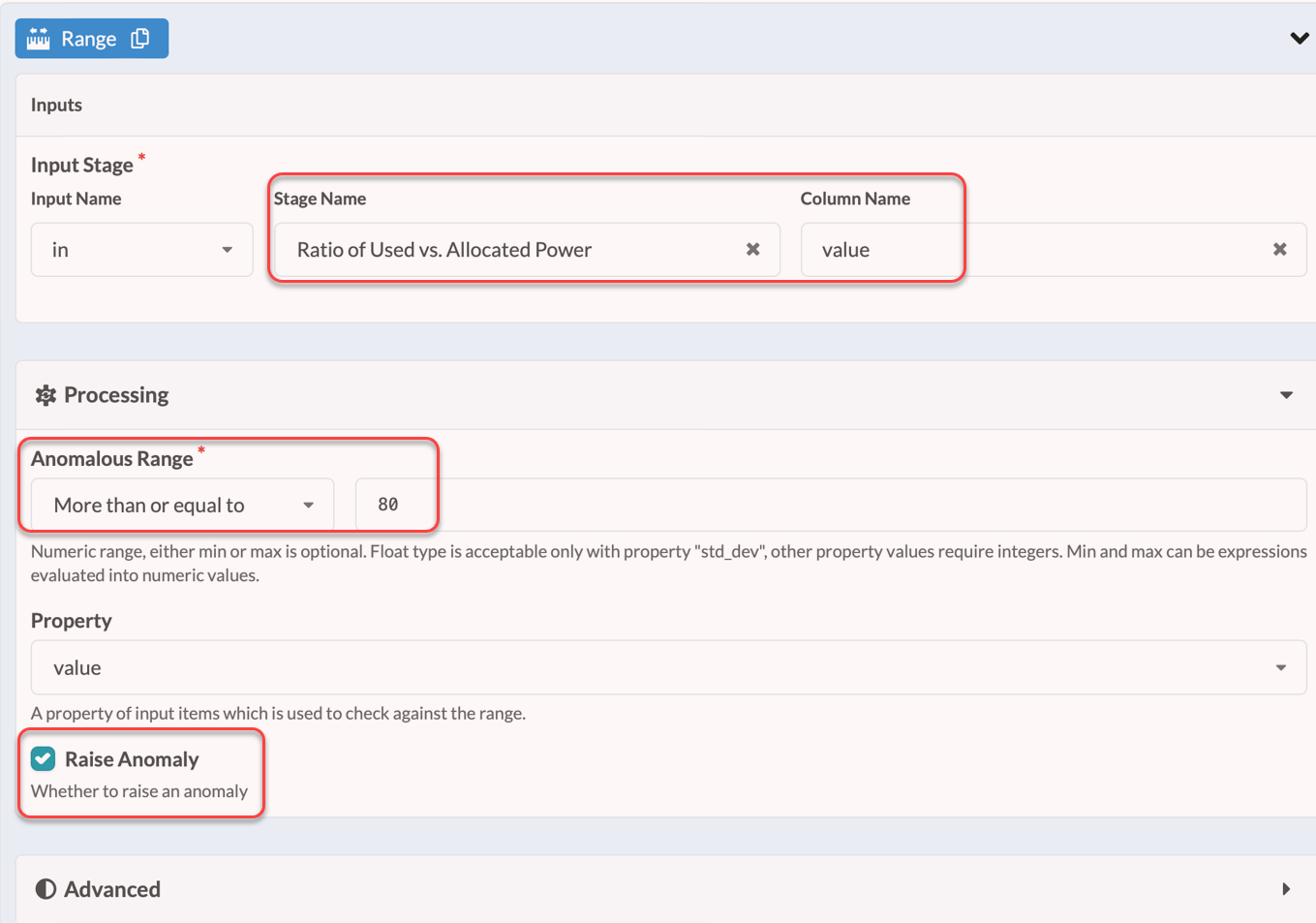
You can create a range processor to generate an alert when a device uses more than 80 percent of its allocated capacity. A range processor checks the value against a defined range.
To create a range processor:
From the Analytical Processor list, under the Check category, select Range. In the Range and Output fields, enter Device with power usage > 80 % capacity.
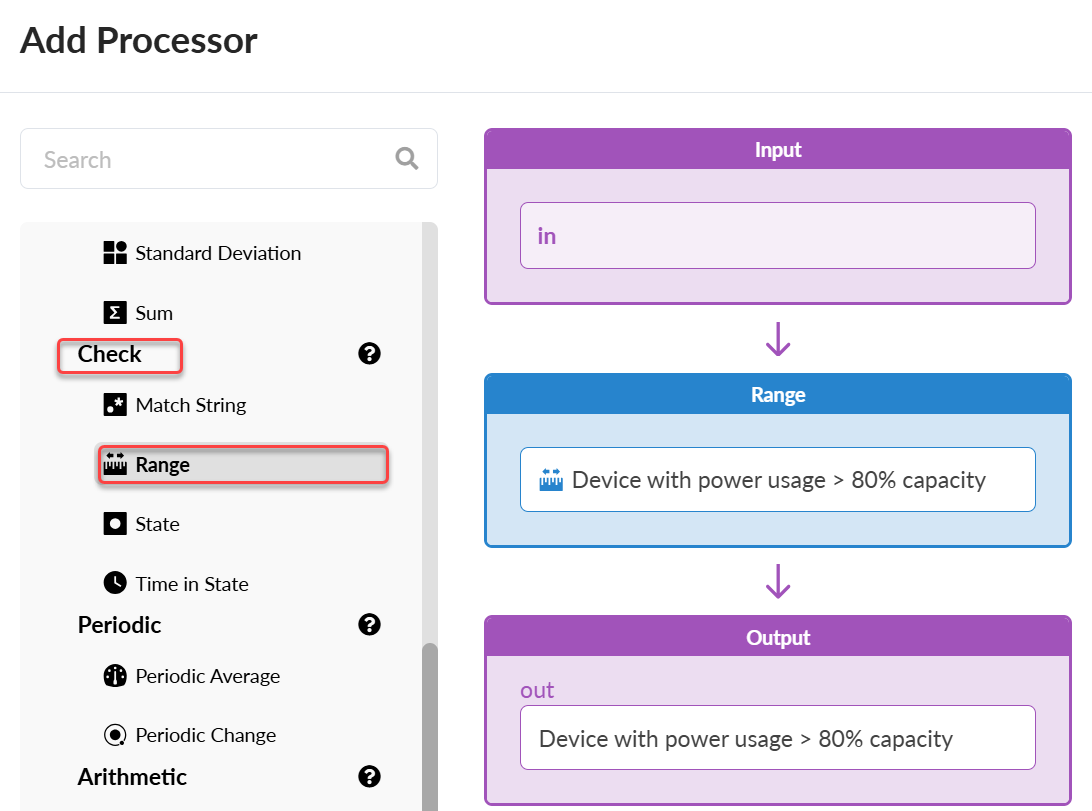
Set the range processor to the ratio of used versus allocated power and specify an anomalous range of 80 percent or more. Check Raise Anomaly to receive alerts in the Apstra GUI when this range is exceeded. This allows for efficient power management and early detection of potential issues.
Verify Your Configuration
You can view your configuration by selecting your probe from the table under Analytics > Probes. The following example shows the processor we created for Aggregated Used Capacity that details the capacity used for each device.