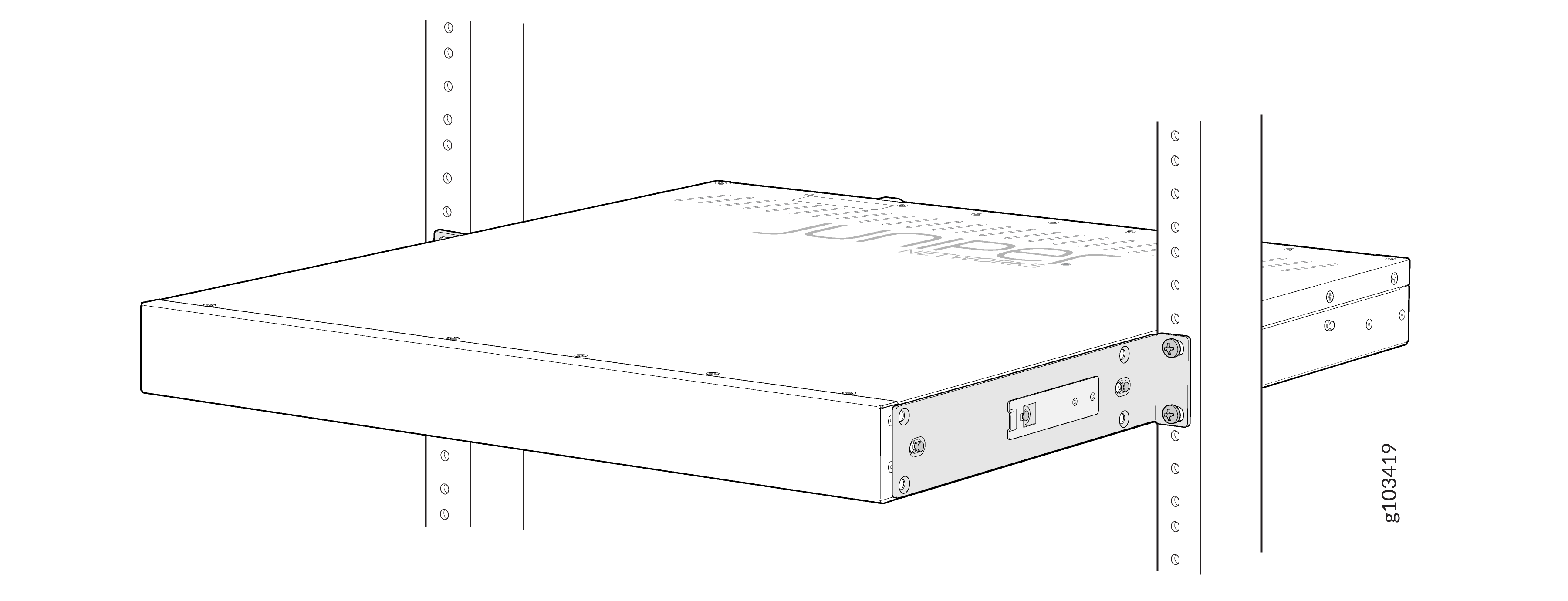
Install the SRX4300 in a Rack
Mount the SRX4300 on a rack by following the recommended procedures that are appropriate for your site.
You can mount the SRX4300 on a four-post rack or in a cabinet. Use the toolless rack mount kit shipped with the device.
Complete these prerequisites before you mount the device:
-
Prepare the site for installation as described in SRX4300 Site Guidelines and Requirements.
-
Be sure the site has adequate clearance for both airflow and hardware maintenance, as described in SRX4300 Site Guidelines and Requirements.
-
Unpack the device as described in Unpack the SRX4300.
Ensure that you support the rear of the chassis throughout the process of mounting the appliance on the rack.
A qualified technician must verify that the rack or cabinet is strong enough to support the device's weight before mounting the device. Have the technician verify also that the rack or cabinet has adequate support at the installation site.
If you are installing more than one device on a rack or in a cabinet, install the first device at the bottom of the rack.
Mount your Device by Using the JNP-4P-TL-1RU-RMK Rack Mount Kit on a Square Hole 4-Post Rack
Ensure that you have the following tools and parts available:
-
An ESD grounding strap—not provided.
-
A pair of side mounting brackets that attach to the chassis—provided with the rack mount kit.
-
A pair of front and rear mounting rails that attach to the rack posts—provided with the rack mount kit.
To mount the device on a four-post rack:
-
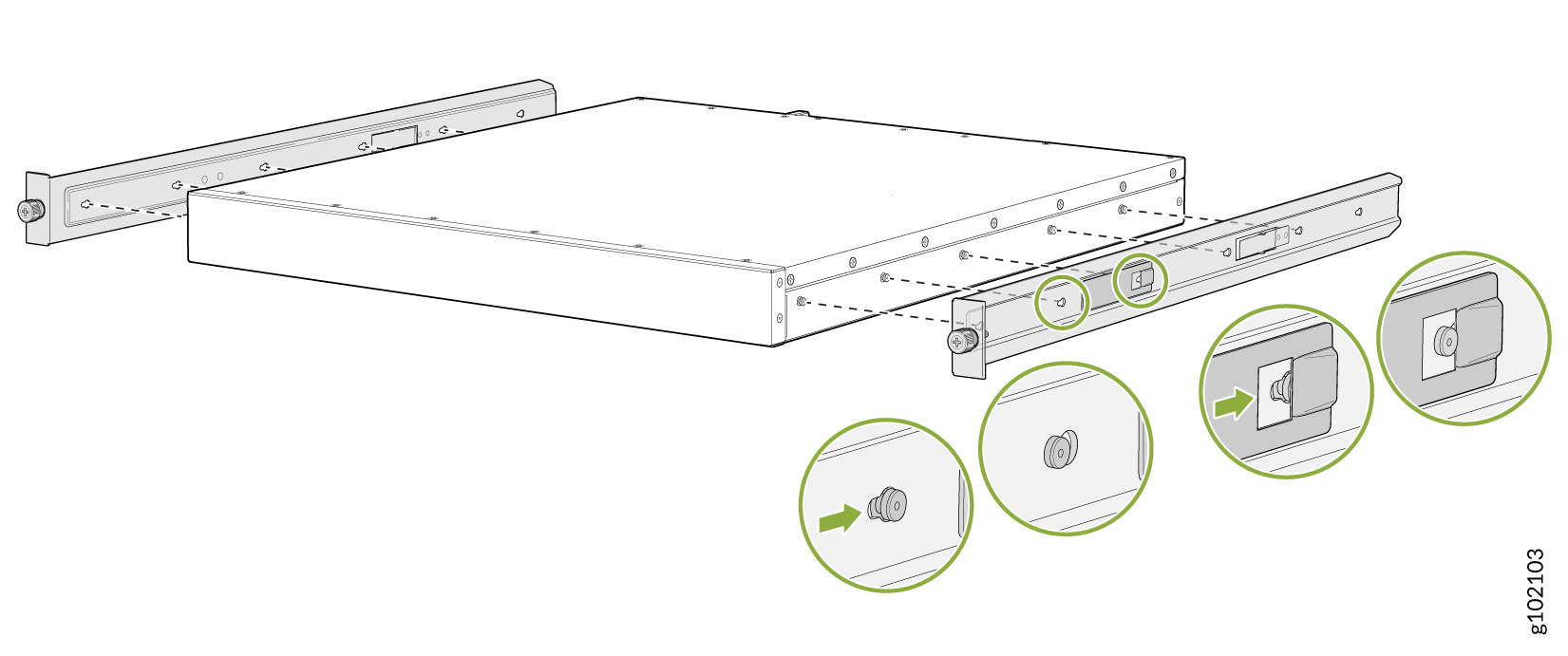
To attach the side mounting brackets to the chassis, align the keyholes on the mounting
brackets over the shoulder screws on the chassis. Slide the mounting brackets toward the
rear of the chassis so that the shoulder screws get locked in place.
Figure 1: Attach the Side Mounting Brackets
-
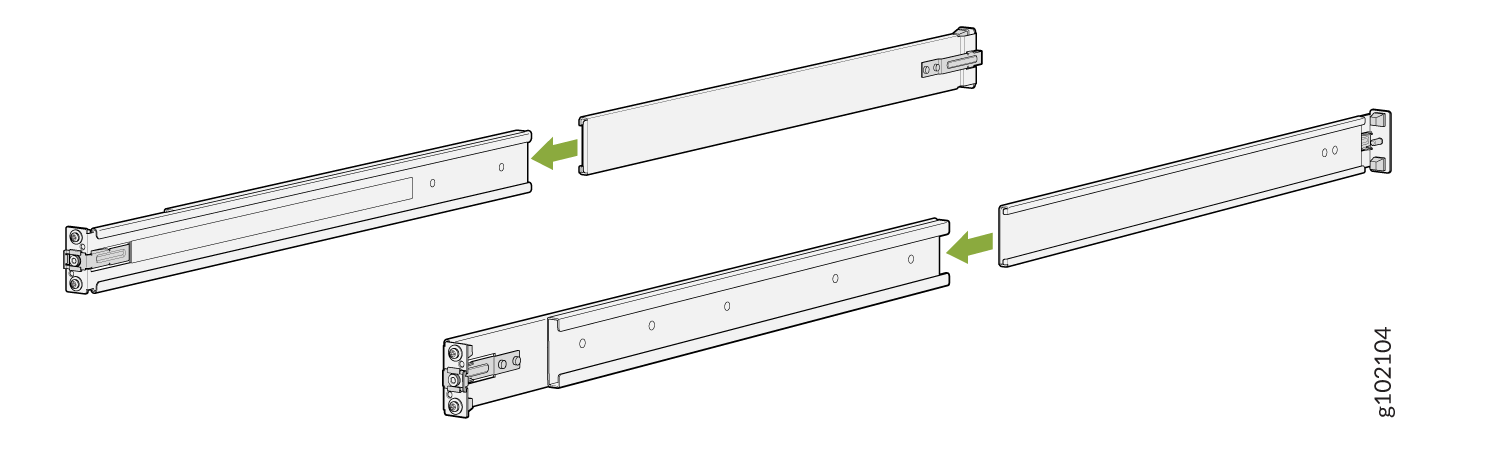
Assemble the mounting rails by sliding the rear mounting rails into the front
rails.
Figure 2: Assemble the Mounting Rails
-
Install the mounting rails on the rack:
-
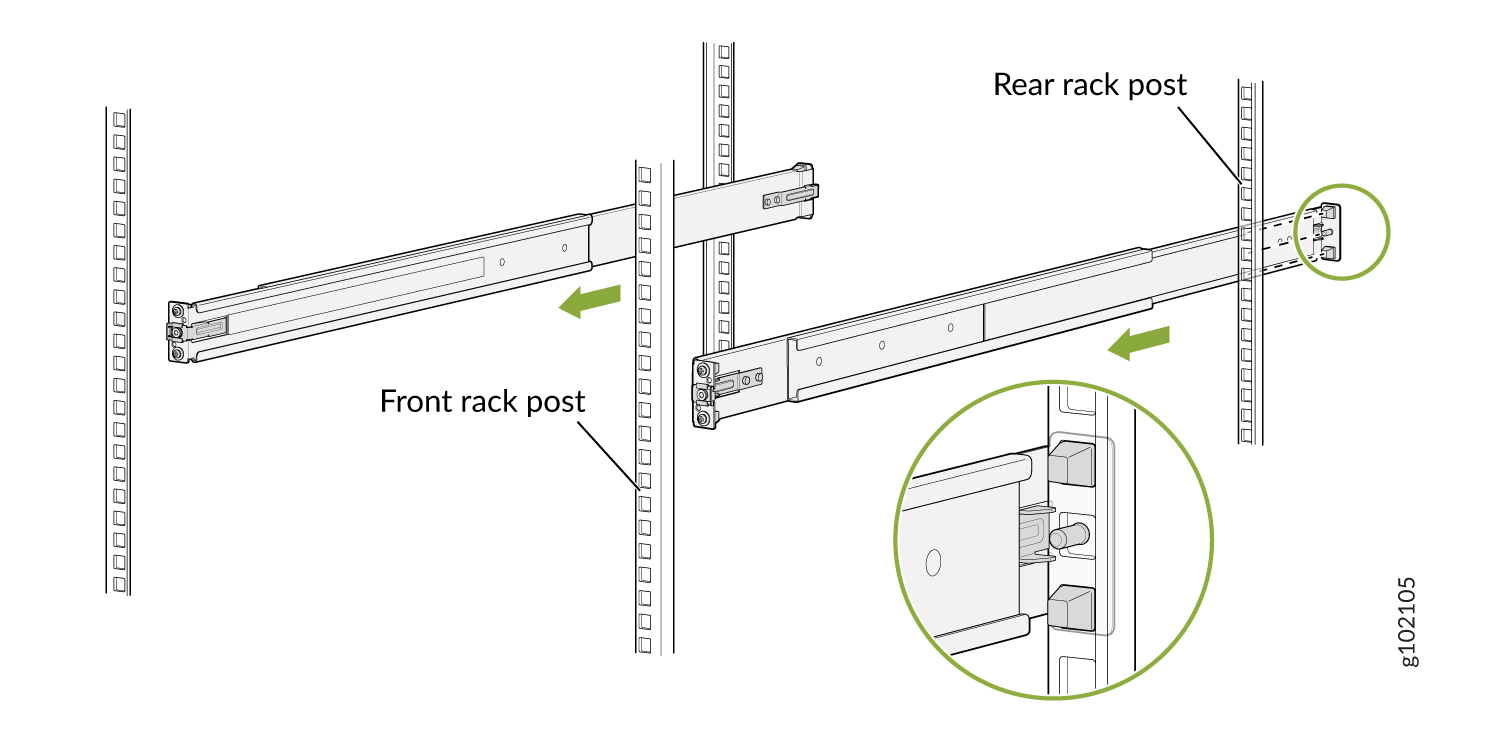
Align the guide blocks of the rear mounting rails with the rear-post holes. Pull
the rear mounting rails toward the front of the rack to lock the rails in place. You
will hear a distinct click sound when the latch locks into the corresponding rack
holes.
Figure 3: Install the Rear Mounting Rails
-
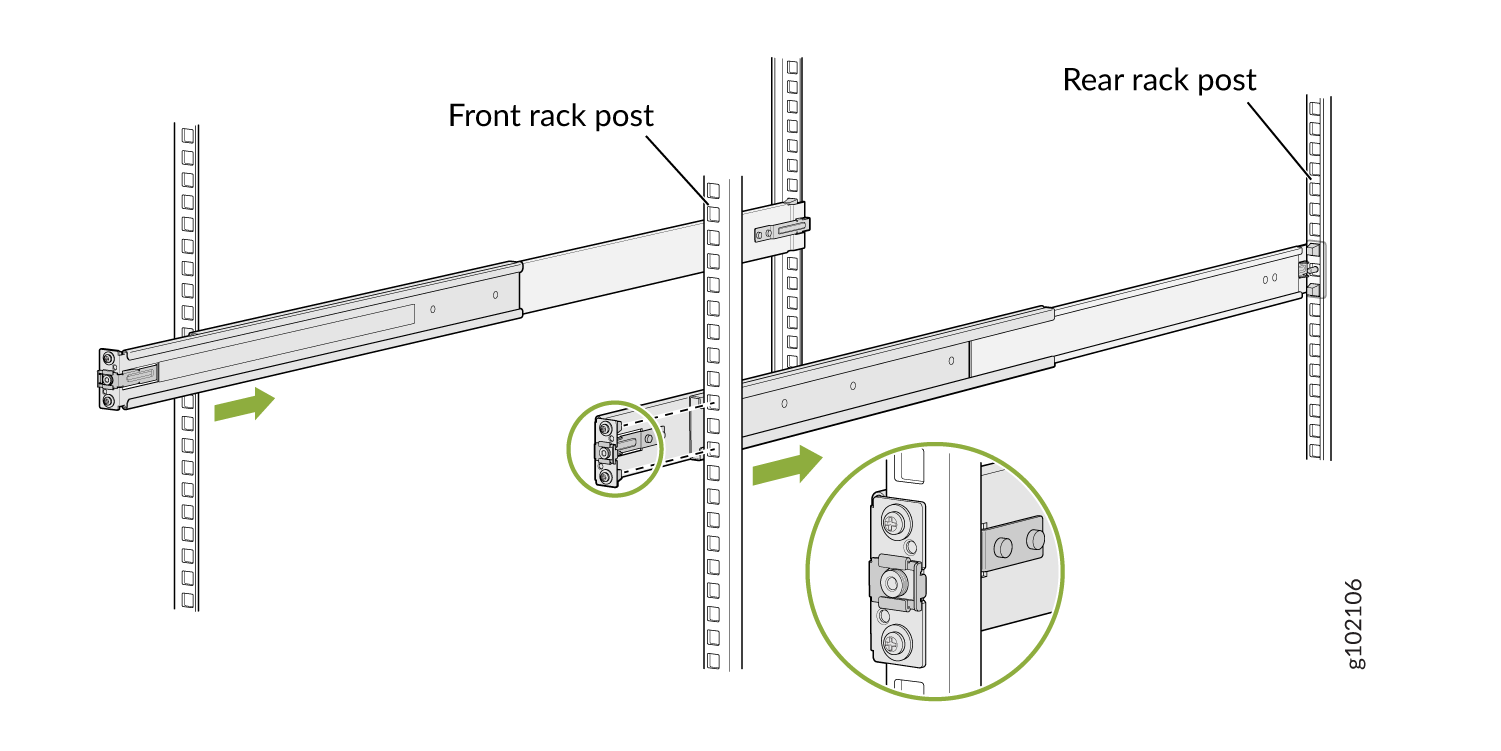
Align the guide blocks of the front mounting rails with the front-post holes. Push
the front mounting rails toward the rear of the rack to lock the rails in place. You
will hear a distinct click sound when the latch locks into the corresponding rack
holes.
Figure 4: Install the Front Mounting Rails
-
Align the guide blocks of the rear mounting rails with the rear-post holes. Pull
the rear mounting rails toward the front of the rack to lock the rails in place. You
will hear a distinct click sound when the latch locks into the corresponding rack
holes.
-
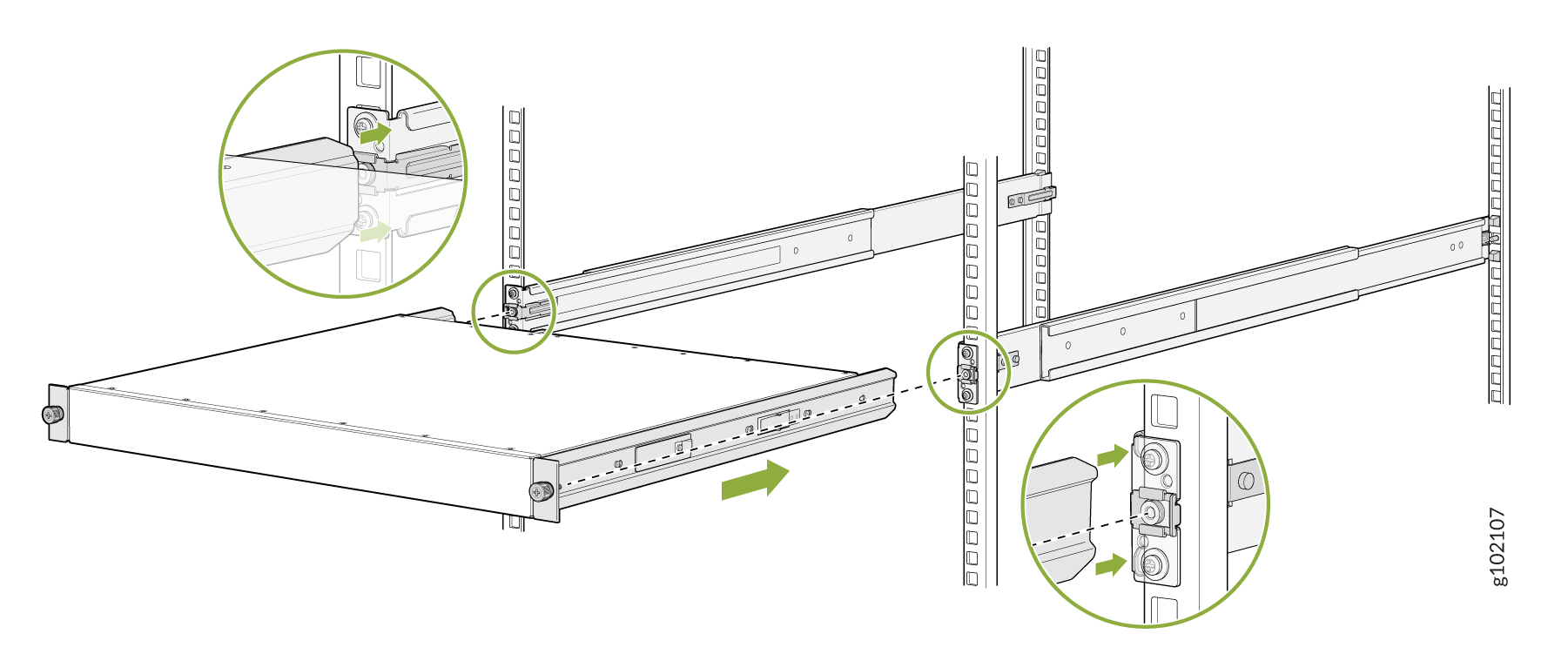
Lift the device and position it in the rack, aligning the side mounting brackets with
the mounting rails. Slide the device into the channels of the rack mounting rails.
Figure 5: Slide the Device into the Rack
-
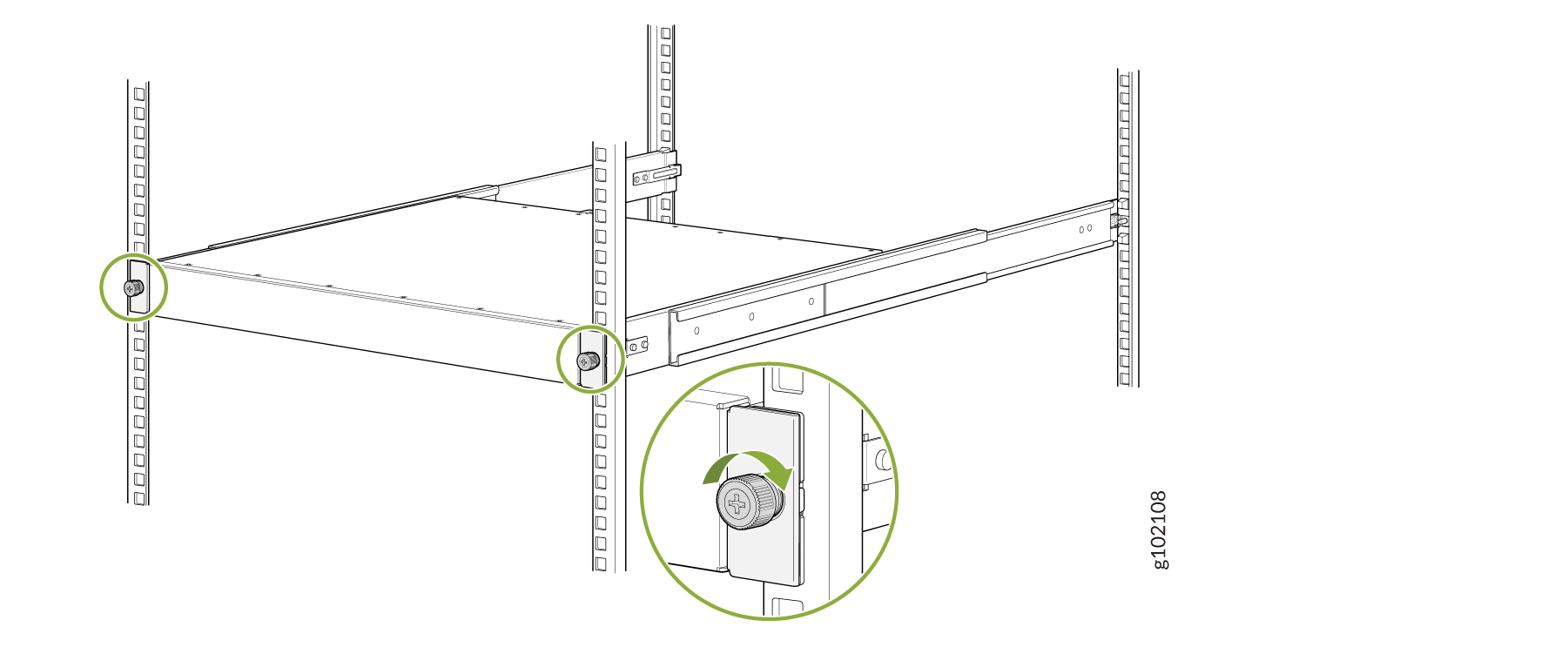
Tighten the two thumbscrews to secure the device.
Figure 6: Tighten the Thumbscrews
Mount your Device by Using the JNP-4P-TL-1RU-RMK Rack Mount Kit on a Threaded-Hole 4-Post Rack
Ensure that you have the following tools and parts available:
-
An ESD grounding strap—not provided.
-
A Phillips (+) screwdriver, number 2—not provided.
-
Eight screws to attach the mounting rails to the rack posts—not provided.
-
A pair of side mounting brackets that attach to the chassis—provided with the rack mount kit.
-
A pair of mounting front and rear rails that attach to the rack posts—provided with the rack mount kit.
To mount the device on a four-post rack with threaded holes:
-
To attach the side mounting brackets to the chassis, align the keyholes on the mounting
brackets over the shoulder screws on the chassis. Slide the mounting brackets toward the
rear of the chassis so that the shoulder screws get locked in place.
Figure 7: Attach the Side Mounting Brackets
-
Assemble the mounting rails:
-
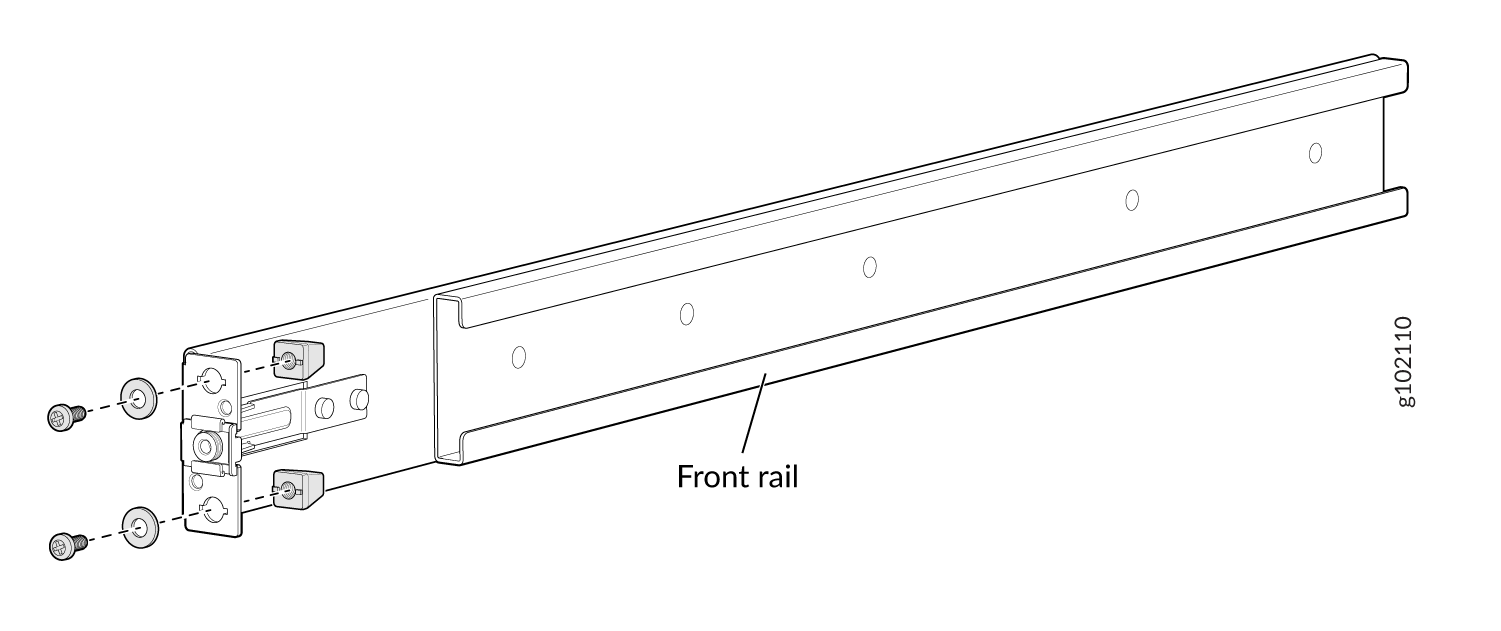
Remove the guide blocks from the front mounting rails by loosening the screws and
washers.
Figure 8: Removing the Guide Blocks from the Front Mounting Rail
-
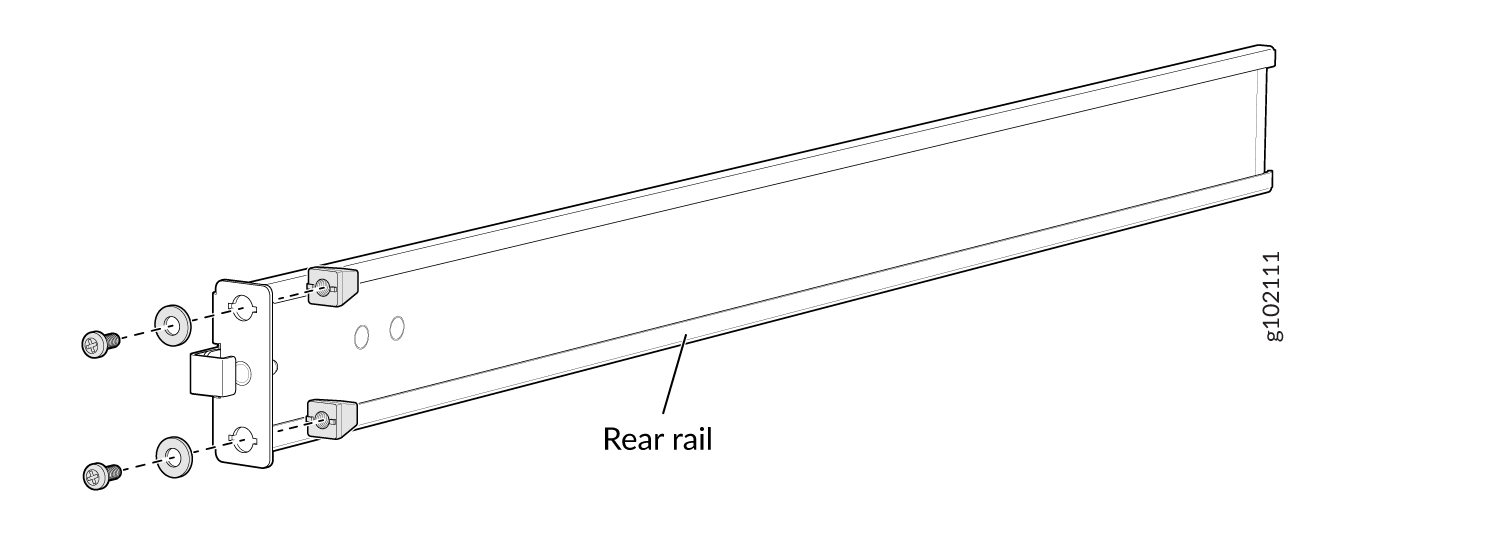
Remove the guide blocks from the rear mounting rail by loosening the screws and
washers.
Figure 9: Removing the Guide Blocks from the Rear Mounting Rail
-
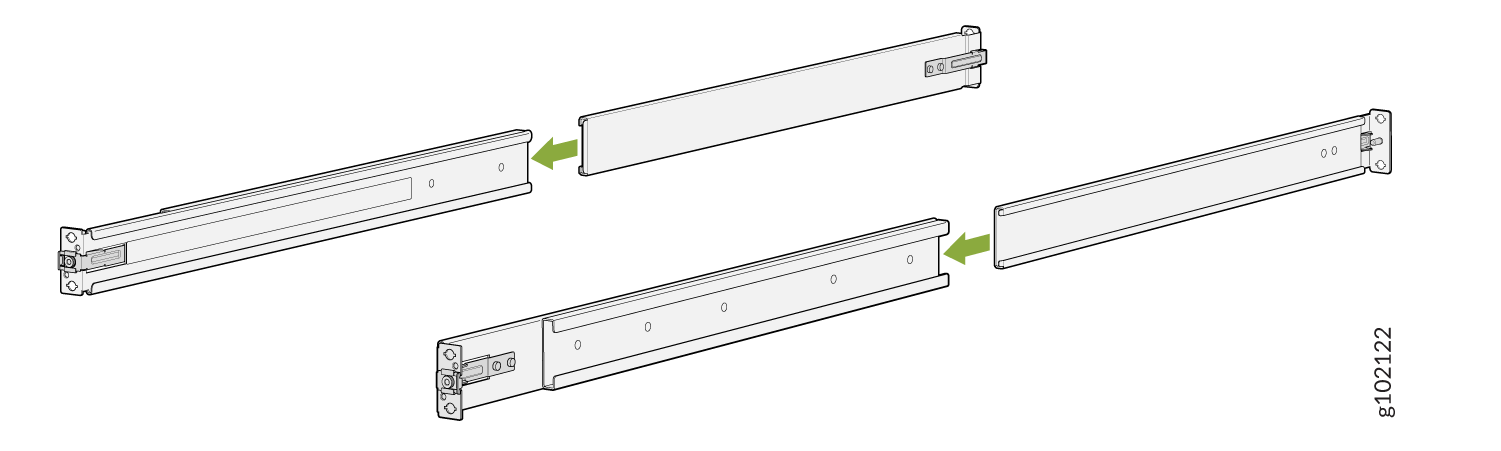
Slide the rear mounting rails into the front rails.
Figure 10: Assemble the Mounting Rails
-
Remove the guide blocks from the front mounting rails by loosening the screws and
washers.
-
Install the mounting rails on the rack:
-
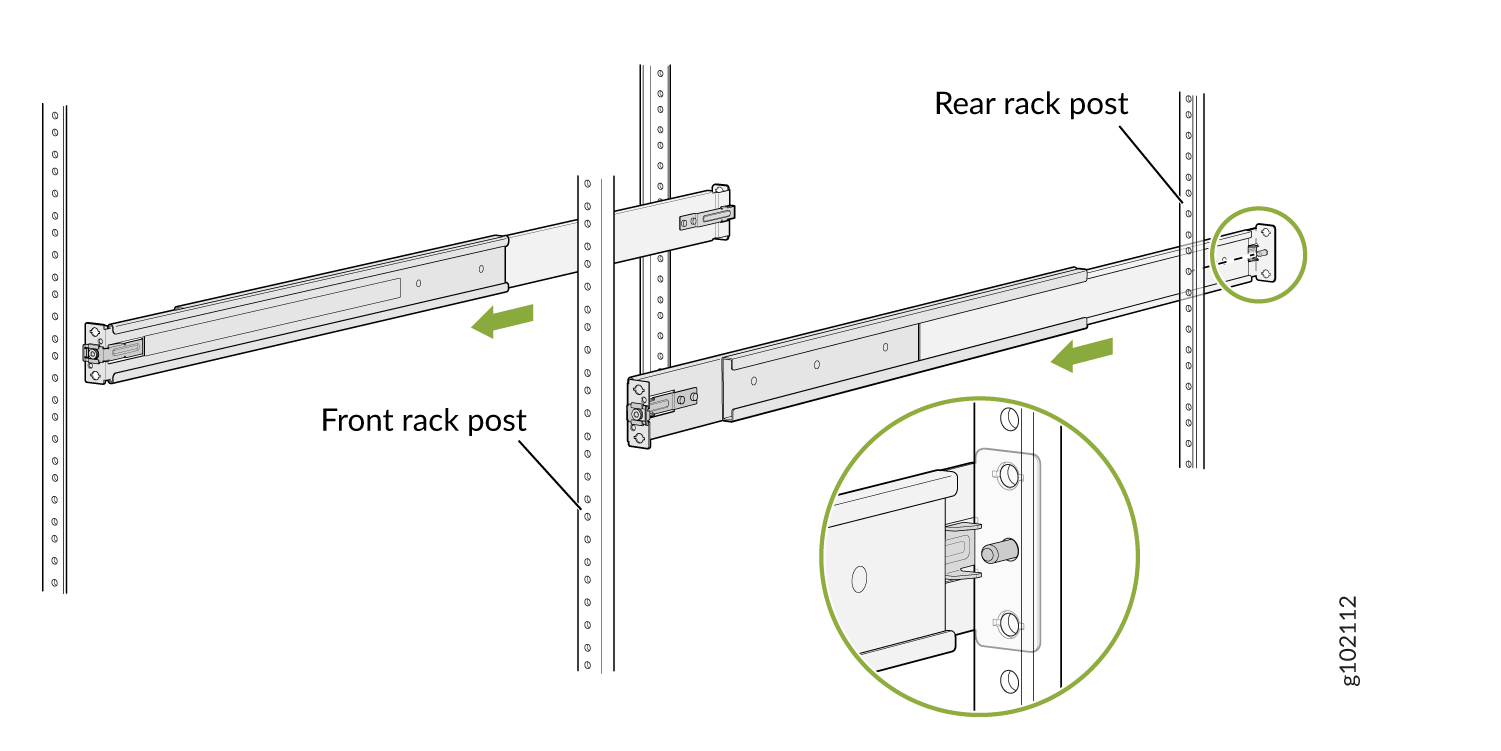
Insert the guide pin of the rear mounting rails into the rear-post holes. Pull the
rear mounting rails toward the front of the rack to lock the rails in place. You will
hear a distinct click sound when the latch locks into place.
Figure 11: Install the Rear Mounting Rails
-
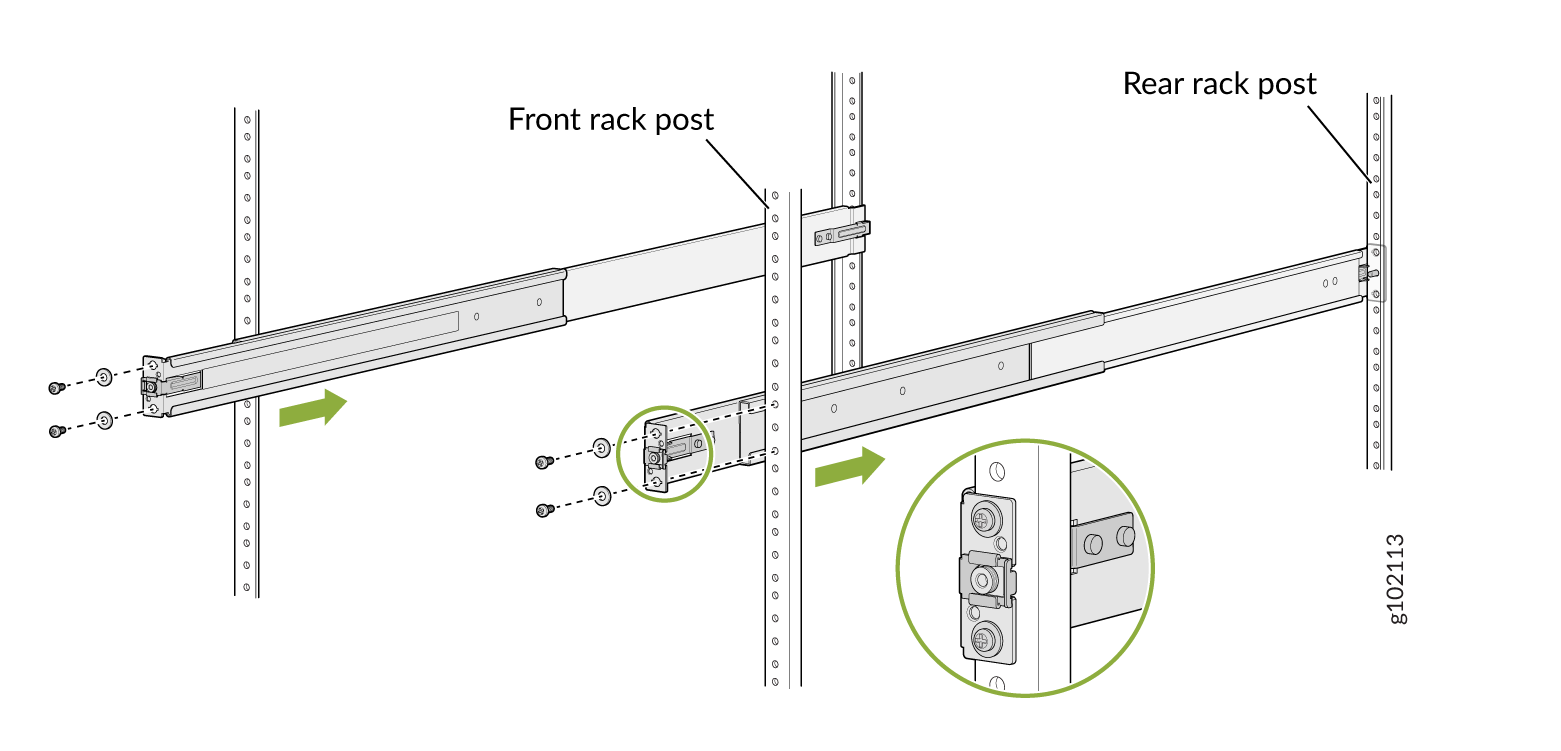
Insert the guide pin of the front mounting rails into the front-post holes. Push
the front mounting rails toward the rear of the rack to lock the rails in place. You
will hear a distinct click sound when the latch locks into place. Secure the front
mounting rails to the front rack post by using screws appropriate for your rack
threaded size (not provided).
Figure 12: Install and Secure the Front Mounting Rails
-
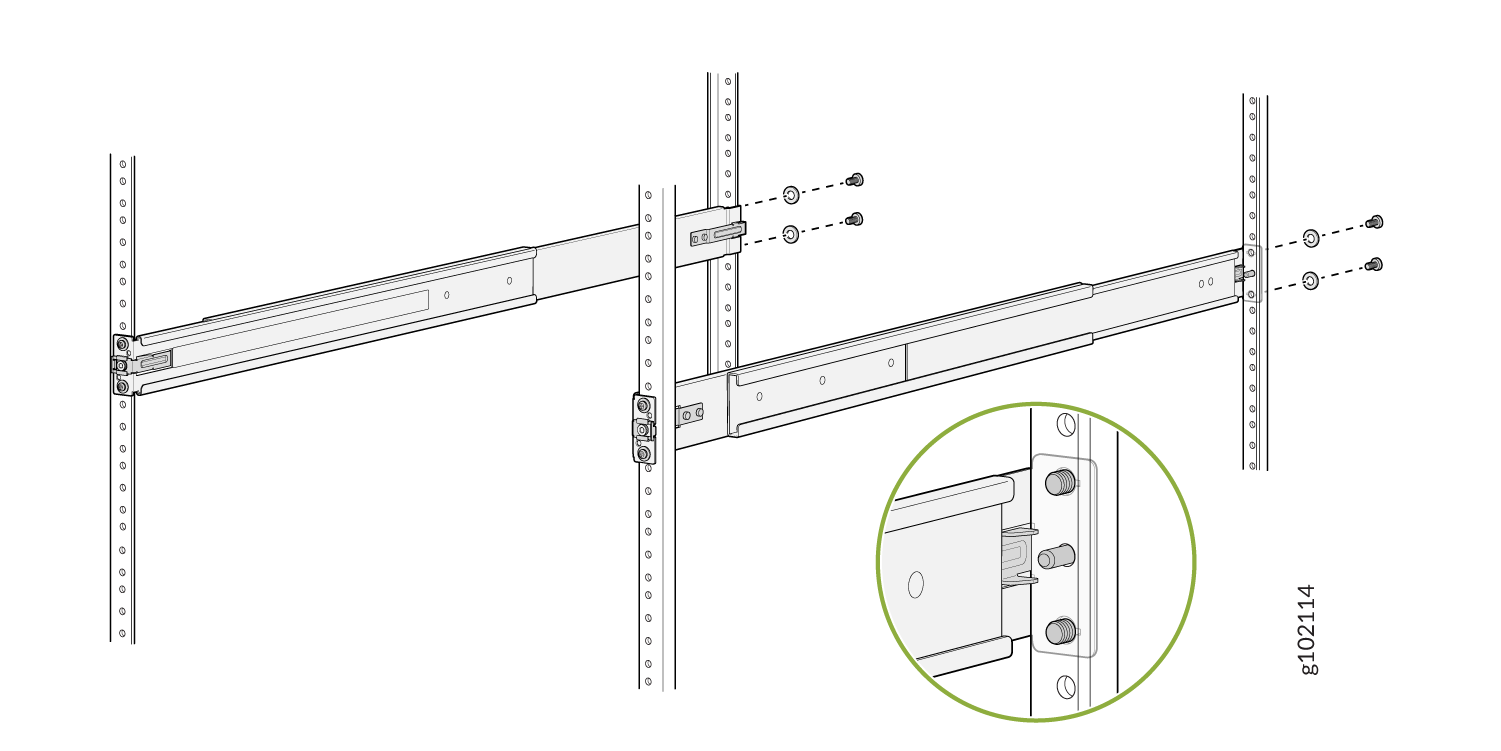
Secure the rear mounting rails to the rear rack post by using screws appropriate
for your rack threaded size (not provided).
Figure 13: Secure the Rear Mounting Brackets
-
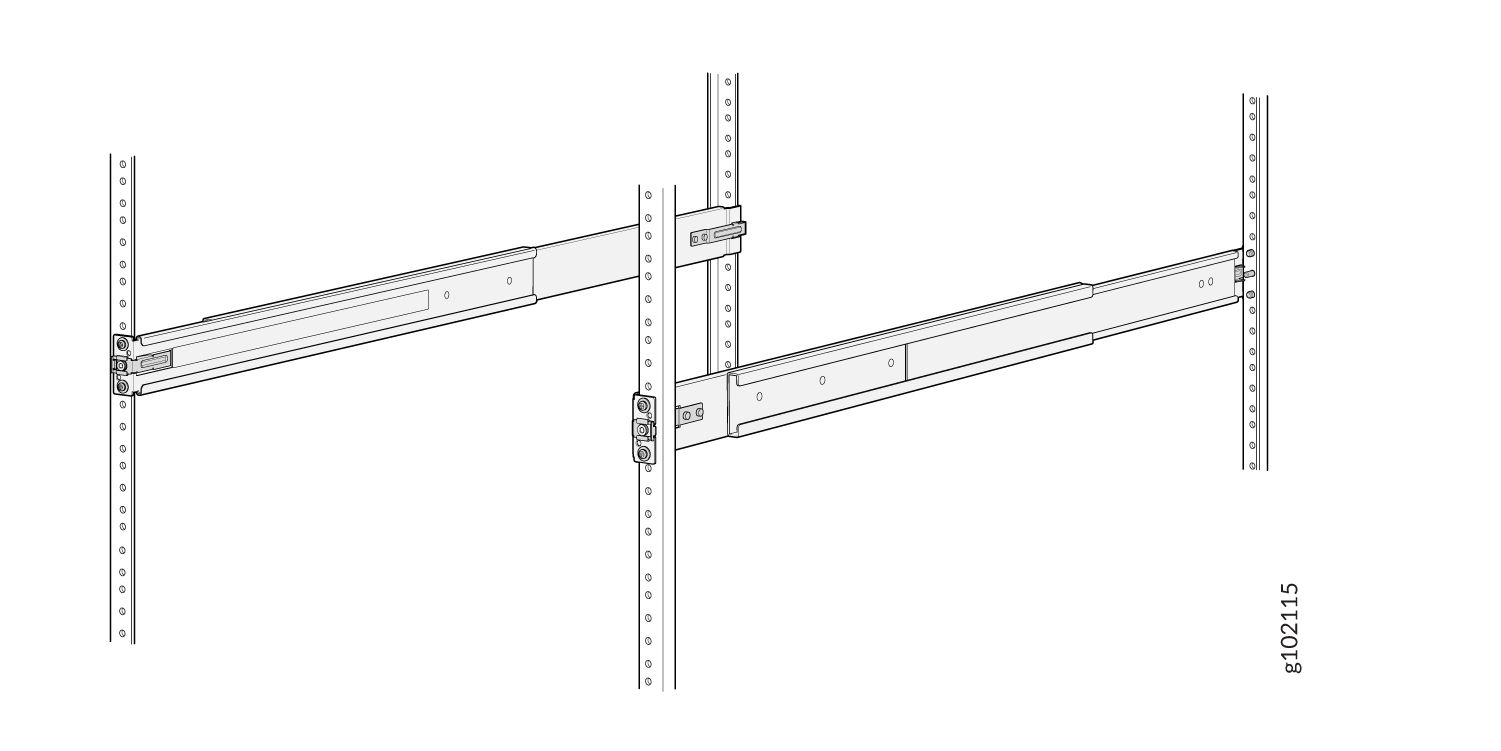
Visually ensure that the front and rear latches are locked into place on the
mounting rails. The mounting rails should be securely installed on the rack.
Figure 14: Mounting Rails Installed and Secured
-
Insert the guide pin of the rear mounting rails into the rear-post holes. Pull the
rear mounting rails toward the front of the rack to lock the rails in place. You will
hear a distinct click sound when the latch locks into place.
-
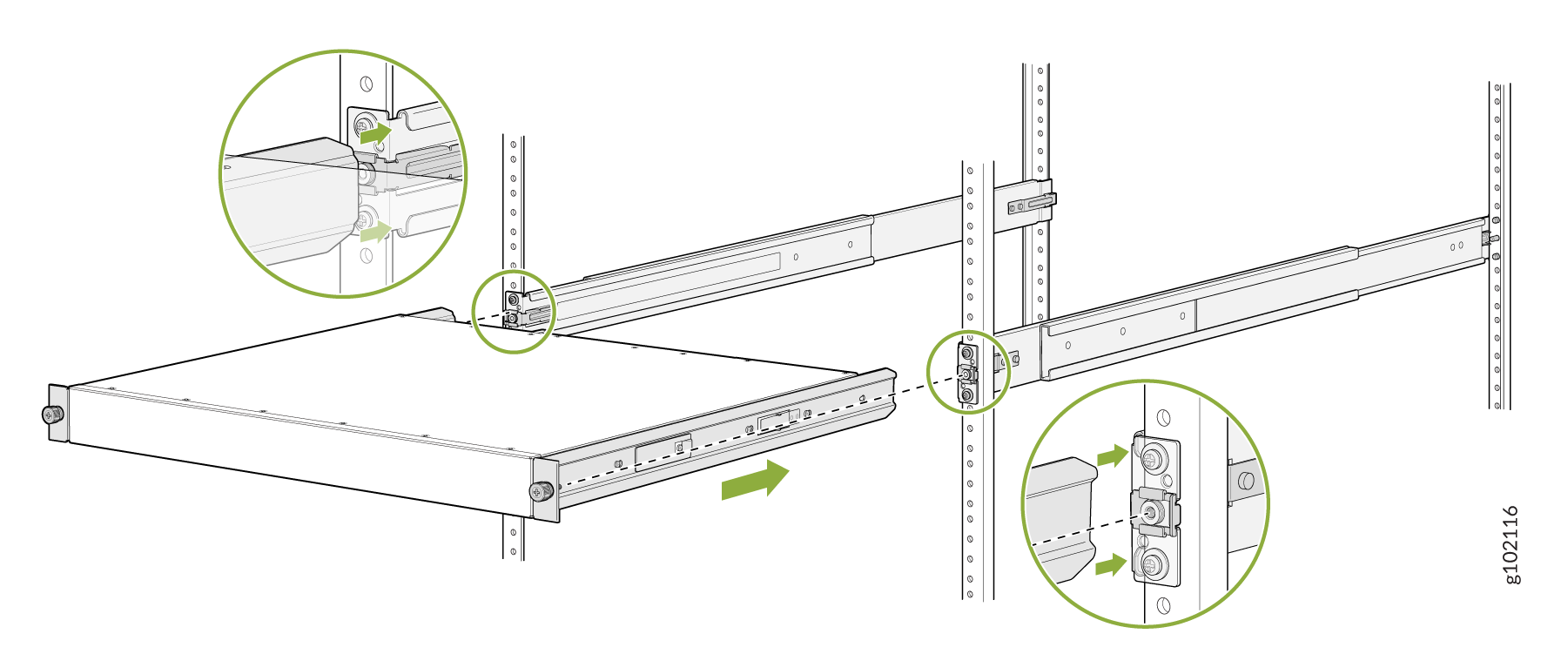
Lift the device and position it in the rack, aligning the side mounting brackets with
the mounting rails. Slide the device into the channels of the rack mounting rails.
Figure 15: Slide the Device into the Rack
-
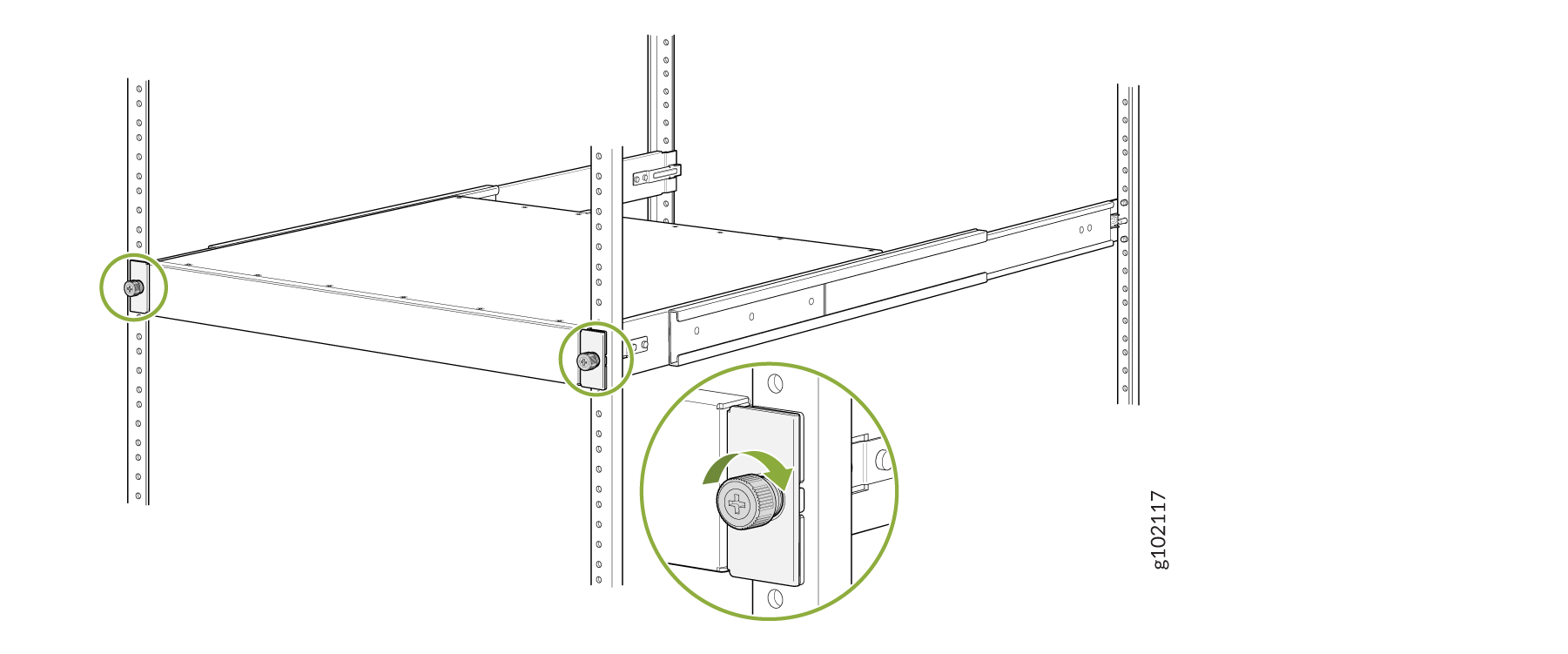
Tighten the two thumbscrews to secure the device.
Figure 16: Tighten the Thumbscrews
Mount your Device by Using the SRX-2PST-TLESS-RMK Rack Mount Kit on a 2-Post Rack
Ensure that you have the following tools and parts available:
-
An ESD grounding strap—not provided.
-
A screwdriver—not provided.
-
Four screws appropriate for your rack threaded size—not provided.
-
A pair of side mounting brackets that attach to the chassis—provided with the rack mount kit.
To mount the device on a two-post rack:
-
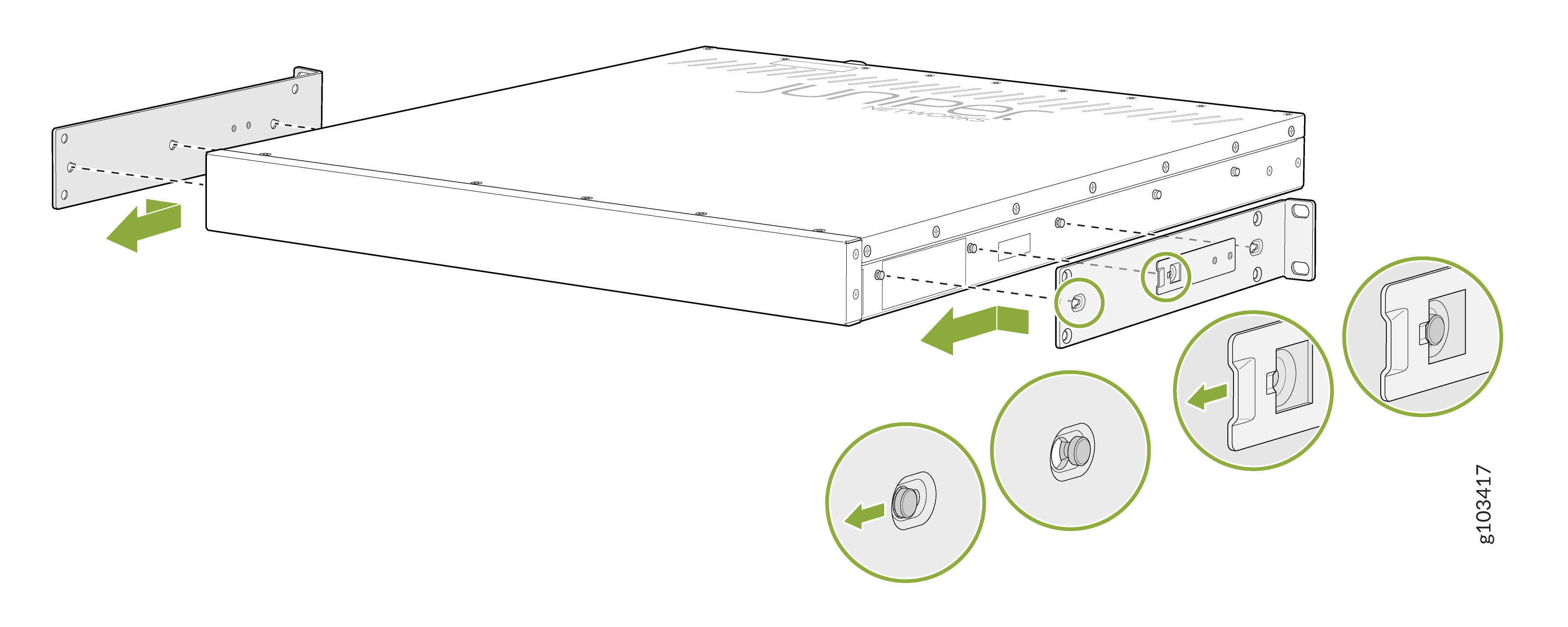
To attach the side mounting brackets to the chassis, align the keyholes on the mounting
brackets over the shoulder screws on the chassis. Slide the mounting brackets toward the
front of the chassis. The latch on the mounting brackets locks into place.
Figure 17: Attach the Side Mounting Brackets
-
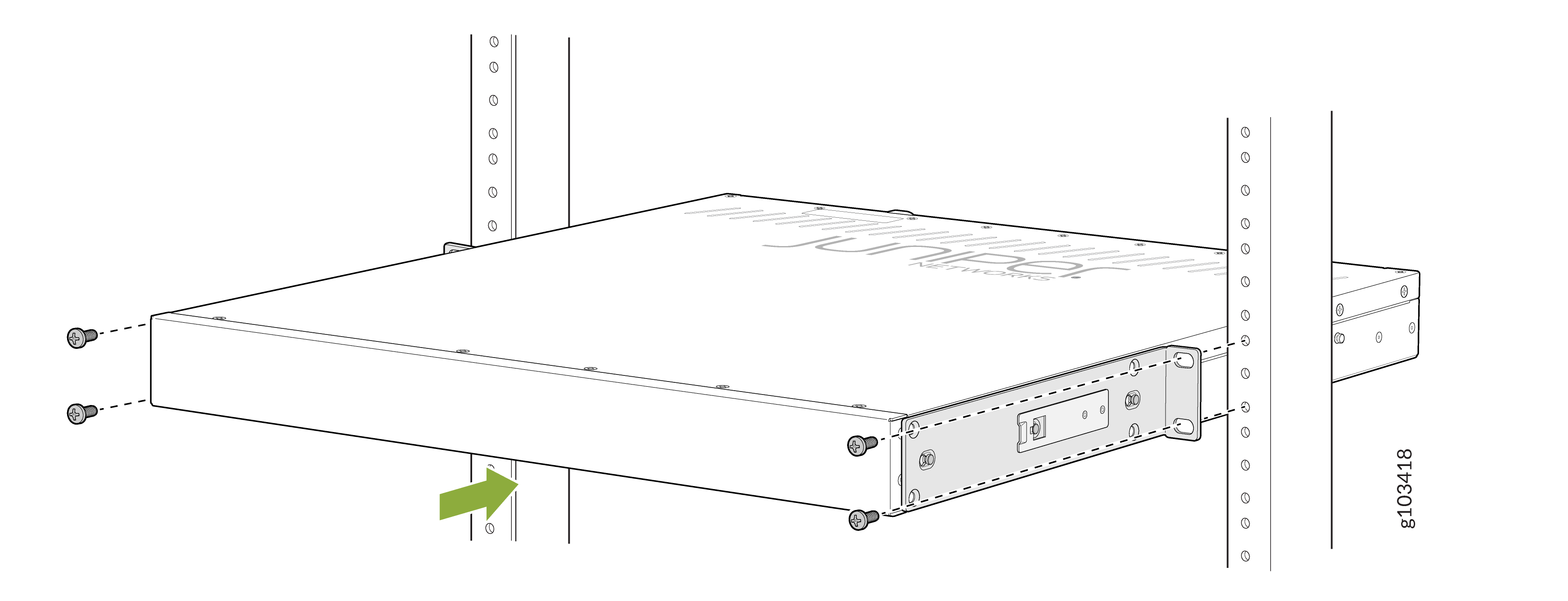
Lift the device and position it in the rack, aligning the holes on the side mounting
brackets with the rack post holes. Attach the mounting brackets to the rack post by using
screws appropriate for your rack threaded size (not provided).
Figure 18: Attach the Device to the Rack Posts
-
Tighten the screws using a screwdriver. Ensure that the device is secured to the rack
posts.
Figure 19: Secure the Device