
ON THIS PAGE
Agency Approvals and Compliance Statements for MX301 and MX301-M
Agency Approvals
The MX301 and MX301-M routers is designed to comply with the following standards:
Safety
Safety Requirements for Chassis
-
IEC 62368-1:2014 (All country deviations): 2nd Edition: CB Scheme
-
IEC 62368-1:2018 (All country deviations): 3rd Edition: CB Scheme
-
IEC 62368-1:2023 (All country deviations): 4th Edition: CB Scheme
-
EN 62368-1:2014+A11:2017, EN IEC 62368-1:2020+A11:2020
-
EN 62368-1:2024/A11:2024
-
BS EN 62368-1:2014+A11:2017, BS EN IEC 62368-1:2020+A11:2020
-
BS EN 62368-1:2024/A11:2024
-
UL 62368-1:2025 (4th Edition)
-
CSA C22.2 No. 62368-1:2025 (4th Edition)
-
UL 60950-1:2007
-
CAN/CSA C22.2 No. 60950-1-07+ A1:2011+A2:2014
Safety Requirements for Optics
- CFR, Title 21, Chapter 1, Subchapter J, Part 1040
- REDR c 1370 OR CAN/CSA-E 60825-1 Part 1
- IEC 60825-1
- IEC 60825-2
- IEC/UL/CSA 62368-1
NEBS
-
GR-1089-Core Issue 8 EMC and Electrical Safety for Network Telecommunications Equipment
-
GR-3160-Data Center Equipment
-
ETSI EN 300 019-2-1 – Storage, Class T1.2
-
ETSI EN 300 019-2-2 – Transportation, Class T2.3
-
ETSI EN 300 019-2-3 – Stationary Use at Weather-protected Locations, Class T3.2
Electromagnetic Compatibility (EMC)
EMC Requirements (Global)
-
FCC 47 CFR Part 15
-
ICES-003/ICES-GEN
-
BS EN 55032
-
BS EN 55035
-
EN 300 386 V1.6.1
-
EN 300 386 V2.2.1
-
BS EN 300 386
-
EN 55032
-
CISPR 32
-
EN 55035
-
CISPR 35
-
IEC/EN 61000 Series
-
IEC/EN 61000-3-2
-
IEC/EN 61000-3-3
-
AS/NZS CISPR 32
VCCI-CISPR 32
-
BSMI CNS 15936
-
KS C 9835 (Old KN 35)
-
KS C 9832 (Old KN 32)
-
KS C 9610
-
BS EN 61000 Series
Customer-Specific EMC Requirements
-
GR-1089-Core, Issue 8
-
Juniper Inductive GND (IGS)
Energy Efficiency Requirements
-
AT&T TEER (ATIS-06000015.03.2016)
-
ECR 3.0.1
-
ETSI ES 203 136 V1.2.1
-
Verizon TEEER (VZ.TPR.9205 Issue 7)
Environmental
- Environmental Requirements for Chassis
- Environmental Product Regulations, Legislations, Directives and International Standards
Environmental Requirements for Chassis
-
Operating Temperature:
-
0° C to 55° C @ 6000 ft (Telco NEBS environment short term GR 63) for optics up to 100G
-
0° C to 40° C @ 6000 ft (DC NEBS environment) for 400G optics
-
-
Storage Temperature: -40° to 70° C
-
Relative Humidity (Operating): 5 to 90% non-condensing
-
ETSI EN 300 019: Environmental Conditions & Environmental Tests for Telecommunications Equipment (Specific test requirements in Tables 7 & 8)
-
ETSI EN 300 019-2-1 Storage (ETSI EN 300 019 -1-1 Class 1.2)
-
ETSI EN 300 019-2-2 Transportation (ETSI EN 300 019-1-2 Class 2.3)
-
ETSI EN 300 019-2-3 Stationary Use at Weather-protected Locations (ETSI EN 300 019-1-3 Class 3.2)
Environmental Product Regulations, Legislations, Directives and International Standards
Regulations:
-
EC No. 1907/2006 – Regulation concerning the Registration, Evaluation, Authorisation and Restriction of Chemicals (REACH) 18 December 2006.
-
Annex XVII
-
SVHC
-
-
EU 2019/1021 – Of the European Parliament and the council of 20 June 2019 on Persistent Organic Pollutants (EU POPs).
-
Commission Regulation (EU) 2024/1834 of 3 July 2024 - Ecodesign requirements for the placing on the market or putting into service of fans with an electric input power between 125 W and 500 kW (≥ 125 W and ≤ 500 kW) at their best efficiency point, including where they are integrated into other products.
Legislations:
-
TSCA – The Toxic Substance Control Act authorizes the EPA (Environmental Protection Agency) to regulate and screen all chemical producer or imported into the US to prevent unreasonable risks to health and the environment.
-
6(h) PBT
-
8(a)(7) PFAS
-
-
PFAS Reporting Requirements in Canada Under the Section 71 of the Canadian Environmental Protection Act, 1999 (CEPA)
-
California Prop 65 – The Safe Drinking Water and Toxic Enforcement Act of 1986.
Directives:
-
The EU RoHS Directive 2011/65/EU amended by (EU) 2015/863.
-
China RoHS ‐ GB/T 26572‐2011 – Must comply with the Requirements for Concentration Limits for Certain Hazardous Substances in Electronic Information Products
-
China RoHS Certificates as per SJ/T 11364‐2014 for all ordered AVL parts.
-
-
Taiwan RoHS ‐ CNS 15663 Guidance to reduction of the restricted chemical substances in electrical and electronic equipment (EEE) and its amendments.
-
Korea RoHS ‐ The Act for Resource Recycling of Electrical and Electronic Equipment and Vehicles and its amendments.
-
UAE RoHS ‐ Cabinet Decision No 10 of 2017 issued by The Emirates Authority for Standardization and Metrology (‘ESMA’) and its amendments.
-
India RoHS ‐E‐Waste (Management) Rules, 2022
-
Directive 2002/96/EC of the European Parliament and of Council of 4 July 2012 on waste electrical and electronic equipment (WEEE).
-
IATA DGR (Dangerous Good Regulation / Battery) – Guidelines and regulations to ensure the safe and standardized transportation of dangerous goods by air.
Compliance to EU Battery Directive 2023/1542
For all batteries used, the documents below must be collected.
-
Battery MSDS
-
EN IEC 60086
-
UL 1642
-
UN/DOT 38.3
-
International Standards:
-
IEC 62474 DSL (Declarable Substance List)
-
IEC 62474 RSL (Reference Substance List)
-
IPC 1752 Class 6 or 1752A Class D required for all AVL parts ordered.
Compliance Statements
- Compliance Statement for Argentina
- Compliance Statements for Data Center
- Compliance Statements for EMC Requirements
- Compliance Statements for Environmental Requirements
Compliance Statement for Argentina
EQUIPO DE USO IDÓNEO.
Compliance Statements for Data Center
-
The equipment is suitable for installation as part of the Common Bonding Network (CBN).
-
The equipment is suitable for installation in locations where the National Electrical Code (NEC) applies.
-
The battery return connection is to be treated as an isolated DC return (that is, DC-I), as defined in GR-1089-CORE.
-
You must provision a readily accessible device outside of the equipment to disconnect power. The device must also be rated based on local electrical code practice.
Compliance Statements for EMC Requirements
Canada
CAN ICES-3 (A)/NMB-3(A)
European Community
This is a Class A product. In a domestic environment, this product might cause radio interference in which case the user might be required to take adequate measures.
Israel
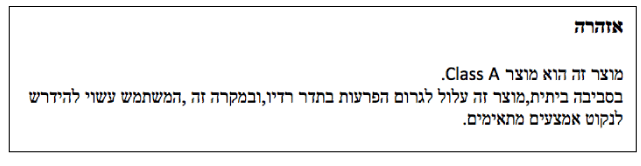
Translation from Hebrew—Warning: This product is Class A. In residential environments, the product might cause radio interference, and in such a situation, the user might be required to take adequate measures.
Japan

The preceding translates as follows:
This is a Class A product based on the standard of the Voluntary Control Council for Interference by Information Technology Equipment (VCCI). If this product is used near a radio or television receiver in a domestic environment, it might cause radio interference. Install and use the equipment according to the instruction manual. VCCI-A.
Korea
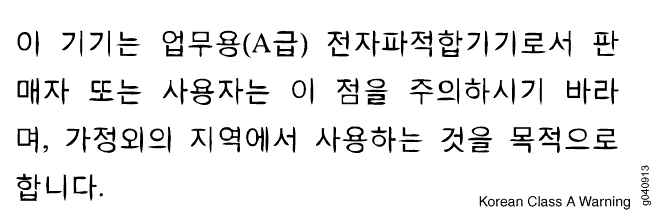
The preceding translates as follows:
This equipment is Industrial (Class A) electromagnetic wave suitability equipment and seller or user should take notice of it, and this equipment is to be used in the places except for home.
Taiwan
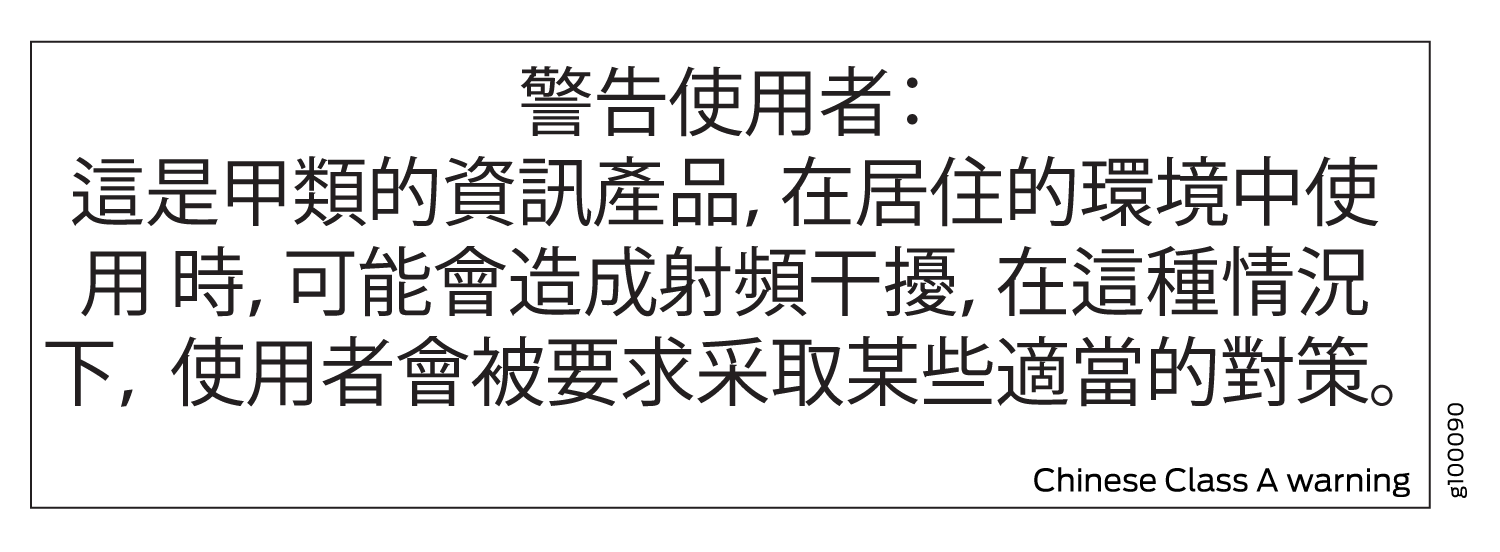
The preceding translates as follows:
This is Class A product. In a domestic environment this product may cause radio interference in which case the user may be required to take adequate measures.
United States
The hardware equipment has been tested and found to comply with the limits for a Class A digital device, pursuant to Part 15 of the FCC Rules. These limits are designed to provide reasonable protection against harmful interference when the equipment is operated in a commercial environment. This equipment generates, uses, and can radiate radio frequency energy and, if not installed and used in accordance with the instruction manual, might cause harmful interference to radio communications. Operation of this equipment in a residential area is likely to cause harmful interference in which case the user will be required to correct the interference at his own expense.
Compliance Statements for Environmental Requirements
Batteries in this product are not based on mercury, lead, or cadmium substances. The batteries used in this product are in compliance with EU Directives 91/157/EEC, 93/86/EEC, and 98/101/EEC. The product documentation includes instructional information about the proper method of reclamation and recycling.