Replace Transceivers
Maintaining your device includes removing and installing transceivers.
The transceivers for Juniper Networks® devices are hot-removable and hot-insertable field-replaceable units (FRUs). You can remove and replace the transceivers without powering off the device or disrupting device functions.
After you remove a transceiver, or when you change the media-type configuration, wait for 6 seconds for the interface to display the operational commands.
Before you replace a transceiver on a device, ensure that you have taken the necessary precautions for the safe handling of lasers (see Laser and LED Safety Guidelines and Warnings).
We recommend that you use only optical transceivers and optical connectors purchased from Juniper Networks with your Juniper Networks device.
The Juniper Networks Technical Assistance Center (JTAC) provides complete support for Juniper-supplied optical modules and cables. However, JTAC does not provide support for third-party optical modules and cables that are not qualified or supplied by Juniper Networks. If you face a problem running a Juniper device that uses third-party optical modules or cables, JTAC may help you diagnose host-related issues if the observed issue is not, in the opinion of JTAC, related to the use of the third-party optical modules or cables. Your JTAC engineer will likely request that you check the third-party optical module or cable and, if required, replace it with an equivalent Juniper-qualified component.
Use of third-party optical modules with high-power consumption (for example, coherent ZR or ZR+) can potentially cause thermal damage to or reduce the lifespan of the host equipment. Any damage to the host equipment due to the use of third-party optical modules or cables is the users’ responsibility. Juniper Networks will accept no liability for any damage caused due to such use.
Remove a Transceiver
This topic describes how to remove a QSFP+ transceiver. The procedure is the same for all types of transceivers except the QSFP28 and CFP transceivers.
Review the Laser and LED Safety Guidelines and Warnings
Ensure that you have the following parts and tools available:
-
An antistatic bag or an antistatic mat
-
Rubber safety caps to cover the transceiver and fiber-optic cable connector
-
A dust cover to cover the port or a replacement transceiver
To remove a transceiver:
-
(For transceivers except CFP and QSFP28)
-
Grasp the transceiver ejector lever and gently slide the
transceiver approximately 0.5 in. (1.3 cm) straight out of the
port.
CAUTION:
To prevent ESD damage to the transceiver, do not touch the connector pins at the end of the transceiver.
Figure 1: Remove a QSFP+ Transceiver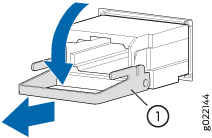
-
Grasp the transceiver ejector lever and gently slide the
transceiver approximately 0.5 in. (1.3 cm) straight out of the
port.
Install a Transceiver
This process describes how to install a QSFP+ transceiver. The procedure is the same for all types of transceivers except the QSFP28 and CFP transceivers.
We recommend that you use only optical transceivers and optical connectors purchased from Juniper Networks with your Juniper Networks device.
The Juniper Networks Technical Assistance Center (JTAC) provides complete support for Juniper-supplied optical modules and cables. However, JTAC does not provide support for third-party optical modules and cables that are not qualified or supplied by Juniper Networks. If you face a problem running a Juniper device that uses third-party optical modules or cables, JTAC may help you diagnose host-related issues if the observed issue is not, in the opinion of JTAC, related to the use of the third-party optical modules or cables. Your JTAC engineer will likely request that you check the third-party optical module or cable and, if required, replace it with an equivalent Juniper-qualified component.
Use of third-party optical modules with high-power consumption (for example, coherent ZR or ZR+) can potentially cause thermal damage to or reduce the lifespan of the host equipment. Any damage to the host equipment due to the use of third-party optical modules or cables is the users’ responsibility. Juniper Networks will accept no liability for any damage caused due to such use.
Review the Laser and LED Safety Guidelines and Warnings.
Ensure that you have a rubber safety cap available to cover the transceiver.
To install a transceiver:
-
Slide the transceiver in gently until it is fully seated. If you are
installing a CFP transceiver, use your fingers to tighten the captive screws
on the transceiver.
Note:
When you install SFP-DD transceivers, push it hard until you hear a small click.
Figure 2: Install a Transceiver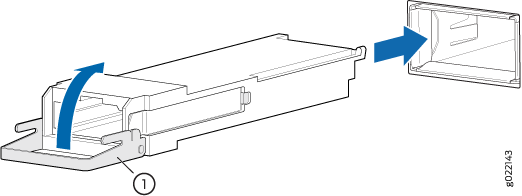
Remove a QSFP28 Transceiver
Review the Laser and LED Safety Guidelines and Warnings.
Ensure that you have the following parts and tools available:
-
An antistatic bag or an antistatic mat
-
Rubber safety caps to cover the transceiver and fiber-optic cable connector
-
A dust cover to cover the port or a replacement transceiver
After you insert a transceiver, or after you change the media-type configuration, wait for 6 seconds for the interface to display operational commands.
To remove a QSFP28 transceiver:
-
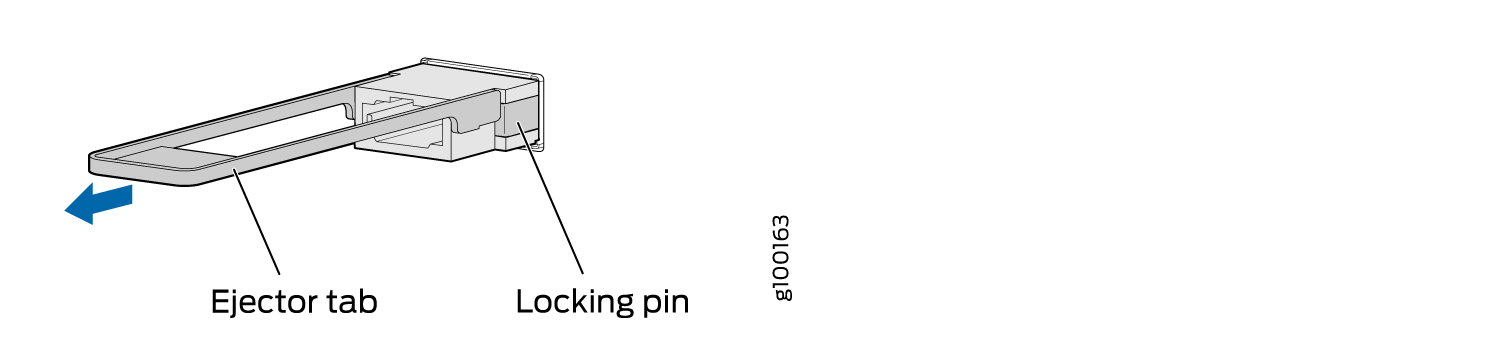
Pull the ejector tab straight back. The locking pins on the transceiver
automatically release the transceiver.
Figure 3: Remove a QSFP28 Transceiver
Install a QSFP28 Transceiver
We recommend that you use only optical transceivers and optical connectors purchased from Juniper Networks with your Juniper Networks device.
The Juniper Networks Technical Assistance Center (JTAC) provides complete support for Juniper-supplied optical modules and cables. However, JTAC does not provide support for third-party optical modules and cables that are not qualified or supplied by Juniper Networks. If you face a problem running a Juniper device that uses third-party optical modules or cables, JTAC may help you diagnose host-related issues if the observed issue is not, in the opinion of JTAC, related to the use of the third-party optical modules or cables. Your JTAC engineer will likely request that you check the third-party optical module or cable and, if required, replace it with an equivalent Juniper-qualified component.
Use of third-party optical modules with high-power consumption (for example, coherent ZR or ZR+) can potentially cause thermal damage to or reduce the lifespan of the host equipment. Any damage to the host equipment due to the use of third-party optical modules or cables is the users’ responsibility. Juniper Networks will accept no liability for any damage caused due to such use.
Review the Laser and LED Safety Guidelines and Warnings
Ensure that you have a rubber safety cap available to cover the transceiver.
After you insert a transceiver or after you change the media-type configuration, wait for 6 seconds for the interface to display operational commands.
To install a QSFP28 transceiver:
-
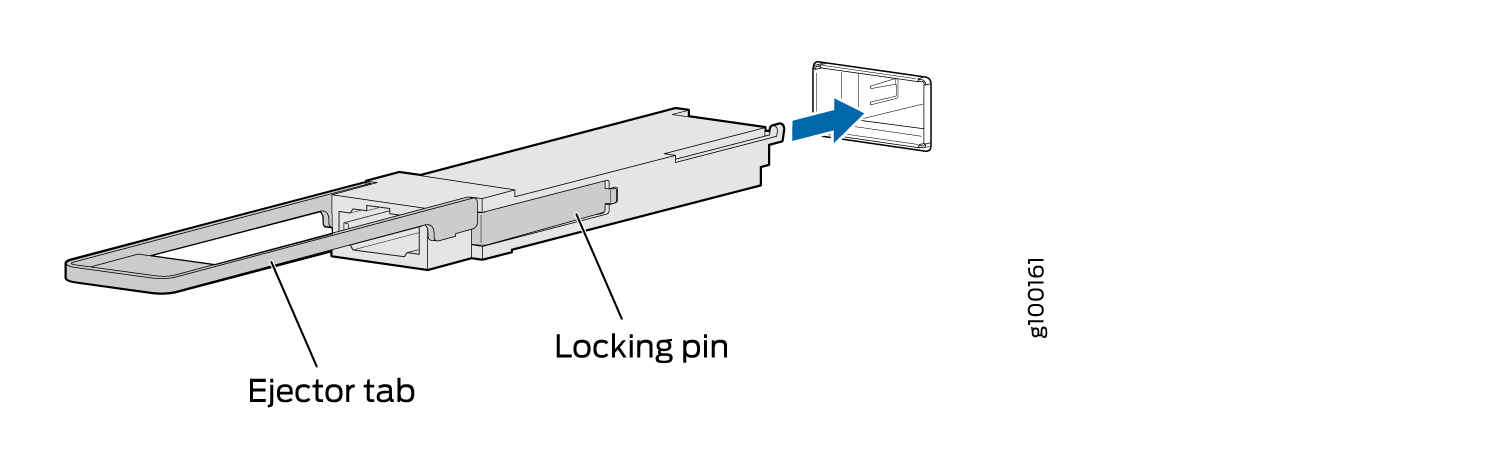
Slide the transceiver into the port until the locking pins lock in place.
If there is resistance, remove the transceiver and flip it so that the
connector faces the other direction.
Figure 4: Install a QSFP28 Transceiver