
例:LDP VPLS向けBGP自動検出の設定
この例では、FEC(Forwarding Equivalency Class)129で規定されているとおりに、LDP VPLSのBGP自動検出を設定する方法を説明します。FEC 129は、BGP自動検出を使用してエンドポイント情報を伝達するため、疑似配線を手動で設定する必要はありません。
要件
この例では、以下のハードウェアおよびソフトウェアコンポーネントを使用しています。
-
4つのMXシリーズ5Gユニバーサルルーティングプラットフォーム
-
Junos OSリリース10.4R2以降
M SeriesルーターまたはT Seriesルーターを使用する場合、PEルーターは仮想ループバックトンネル(vt)インターフェイスまたはラベルスイッチインターフェイス(LSI)のいずれかを備えている必要があります。M SeriesルーターとT Seriesルーターでは、VPLSはトンネルベースのPICを使用して、 vt インターフェイスに仮想ポートを作成します。M SeriesまたはT SeriesルーターにトンネルベースのPICがインストールされていない場合でも、仮想ポートをサポートするLSIを使用してVPLSを設定することができます。LSIを使用するには、拡張フレキシブルPICコンセントレータ(FPC)にイーサネットベースのPICをインストールする必要があります。
CEデバイスにルーターを使用する必要はありません。例えば、CEデバイスはEXシリーズイーサネットスイッチにすることができます。
概要
VPLSネットワーク内のすべてのPEルーターは、大型の分散型イーサネットスイッチのように動作し、接続されたデバイスにレイヤー2サービスを提供します。この例では、自動検出されたVPLSネットワークを作成するためのPEルーターとCEデバイスの最小設定を示します。トポロジーは、2 つの PE ルーター、2 つの CE ルーター、およびオプションのルート リフレクター(RR)の 5 つのルーターで構成されています。PEルーターは、BGPを使用して、両方のPEルーターに設定された2つの異なるVPLSインスタンスを自動検出します。その後、PE ルーターは LDP を使用して、検出されたエンドポイント間の 2 つの疑似配線に自動的に信号を送ります。最後に、PE ルーターはトラフィックを転送するために両方の VPLS インスタンスを起動します。各CEデバイスには2つのVLANが設定されており、各VLANはPEルーター内の異なるVPLSインスタンスに属しています。
この例では、以下の設定が含まれています。
-
auto-discovery-only—LDPベースのレイヤー2VPNおよびVPLSアップデートメッセージ(BGP_L2VPN_AD_NLRI)(FEC 129)の自動検出ネットワーク層到達可能性情報(NLRI)アップデートメッセージのみをルーターが処理できるようにします。具体的には、auto-discovery-onlyステートメントは、自動検出関連のNLRIメッセージを期待するようにルーティングプロセス(rpd)に通知し、LDPとVPLSで情報を解読して使用できるようにします。このステートメントは、BGPのグローバル、グループ、およびネイバーレベルで設定できます。auto-discovery-onlyステートメントは、VPLSのすべてのPEルーターで設定する必要があります。ルートリフレクションを設定する場合、FEC 129関連のアップデートをサポートするルートリフレクタとして機能するPルーターでもauto-discovery-onlyステートメントが必要になります。signalingステートメントはこの例には含まれていませんが、念のためにここで説明します。signalingステートメントにより、ルーターは、BGPベースのレイヤー2VPN(FEC 128)に使用されるBGP_L2VPN_NLRIのみを処理できます。PE ルーターが両方のタイプの NLRI(FEC 128 および FEC 129)をサポートしなければならない相互運用シナリオでは、
signalingステートメントとauto-discovery-onlyステートメントの両方を設定することができます。例えば、単一の PE ルーターは、BGP 自動検出によって支援された BGP 信号の仮想プライベート ワイヤ サービス(VPWS)と LDP 信号の VPLS の組み合わせを処理する必要がある場合があります。signalingステートメントとauto-discovery-onlyステートメントの両方を一緒に設定することで、両方のタイプのシグナリングを独立して実行できます。signalingステートメントは、auto-discovery-onlyステートメントと同じ階層レベルでサポートされています。 -
cluster—FEC 129自動検出PEルーターでは、ルートリフレクタの設定はオプションです。この例では、clusterステートメントは、ルーターRRをIBGPグループのルートリフレクタとして設定しています。インバウンド更新では、ルーターがルートリフレクタとして設定されている場合、またはkeep allステートメントがIBGPグループに設定されている場合、BGP自動検出NLRIメッセージが受け入れられます。 -
l2vpn-id—インスタンスのグローバルに一意なレイヤー2 VPNコミュニティ識別子を指定します。このステートメントは、タイプvplsのルーティングインスタンスに対して設定可能です。コミュニティ識別子には、以下の形式を設定できます。
-
自律システム(AS)番号形式—
l2vpn-id:as-number:2-byte-number例:l2vpn-id:100:200。AS番号の範囲は1〜65,535です。 -
IPv4形式—
l2vpn-id:ip-address:2-byte-number例:l2vpn-id:10.1.1.1:2。
-
-
vrf-target—NLRIのインポートおよびエクスポートルートターゲットを定義します。NLRI のインスタンスのインポートとエクスポートのポリシーあるいはインポートとエクスポートのルートターゲットを定義するには、vrf-targetステートメントまたはvrf-importステートメントとvrf-exportステートメントを設定する必要があります。この例では、vrf-targetステートメントを使用しています。 -
route-distinguisher—BGP自動検出NLRIの一部を形成し、各ルートが属しているVPNまたはVPLSルーティングインスタンスを区別します。各ルート識別は 6 バイト値です。ルーティングインスタンスごとに固有のルート識別子を設定する必要があります。ルート識別には、以下の形式を設定できます。
-
AS番号形式—
as-number:2-byte-number -
IPv4形式—
ip-address:2-byte-number
-
この例には、2 つの注目すべきステートメントが含まれています。これらの記述は、他のベンダーの機器との相互運用性にとって重要です。相互運用性ステートメントは、この例で使用されているトポロジーには必要ありませんが、完全を期すために含まれています。
相互運用性に関する声明は以下のとおりです。
-
input-vlan-map pop—VLANタグスタックの最上位から外側のVLANタグを削除します。 -
output-vlan-map push—既存のVLANタグの前に外部VLANタグを追加します。
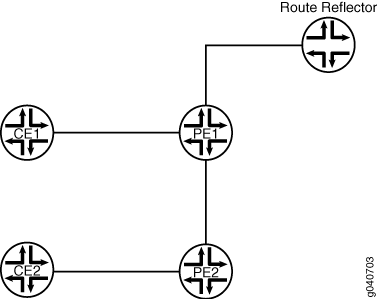
設定
CLIクイックコンフィグレーション
LDP VPLSのBGP自動検出をすばやく設定するには、以下のコマンドをコピーし、改行を削除してから、各デバイスのCLIにコマンドを貼り付けます。
ルーターPE1の場合:
[edit]
set interfaces ge-0/1/0 vlan-tagging
set interfaces ge-0/1/0 encapsulation flexible-ethernet-services
set interfaces ge-0/1/0 unit 100 encapsulation vlan-vpls
set interfaces ge-0/1/0 unit 100 vlan-id 100
set interfaces ge-0/1/0 unit 100 input-vlan-map pop
set interfaces ge-0/1/0 unit 100 output-vlan-map push
set interfaces ge-0/1/0 unit 100 family vpls
set interfaces ge-0/1/0 unit 200 encapsulation vlan-vpls
set interfaces ge-0/1/0 unit 200 vlan-id 200
set interfaces ge-0/1/0 unit 200 family vpls
set interfaces ge-0/1/1 unit 0 description "PE1 to PE2"
set interfaces ge-0/1/1 unit 0 family inet address 192.0.2.4/24
set interfaces ge-0/1/1 unit 0 family iso
set interfaces ge-0/1/1 unit 0 family mpls
set interfaces ge-0/3/0 unit 0 description "PE1 to RR"
set interfaces ge-0/3/0 unit 0 family inet address 192.0.2.7/24
set interfaces ge-0/3/0 unit 0 family iso
set interfaces ge-0/3/0 unit 0 family mpls
set interfaces lo0 unit 0 family inet address 192.0.2.8/24
set routing-options router-id 192.0.2.8
set routing-options autonomous-system 100
set protocols mpls interface lo0.0
set protocols mpls interface all
set protocols mpls interface fxp0.0 disable
set protocols bgp group int type internal
set protocols bgp group int local-address 192.0.2.8
set protocols bgp group int family l2vpn auto-discovery-only
set protocols bgp group int neighbor 192.0.2.9
set protocols isis level 1 disable
set protocols isis interface all
set protocols isis interface fxp0.0 disable
set protocols isis interface lo0.0
set protocols ldp interface all
set protocols ldp interface fxp0.0 disable
set protocols ldp interface lo0.0
set routing-instances vpls100 instance-type vpls
set routing-instances vpls100 interface ge-0/1/0.100
set routing-instances vpls100 route-distinguisher 192.0.2.8:100
set routing-instances vpls100 l2vpn-id l2vpn-id:100:100
set routing-instances vpls100 vrf-target target:100:100
set routing-instances vpls100 protocols vpls no-tunnel-services
set routing-instances vpls200 instance-type vpls
set routing-instances vpls200 interface ge-0/1/0.200
set routing-instances vpls200 route-distinguisher 192.0.2.8:200
set routing-instances vpls200 l2vpn-id l2vpn-id:100:200
set routing-instances vpls200 vrf-target target:100:208
set routing-instances vpls200 protocols vpls no-tunnel-services
デバイスCE1の場合:
[edit]
set interfaces ge-1/2/1 vlan-tagging
set interfaces ge-1/2/1 mtu 1400
set interfaces ge-1/2/1 unit 100 vlan-id 100
set interfaces ge-1/2/1 unit 100 family inet address 203.0.113.3/24
set interfaces ge-1/2/1 unit 200 vlan-id 200
set interfaces ge-1/2/1 unit 200 family inet address 203.0.113.2/24
set protocols ospf area 0.0.0.0 interface ge-1/2/1.100
set protocols ospf area 0.0.0.0 interface ge-1/2/1.200
ルーターPE2の場合:
[edit]
set interfaces ge-1/1/0 vlan-tagging
set interfaces ge-1/1/0 encapsulation flexible-ethernet-services
set interfaces ge-1/1/0 unit 100 encapsulation vlan-vpls
set interfaces ge-1/1/0 unit 100 vlan-id 100
set interfaces ge-1/1/0 unit 100 input-vlan-map pop
set interfaces ge-1/1/0 unit 100 output-vlan-map push
set interfaces ge-1/1/0 unit 100 family vpls
set interfaces ge-1/1/0 unit 200 encapsulation vlan-vpls
set interfaces ge-1/1/0 unit 200 vlan-id 200
set interfaces ge-1/1/0 unit 200 family vpls
set interfaces ge-1/2/1 unit 0 description "PE2 to PE1"
set interfaces ge-1/2/1 unit 0 family inet address 192.0.2.14/24
set interfaces ge-1/2/1 unit 0 family iso
set interfaces ge-1/2/1 unit 0 family mpls
set interfaces lo0 unit 0 family inet address 192.0.2.10/24
set routing-options router-id 192.0.2.10
set routing-options autonomous-system 100
set protocols mpls interface lo0.0
set protocols mpls interface all
set protocols mpls interface fxp0.0 disable
set protocols bgp group int type internal
set protocols bgp group int local-address 192.0.2.10
set protocols bgp group int family l2vpn auto-discovery-only
set protocols bgp group int neighbor 192.0.2.9
set protocols isis level 1 disable
set protocols isis interface ge-1/2/1.0
set protocols isis interface lo0.0
set protocols ldp interface all
set protocols ldp interface fxp0.0 disable
set protocols ldp interface lo0.0
set routing-instances vpls100 instance-type vpls
set routing-instances vpls100 interface ge-1/1/0.100
set routing-instances vpls100 route-distinguisher 192.0.2.10:100
set routing-instances vpls100 l2vpn-id l2vpn-id:100:100
set routing-instances vpls100 vrf-target target:100:100
set routing-instances vpls100 protocols vpls no-tunnel-services
set routing-instances vpls200 instance-type vpls
set routing-instances vpls200 interface ge-1/1/0.200
set routing-instances vpls200 route-distinguisher 192.0.2.10:200
set routing-instances vpls200 l2vpn-id l2vpn-id:100:200
set routing-instances vpls200 vrf-target target:100:208
set routing-instances vpls200 protocols vpls no-tunnel-services
デバイスCE2の場合:
[edit]
set interfaces ge-1/1/0 vlan-tagging
set interfaces ge-1/1/0 mtu 1400
set interfaces ge-1/1/0 unit 100 vlan-id 100
set interfaces ge-1/1/0 unit 100 family inet address 203.0.113.15/24
set interfaces ge-1/1/0 unit 200 vlan-id 200
set interfaces ge-1/1/0 unit 200 family inet address 203.0.113.16/24
set protocols ospf area 0.0.0.0 interface ge-1/1/0.100
set protocols ospf area 0.0.0.0 interface ge-1/1/0.200
ルーター RR の場合:
[edit]
set interfaces ge-1/3/2 unit 0 description "RR to PE1"
set interfaces ge-1/3/2 unit 0 family inet address 192.0.2.17/24
set interfaces ge-1/3/2 unit 0 family iso
set interfaces ge-1/3/2 unit 0 family mpls
set interfaces lo0 unit 0 family inet address 192.0.2.9/24
set routing-options router-id 192.0.2.9
set routing-options autonomous-system 100
set protocols bgp group int type internal
set protocols bgp group int local-address 192.0.2.9
set protocols bgp group int family l2vpn auto-discovery-only
set protocols bgp group int cluster 198.51.100.0
set protocols bgp group int neighbor 192.0.2.8
set protocols bgp group int neighbor 192.0.2.10
set protocols isis level 1 disable
set protocols isis interface all
set protocols isis interface fxp0.0 disable
set protocols isis interface lo0.0
set protocols ldp interface all
set protocols ldp interface fxp0.0 disable
set protocols ldp interface lo0.0
ルーターPE1
ステップバイステップの手順
ルーターPE1を設定するには:
-
インターフェイス、インターフェイスのカプセル化、プロトコルファミリーを設定します。
[edit]
user@PE1# edit interfaces
[edit interfaces]
user@PE1# set ge-0/1/0 encapsulation flexible-ethernet-services
user@PE1# set ge-0/1/0 unit 100 encapsulation vlan-vpls
user@PE1# set ge-0/1/0 unit 100 family vpls
user@PE1# set ge-0/1/0 unit 200 encapsulation vlan-vpls
user@PE1# set ge-0/1/0 unit 200 family vpls
user@PE1# set ge-0/1/1 unit 0 description "PE1 to PE2"
user@PE1# set ge-0/1/1 unit 0 family inet address 192.0.2.4/24
user@PE1# set ge-0/1/1 unit 0 family iso
user@PE1# set ge-0/1/1 unit 0 family mpls
user@PE1# set ge-0/3/0 unit 0 description "PE1 to RR"
user@PE1# set ge-0/3/0 unit 0 family inet address 192.0.2.7/24
user@PE1# set ge-0/3/0 unit 0 family iso
user@PE1# set ge-0/3/0 unit 0 family mpls
user@PE1# set lo0 unit 0 family inet address 192.0.2.8/24
-
VLANを設定します。
[edit interfaces]
user@PE1# set ge-0/1/0 vlan-tagging
user@PE1# set ge-0/1/0 unit 100 vlan-id 100
user@PE1# set ge-0/1/0 unit 100 input-vlan-map pop
user@PE1# set ge-0/1/0 unit 100 output-vlan-map push
user@PE1# set ge-0/1/0 unit 200 vlan-id 200
user@PE1# exit
-
プロトコルに依存しないプロパティを設定します。
ルーターIDはローカルアドレスと同じにすることをお勧めします。(ステップ4の
local-addressステートメントを参照してください。)[edit] user@PE1# edit routing-options [edit routing-options] user@PE1# set router-id 192.0.2.8 user@PE1# set autonomous-system 100 user@PE1# exit
-
auto-discovery-onlyステートメントを含め、IBGPを設定します。[edit] user@PE1# edit protocols [edit protocols] user@PE1# set bgp group int type internal user@PE1# set bgp group int local-address 192.0.2.8 user@PE1# set bgp group int family l2vpn auto-discovery-only user@PE1# set bgp group int neighbor 192.0.2.9
-
MPLS、LDP、およびIGPを設定します。
[edit protocols]
user@PE1# set mpls interface lo0.0
user@PE1# set mpls interface all
user@PE1# set mpls interface fxp0.0 disable
user@PE1# set isis level 1 disable
user@PE1# set isis interface all
user@PE1# set isis interface fxp0.0 disable
user@PE1# set isis interface lo0.0
user@PE1# set ldp interface all
user@PE1# set ldp interface fxp0.0 disable
user@PE1# set ldp interface lo0.0
user@PE1# exit
-
ルーティングインスタンスを設定します。
no-tunnel-servicesステートメントは、vtインターフェイスではなく VPLS に LSI インターフェイスを使用する場合に必要です。[edit] user@PE1# edit routing-instances [edit routing-instances] user@PE1# set vpls100 instance-type vpls user@PE1# set vpls100 interface ge-0/1/0.100 user@PE1# set vpls100 route-distinguisher 192.0.2.8:100 user@PE1# set vpls100 l2vpn-id l2vpn-id:100:100 user@PE1# set vpls100 vrf-target target:100:100 user@PE1# set vpls100 protocols vpls no-tunnel-services user@PE1# set vpls200 instance-type vpls user@PE1# set vpls200 interface ge-0/1/0.200 user@PE1# set vpls200 route-distinguisher 192.0.2.8:200 user@PE1# set vpls200 l2vpn-id l2vpn-id:100:200 user@PE1# set vpls200 vrf-target target:100:208 user@PE1# set vpls200 protocols vpls no-tunnel-services
-
デバイスの設定が完了したら、設定をコミットします。
[edit]
user@PE1# commit
結果
設定モードから、 show interfaces、 show protocols、 show routing-options、 show routing-instances コマンドを入力して設定を確認します。出力に意図した設定が表示されない場合は、この例の手順を繰り返して設定を修正します。
user@PE1# show interfaces
ge-0/1/0 {
    vlan-tagging;
    encapsulation flexible-ethernet-services;
    unit 100 {
        encapsulation vlan-vpls;
        vlan-id 100;
        input-vlan-map pop;
        output-vlan-map push;
        family vpls;
    }
    unit 200 {
        encapsulation vlan-vpls;
        vlan-id 200;
        family vpls;
    }
}
ge-0/1/1 {
    unit 0 {
        description "PE1 to PE2";
        family inet {
            address 192.0.2.4/24;
        }
        family iso;
        family mpls;
    }
}
ge-0/3/0 {
    unit 0 {
        description "PE1 to RR";
        family inet {
            address 192.0.2.7/24;
        }
        family iso;
        family mpls;
    }
}
lo0 {
    unit 0 {
        family inet {
            address 192.0.2.8/24;
        }
    }
}
user@PE1# show protocols
mpls {
    interface lo0.0;
    interface all;
    interface fxp0 disable;
}
bgp {
    group int {
        type internal;
        local-address 192.0.2.8;
        family l2vpn {
            auto-discovery-only;
        }
        neighbor 192.0.2.9;
    }
}
isis {
    level 1 disable;
    interface all;
    interface lo0.0;
    interface fxp0 disable;
}
ldp {
    interface lo0.0;
    interface all;
    interface fxp0 disable;
}
user@PE1# show routing-options
router-id 192.0.2.8;
autonomous-system 100;
user@PE1# show routing-instances
vpls100 {
    instance-type vpls;
    interface ge-0/1/0.100;
    route-distinguisher 192.0.2.8:100;
    l2vpn-id l2vpn-id:100:100;
    vrf-target target:100:100;
    protocols {
        vpls {
            no-tunnel-services;
        }
    }
}
vpls200 {
    instance-type vpls;
    interface ge-0/1/0.200;
    route-distinguisher 192.0.2.8:200;
    l2vpn-id l2vpn-id:100:200;
    vrf-target target:100:208;
    protocols {
        vpls {
            no-tunnel-services;
        }
    }
}
デバイスCE1
ステップバイステップの手順
デバイスCE1を設定するには:
-
インターフェイスアドレスとインターフェイスの最大送信単位(MTU)を設定します。
[edit]
user@CE1# edit interfaces
[edit interfaces]
user@CE1# set ge-1/2/1 mtu 1400
user@CE1# set ge-1/2/1 unit 100 family inet address 203.0.113.3/24
user@CE1# set ge-1/2/1 unit 200 family inet address 203.0.113.2/24
-
VLANを設定します。
[edit interfaces]
user@CE1# set ge-1/2/1 vlan-tagging
user@CE1# set ge-1/2/1 unit 100 vlan-id 100
user@CE1# set ge-1/2/1 unit 200 vlan-id 200
user@CE1# exit
-
IGPを設定します。
user@CE1# edit protocols
[edit protocols]
user@CE1# set ospf area 0.0.0.0 interface ge-1/2/1.100
user@CE1# set ospf area 0.0.0.0 interface ge-1/2/1.200
user@CE1# exit
-
デバイスの設定が完了したら、設定をコミットします。
[edit]
user@CE1# commit
結果
設定モードから、 show interfaces および show protocols コマンドを入力して設定を確認します。出力に意図した設定が表示されない場合は、この例の手順を繰り返して設定を修正します。
user@CE1# show interfaces
ge-1/2/1 {
    vlan-tagging;
    mtu 1400;
    unit 100 {
        vlan-id 100;
        family inet {
            address 203.0.113.3/24;
        }
    }
    unit 200 {
        vlan-id 200;
        family inet {
            address 203.0.113.2/24;
        }
    }
}
user@CE1# show protocols
ospf {
    area 0.0.0.0 {
        interface ge-1/2/1.100;
        interface ge-1/2/1.200;
    }
}
ルーターPE2
ステップバイステップの手順
ルーターPE2を設定するには:
-
インターフェイス、インターフェイスのカプセル化、プロトコルファミリーを設定します。
[edit]
user@PE2# edit interfaces
[edit interfaces]
user@PE2# set ge-1/1/0 encapsulation flexible-ethernet-services
user@PE2# set ge-1/1/0 unit 100 encapsulation vlan-vpls
user@PE2# set ge-1/1/0 unit 100 family vpls
user@PE2# set ge-1/1/0 unit 200 encapsulation vlan-vpls
user@PE2# set ge-1/1/0 unit 200 family vpls
user@PE2# set ge-1/2/1 unit 0 description "PE2 to PE1"
user@PE2# set ge-1/2/1 unit 0 family inet address 192.0.2.14/24
user@PE2# set ge-1/2/1 unit 0 family iso
user@PE2# set ge-1/2/1 unit 0 family mpls
user@PE2# set lo0 unit 0 family inet address 192.0.2.10/24
-
VLANを設定します。
[edit interfaces]
user@PE2# set ge-1/1/0 vlan-tagging
user@PE2# set ge-1/1/0 unit 100 vlan-id 100
user@PE2# set ge-1/1/0 unit 100 input-vlan-map pop
user@PE2# set ge-1/1/0 unit 100 output-vlan-map push
user@PE2# set ge-1/1/0 unit 200 vlan-id 200
user@PE2# exit
-
プロトコルに依存しないプロパティを設定します。
ルーターIDはローカルアドレスと同じにすることをお勧めします。(ステップ4の
local-addressステートメントを参照してください。)[edit] user@PE2# edit routing-options [edit routing-options] user@PE2# set router-id 192.0.2.10 user@PE2# set autonomous-system 100
-
auto-discovery-onlyステートメントを含め、IBGPを設定します。[edit] user@PE2# edit protocols [edit protocols] user@PE2# set bgp group int type internal user@PE2# set bgp group int local-address 192.0.2.10 user@PE2# set bgp group int family l2vpn auto-discovery-only user@PE2# set bgp group int neighbor 192.0.2.9
-
MPLS、LDP、およびIGPを設定します。
[edit protocols]
user@PE2# set mpls interface lo0.0
user@PE2# set mpls interface all
user@PE2# set mpls interface fxp0.0 disable
user@PE2# set isis level 1 disable
user@PE2# set isis interface ge-1/2/1.0
user@PE2# set isis interface lo0.0
user@PE2# set ldp interface all
user@PE2# set ldp interface fxp0.0 disable
user@PE2# set ldp interface lo0.0
user@PE2# exit
-
ルーティングインスタンスを設定します。
no-tunnel-servicesステートメントは、vtインターフェイスではなく VPLS に LSI インターフェイスを使用する場合に必要です。[edit] user@PE2# edit routing-instances [edit routing-instances] user@PE2# set vpls100 instance-type vpls user@PE2# set vpls100 interface ge-1/1/0.100 user@PE2# set vpls100 route-distinguisher 192.0.2.10:100 user@PE2# set vpls100 l2vpn-id l2vpn-id:100:100 user@PE2# set vpls100 vrf-target target:100:100 user@PE2# set vpls100 protocols vpls no-tunnel-services user@PE2# set vpls200 instance-type vpls user@PE2# set vpls200 interface ge-1/1/0.200 user@PE2# set vpls200 route-distinguisher 192.0.2.10:200 user@PE2# set vpls200 l2vpn-id l2vpn-id:100:200 user@PE2# set vpls200 vrf-target target:100:208 user@PE2# set vpls200 protocols vpls no-tunnel-services
-
デバイスの設定が完了したら、設定をコミットします。
[edit]
user@PE2# commit
結果
設定モードから、 show interfaces、 show protocols、 show routing-options、 show routing-instances コマンドを入力して設定を確認します。出力に意図した設定が表示されない場合は、この例の手順を繰り返して設定を修正します。
user@PE2# show interfaces
ge-1/1/0 {
    vlan-tagging;
    encapsulation flexible-ethernet-services;
    unit 100 {
        encapsulation vlan-vpls;
        vlan-id 100;
        input-vlan-map pop;
        output-vlan-map push;
        family vpls;
    }
    unit 200 {
        encapsulation vlan-vpls;
        vlan-id 200;
        family vpls;
    }
}
ge-1/2/1 {
    unit 0 {
        description "PE2 to PE1";
        family inet {
            address 192.0.2.14/24;
        }
        family iso;
        family mpls;
    }
}
lo0 {
    unit 0 {
        family inet {
            address 192.0.2.10/24;
        }
    }
}
user@PE2# show protocols
mpls {
    interface lo0.0;
    interface all;
    interface fxp0 disable;
}
bgp {
    group int {
        type internal;
        local-address 192.0.2.10;
        family l2vpn {
            auto-discovery-only;
        }
        neighbor 192.0.2.9;
    }
}
isis {
    level 1 disable;
    interface ge-1/2/1.0;
    interface lo0.0;
}
ldp {
    interface lo0.0;
    interface all;
    interface fxp0 disable;
}
user@PE2# show routing-options
router-id 192.0.2.10;
autonomous-system 100;
user@PE2# show routing-instances
vpls100 {
    instance-type vpls;
    interface ge-1/1/0.100;
    route-distinguisher 192.0.2.10:100;
    l2vpn-id l2vpn-id:100:100;
    vrf-target target:100:100;
    protocols {
        vpls {
            no-tunnel-services;
        }
    }
}
vpls200 {
    instance-type vpls;
    interface ge-1/1/0.200;
    route-distinguisher 192.0.2.10:200;
    l2vpn-id l2vpn-id:100:200;
    vrf-target target:100:208;
    protocols {
        vpls {
            no-tunnel-services;
        }
    }
}
デバイスCE2
ステップバイステップの手順
デバイスCE2を設定するには:
-
VLAN インターフェイスを設定します。
[edit]
user@CE2# edit interfaces ge-1/1/0
[edit interfaces ge-1/1/0]
user@CE2# set vlan-tagging
user@CE2# set mtu 1400
user@CE2# set unit 100 vlan-id 100
user@CE2# set unit 100 family inet address 203.0.113.15/24
user@CE2# set unit 200 vlan-id 200
user@CE2# set unit 200 family inet address 203.0.113.16/24
user@CE2# exit
-
インターフェイスに OSPF を設定します。
[edit]
user@CE2# edit protocols ospf area 0.0.0.0
[edit protocols ospf area 0.0.0.0]
user@CE2# set interface ge-1/1/0.100
user@CE2# set interface ge-1/1/0.200
user@CE2# exit
-
デバイスの設定が完了したら、設定をコミットします。
[edit]
user@CE2# commit
結果
設定モードから、 show interfaces および show protocols コマンドを入力して設定を確認します。出力に意図した設定が表示されない場合は、この例の手順を繰り返して設定を修正します。
user@CE2# show interfaces
ge-1/1/0 {
    vlan-tagging;
    mtu 1400;
    unit 100 {
        vlan-id 100;
        family inet {
            address 203.0.113.15/24;
        }
    }
    unit 200 {
        vlan-id 200;
        family inet {
            address 203.0.113.16/24;
        }
    }
}
user@CE2# show protocols
ospf {
    area 0.0.0.0 {
        interface ge-1/1/0.100;
        interface ge-1/1/0.200;
    }
}
ルーターRR
ステップバイステップの手順
ルーターRRを設定するには:
-
インターフェイスアドレスとプロトコルファミリーを設定します。
[edit]
user@RR# edit interfaces
[edit interfaces]
user@RR# set ge-1/3/2 unit 0 description "RR to PE1"
user@RR# set ge-1/3/2 unit 0 family inet address 192.0.2.17/24
user@RR# set ge-1/3/2 unit 0 family iso
user@RR# set ge-1/3/2 unit 0 family mpls
user@RR# set lo0 unit 0 family inet address 192.0.2.9/24
user@RR# exit
-
自律システムとルーターIDを設定します。
[edit]
user@RR# edit routing-options
[edit routing-options]
user@RR# set autonomous-system 100
user@RR# set router-id 192.0.2.9
user@RR# exit
-
BGPを設定し、このルーターをルートリフレクタとして設定します。FEC 129では、ルートリフレクションはオプションです。
[edit]
user@RR# edit protocols bgp group int
[edit protocols bgp group int]
user@RR# set type internal
user@RR# set local-address 192.0.2.9
user@RR# set family l2vpn auto-discovery-only
user@RR# set cluster 198.51.100.0
user@RR# set neighbor 192.0.2.8
user@RR# set neighbor 192.0.2.10
user@RR# exit
-
IGPにIS-ISを設定します。
[edit]
user@RR# edit protocols isis
[edit protocols isis]
user@RR# set level 1 disable
user@RR# set interface all
user@RR# set interface fxp0.0 disable
user@RR# set interface lo0.0
user@RR# exit
-
MPLSシグナリングプロトコルにLDPを設定します。
[edit]
user@RR# edit protocols ldp
[edit protocols ldp]
user@RR# set interface all
user@RR# set interface fxp0.0 disable
user@RR# set interface lo0.0
user@RR# exit
-
デバイスの設定が完了したら、設定をコミットします。
[edit]
user@RR# commit
結果
設定モードから、 show interfaces、 show protocols、 show routing-options コマンドを入力して設定を確認します。出力に意図した設定が表示されない場合は、この例の手順を繰り返して設定を修正します。
user@RR# show interfaces
ge-1/3/2 {
    unit 0 {
        description "RR to PE1";
        family inet {
            address 192.0.2.17/24;
        }
        family iso;
        family mpls;
    }
}
lo0 {
    unit 0 {
        family inet {
            address 192.0.2.9/24;;
        }
    }
}
user@RR# show protocols
bgp {
    group int {
        type internal;
        local-address 192.0.2.9;
        family l2vpn {
            auto-discovery-only;
        }
        cluster 198.51.100.0;
        neighbor 192.0.2.8;
        neighbor 192.0.2.10;
    }
}
isis {
    level 1 disable;
    interface lo0.0;
    interface all;
    interface fxp0 disable;
}
ldp {
    interface lo0.0;
    interface all;
    interface fxp0 disable;
}
user@RR# show routing-options
router-id 192.0.2.9;
autonomous-system 100;
検証
動作を検証するには、以下のコマンドを使用します。
-
show route advertising-protocol bgp neighbor -
show route receive-protocol bgp neighbor -
show route table bgp.l2vpn.0 -
show route table vpls100.l2vpn.0 -
show route table vpls200.l2vpn.0 -
show vpls connections extensive -
show vpls mac-table detail
ルーティングテーブル出力の AD は、自動検出NLRIを示しています。