
Visão geral do Juniper Mist WAN Assurance
Familiarize-se com o propósito, os recursos e os benefícios do Juniper Mist™ WAN Assurance.
A Borda da WAN é o ponto de demarcação para que sua rede empresarial alcance o mundo externo. Esse limite é um ponto crucial de segurança e solução de problemas. A borda da WAN pode ser uma borda simples entre sua rede corporativa e o mundo externo. No entanto, a borda da WAN também pode ser um dispositivo SD-WAN da Juniper® orientado pela Mist AI™. As opções incluem firewalls da Juniper® Série SRX, roteadores Session Smart™ da Juniper® Networks ou uma solução de nuvem como o Juniper Secure Edge.
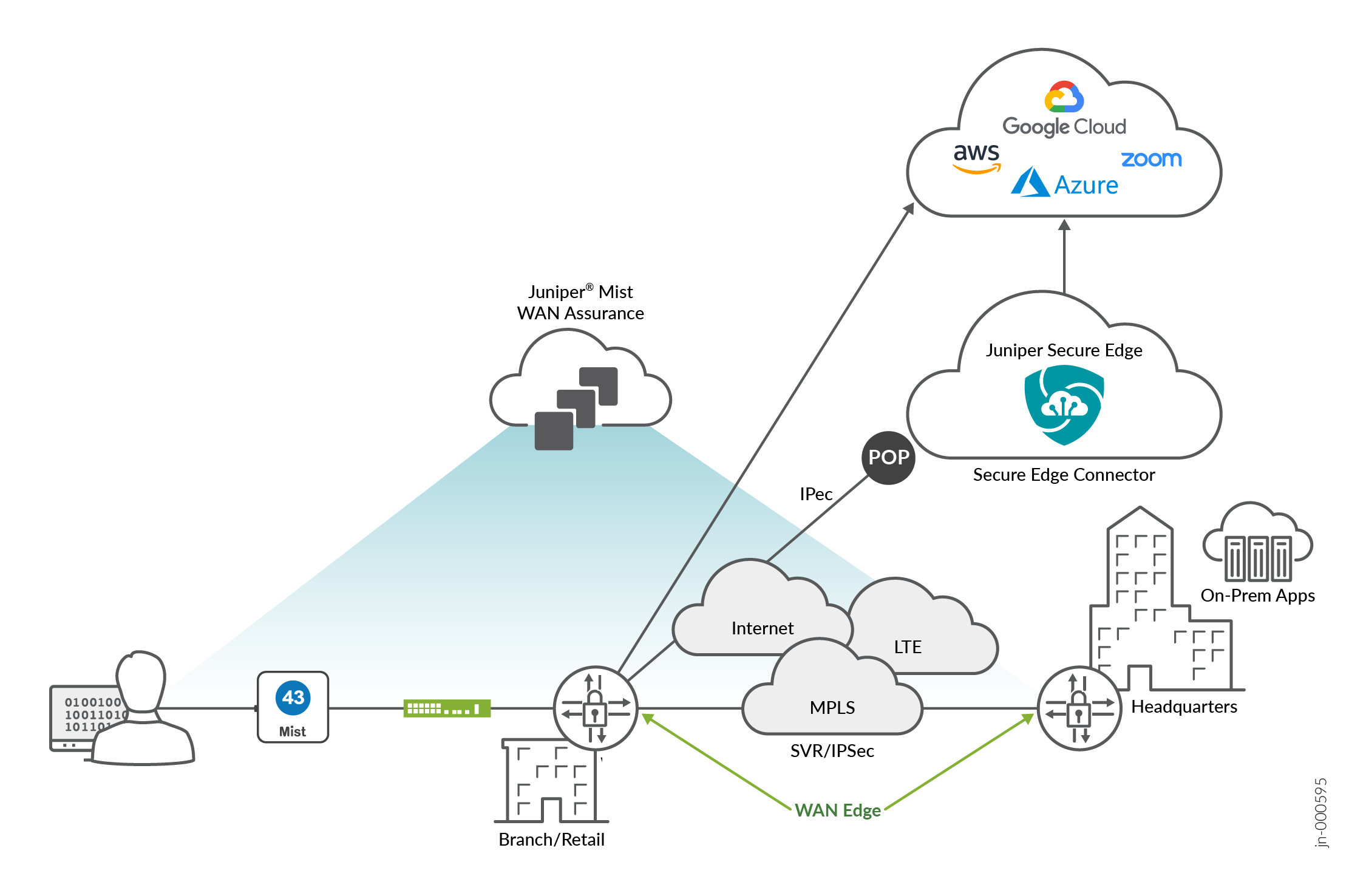
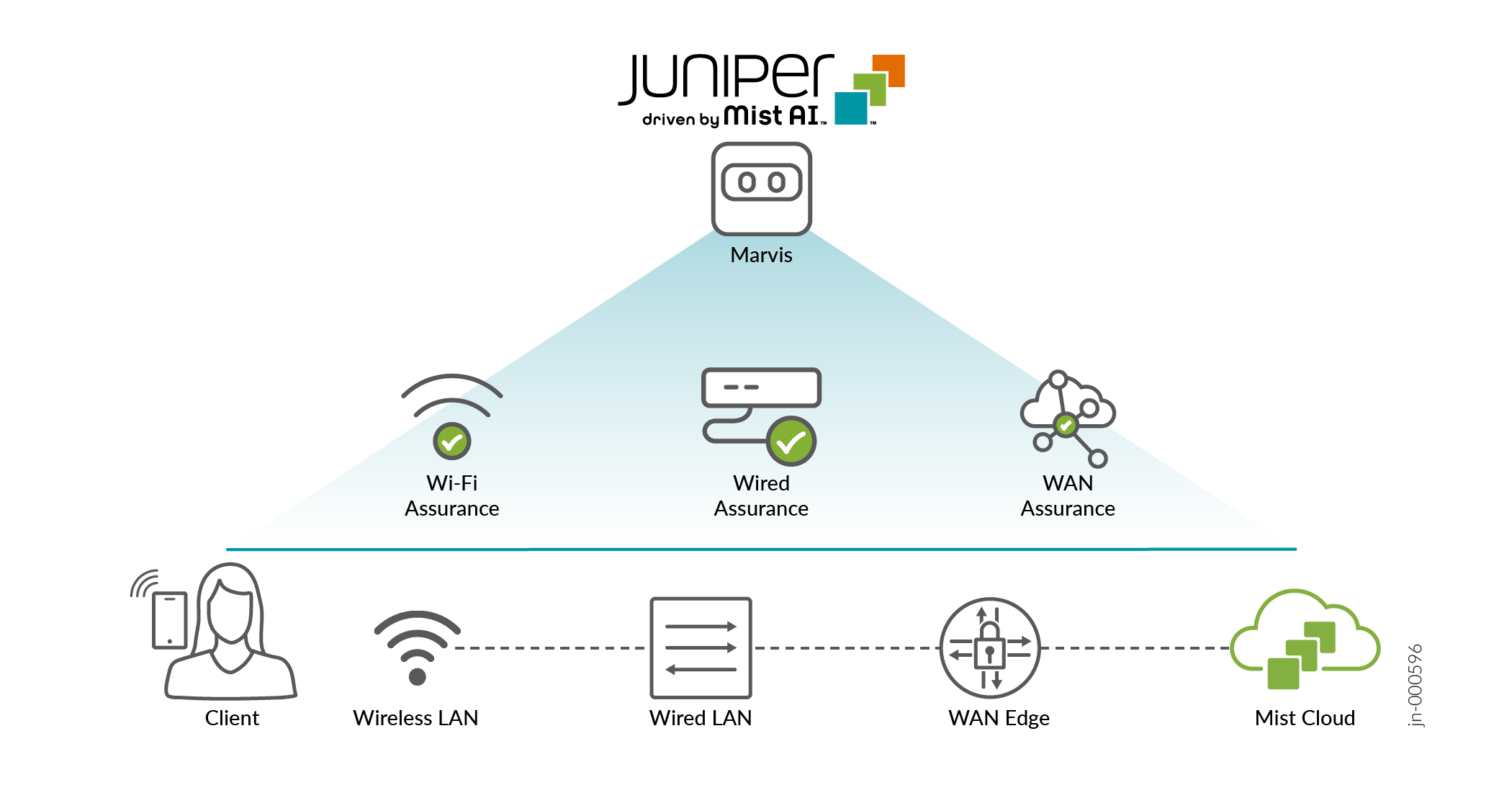
A borda da WAN se transforma com a solução de SD-WAN orientada por IA da Juniper e atua como seu ponto centralizado de aplicação de políticas (PEP). Combinado com o serviço de nuvem Juniper Mist WAN Assurance, o Juniper SD-WAN resolve muitos dos desafios de segurança, monitoramento e solução de problemas das soluções SD-WAN legadas. Promova a implantação, o monitoramento e a solução de problemas em toda a sua rede, integrando o Juniper Mist Wired Assurance, o Juniper Mist Wireless Assurance e, agora, o Juniper Mist WAN Assurance. O Juniper Mist WAN Assurance conecta com segurança escritórios de filiais com roteadores Session Smart™ da Juniper® ou firewalls da Série SRX da Juniper® em toda a SD-WAN.
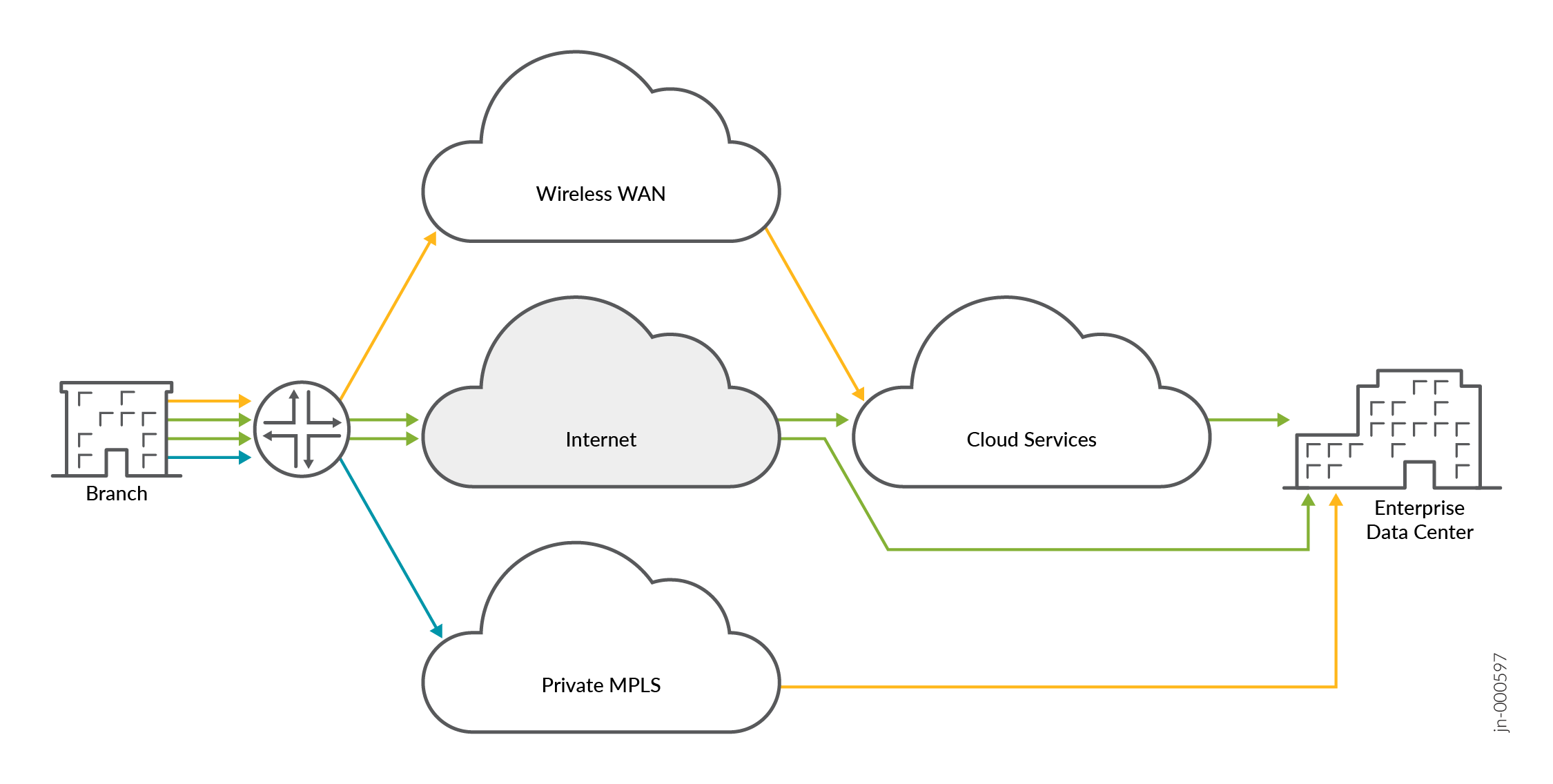
Conectividade entre sites (SD-WAN)
Sua borda de WAN se transforma quando integrada à SD-WAN da Juniper® orientada pela Mist AI™. Seu dispositivo de borda de WAN se torna rápido, seguro e consciente de aplicativos com o Juniper Mist WAN Assurance. O tráfego de WAN definido por software de locais remotos viaja por uma sobreposição abstraída em provedores de serviços de banda larga mais baratos. Esse design de conectividade substitui soluções MPLS legadas caras. Os dispositivos de borda oferecem failovers stateful em vários tipos de conexão, incluindo MPLS, banda larga, satélite e LTE. Essa chave em tempo real para aplicações críticas é imperceptível para o usuário. O Juniper Mist WAN Assurance também traz visibilidade para sua borda de WAN com insights direcionados para integridade, atividade de túnel, conectividade e sessões ativas. Ao criar esse espaço definido por software, você pode influenciar o tráfego no nível do aplicativo com maior controle de acesso e segurança.
 entre sites SD_WAN
Expectativas de nível de serviço (SLEs) do Juniper Mist WAN Assurance
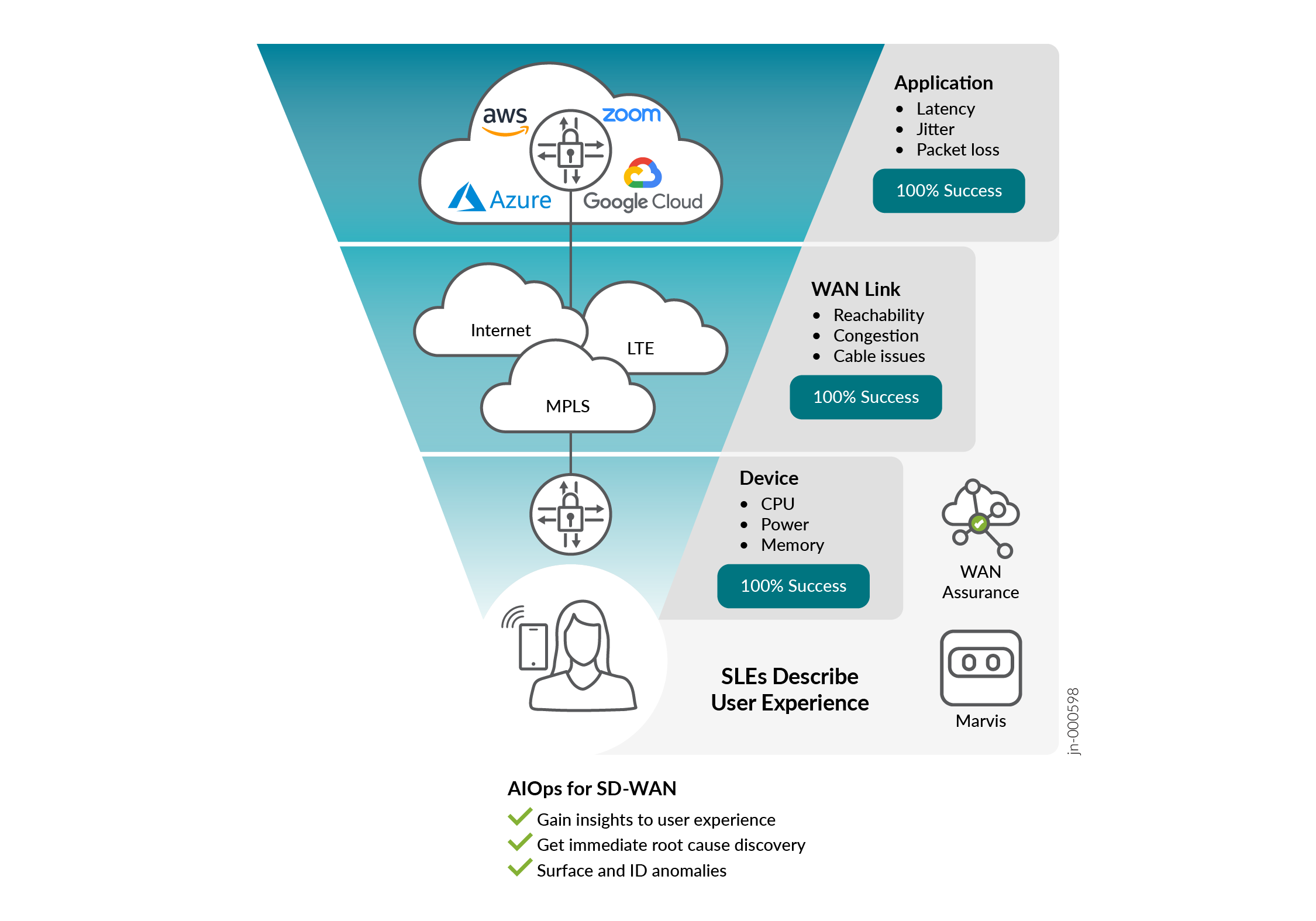
O mecanismo de análise preditiva e correlação (PACE) da Mist fornece ciência de dados e aprendizado de máquina para entender a experiência do usuário final. As métricas da SLE da WAN são: integridade da borda da WAN, integridade do link da WAN e integridade do aplicativo. O Juniper Mist WAN Assurance identifica a causa-raiz dos problemas de WAN que afetam as experiências do usuário. As expectativas de nível de serviço permitem operações mais simples, melhor visibilidade das experiências do usuário final e simplificam o monitoramento e a solução de problemas da sua rede.
 do Juniper Mist WAN Assurance
Modelo de gerenciamento do Mist
A solução de SD-WAN orientada por IA da Juniper é uma plataforma única de gerenciamento para filiais sem fio, com fio e SD-WAN. O provisionamento zero-touch (ZTP) da SD-WAN da Juniper, o ciclo de vida e a configuração são feitos por meio de um único painel da Mist.
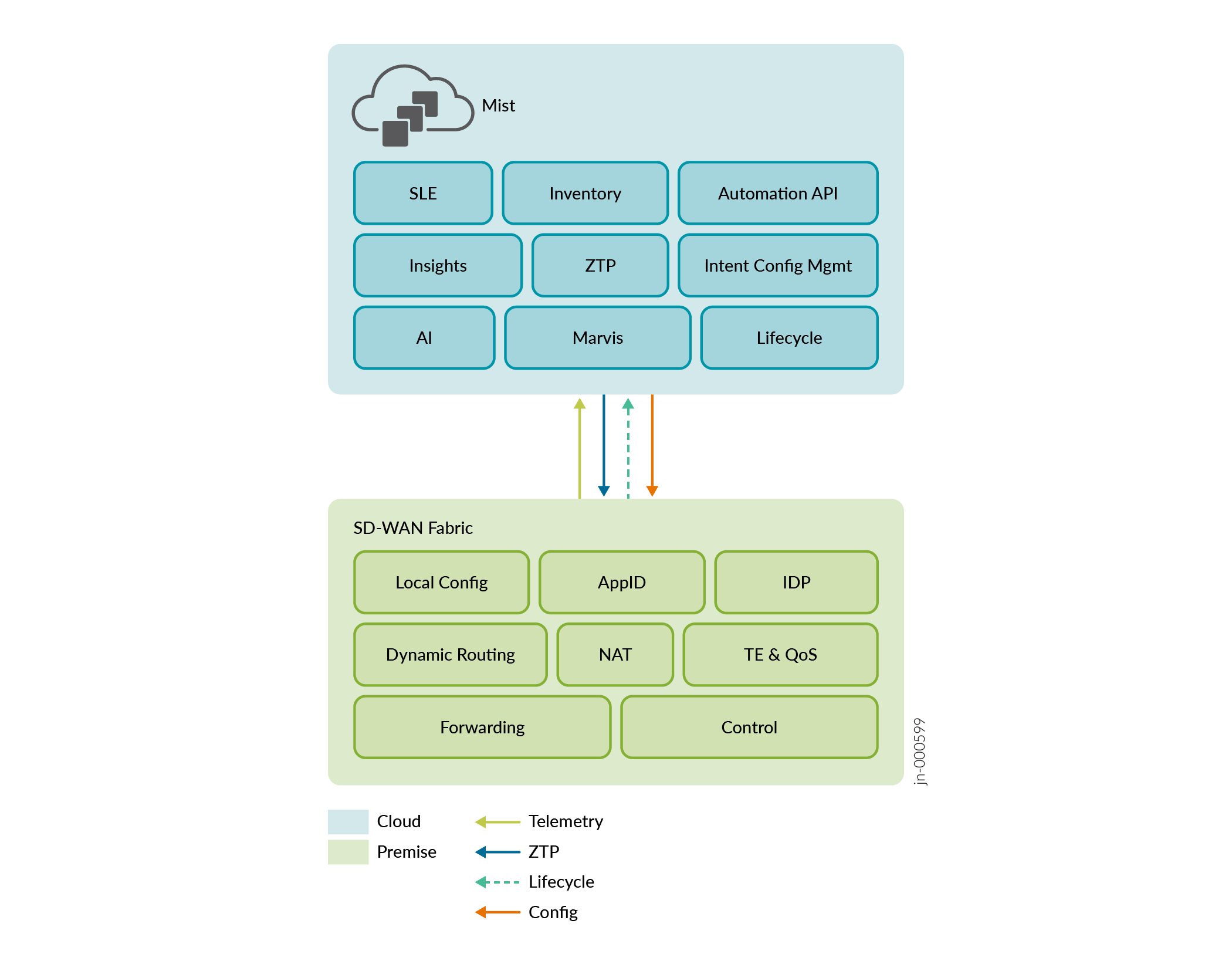 de gerenciamento do Mist
Assista ao vídeo a seguir para obter uma visão geral do recurso Juniper Mist WAN Assurance.
Juniper MIST WAN Assurance delivers insights and troubleshooting driven by MIST AI into the WAN, exposing many factors that impact user experience across your distributed enterprise. WAN Assurance complements your SD-WAN deployment and is focused on delivering the best user experience, from client to the cloud. SD-WAN solutions dynamically optimize traffic flows across the WAN based on an SLA policy for your applications.
However, these SLAs are set once at the beginning and don't account for changes over time that impact the WAN, rendering these static SLAs ineffective. In contrast, WAN Assurance is centered around the concept of the user minute, which is represented by Service Level Expectations, or SLE for short. If a user is experiencing a poor Microsoft Teams call, then the user is having bad user minutes.
Let's see what this looks like in a Juniper Cloud instance. From the monitor view, we select WAN, choosing from the time frame over the last seven days, and we see three SLEs for the WAN. The first one is Gateway Health, which accounts for the overall state of the SRX WAN edge device itself.
We track CPU, memory, temperature, fan, and power, all of which account for the overall device health. WAN Link Health represents the overall state of the WAN connections to the device. It tracks IPsec status, routing, and the WAN interfaces.
Thirdly, there's App Experience, which accounts for factors that impact application performance based on traffic. This SLE tracks latency, jitter, packet loss, and round-trip time. Together, these three SLEs describe how WAN performance is impacting overall user experience.
Let's ask Marvis what's happening with Microsoft Teams. By simply typing, obvious Teams call is bad, Marvis begins a root cause analysis. Marvis first responds by listing five Teams sessions from the past 24 hours.
We select the troublesome session from the list. Marvis quickly responds that the bad Teams experience was due to high latency on the Gateway SRX. Marvis also shows where the issue is in a simplified network diagram.
It displays how Abhi's MacBook is connected wirelessly to an access point, which in turn is connected to an EX access switch, and finally, the traffic is sent to the WAN via the SRX gateway. Marvis visually shows how each of these points in the network are impacting user experience. We see the AP and the gateway devices may be impacting experience.
We click the AP first. There is some non-WiFi interference in the 5GIG band that could be impacting users. Next, we select the gateway device.
We see it has high latency in one of its WAN links due to slow response from the application server. Marvis makes it that easy to determine root cause analysis of issues impacting user experience. By correlating across Wi-Fi, wired, and WAN, we are able to drive a better user experience within our sites, out of our sites, from client to cloud.