

















QFX Series Switches
QFX Series Switches deliver industry-leading throughput and scalability, an extensive routing stack, the open programmability of the Junos OS, and a broad set of EVPN-VXLAN and IP fabric capabilities. With QFX, you’ll find premier solutions for data center spine-and-leaf, campus distribution and core, and data center gateway and interconnect switching.
Rethink data center operations and fabric management with Apstra Data Center Director in your QFX Series environment. You can automate the entire network lifecycle to simplify design and deployment and provide closed-loop assurance. With Data Center Director, customers have achieved 90% faster time to deployment, 70% faster time to resolution, and 83% OpEx reduction.
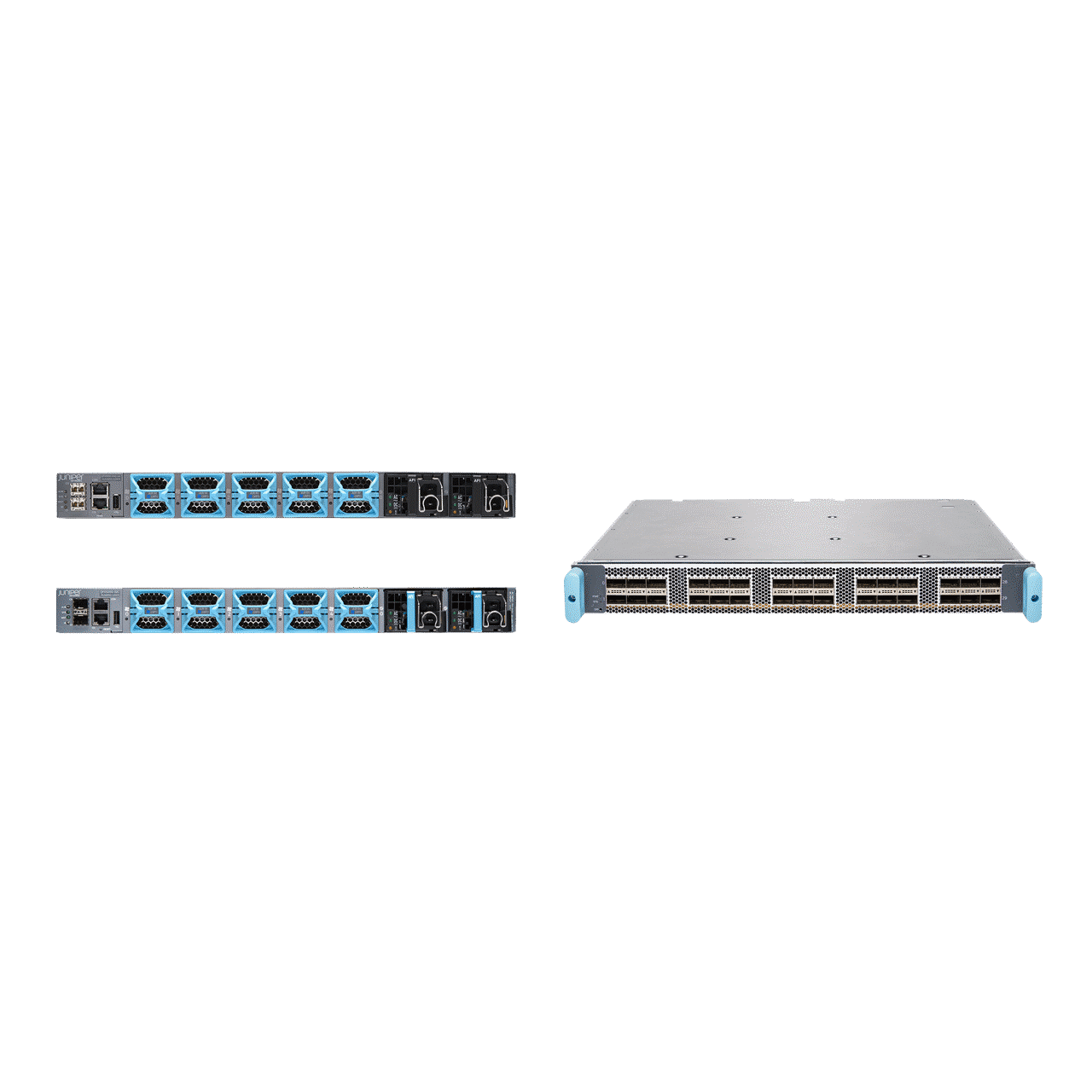
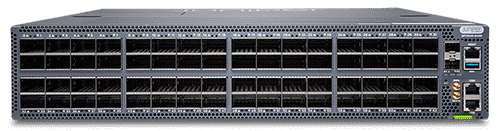
QFX5240
The QFX5240 line offers up to 800GbE interfaces to support AI Data Center Networking deployments with AI/ML workloads and other high-speed, high-density, spine-and-leaf IP fabrics where scalability, performance and low latency are critical.
Use Cases: AI data center leaf/spine, Data center fabric leaf/spine/super spine Port Density:
Throughput: Up to 102.4 Tbps (bidirectional) |
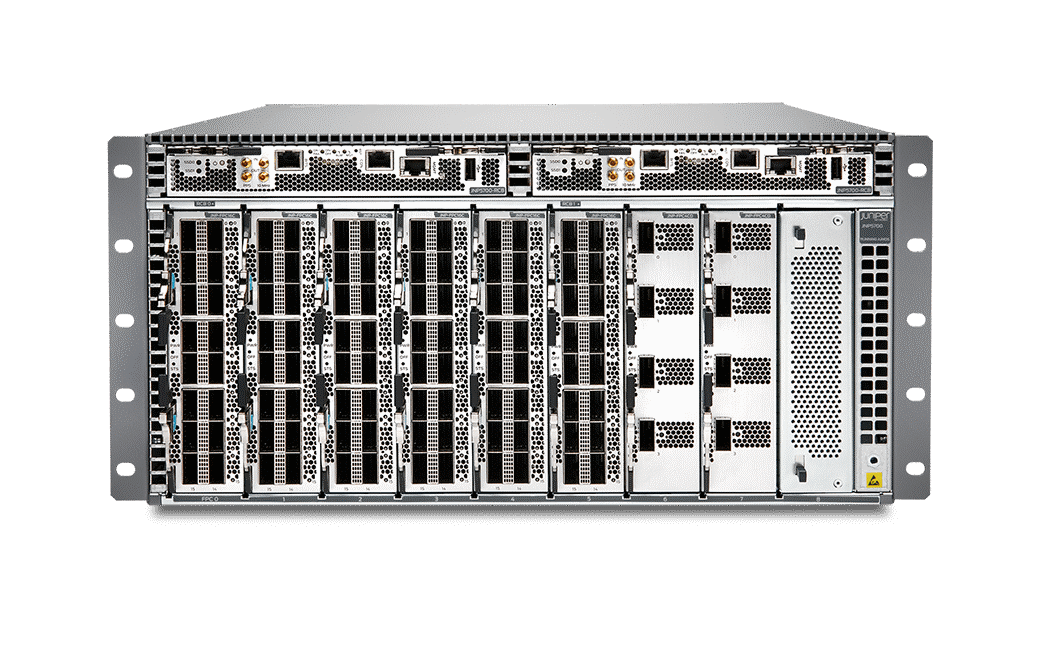
QFX5700
The QFX5700 line supports very large, dense, and fast 400GbE IP fabrics based on proven Internet-scale technology. With 10/25/40/50/100/200/GbE interface options, the QFX5700 is an optimal choice for spine-and-leaf deployments in enterprise, high-performance computing, service provider, and cloud provider data centers.
Use Cases: Data Center Fabric Spine, EVPN-VXLAN Fabric, Data Center Interconnect (DCI) Border, Secure DCI, Multitier Campus, Campus Fabric Port Density:
Throughput: Up to 25.6 Tbps (bidirectional) |
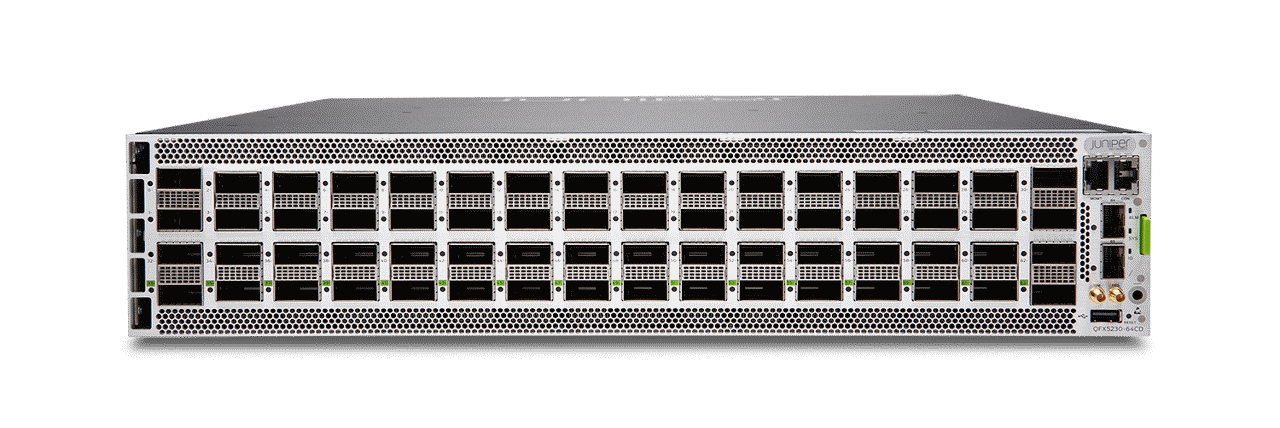
QFX5230
The QFX5230 Switch offers up to 400GbE interfaces to support high-speed, high-density, spine-and-leaf IP fabrics. Prime use cases include AI data center networks with AI/ML workloads where scalability, performance, and low latency are critical.
Use Cases: Data center fabric spine, super spine (including AI data center networking), IP storage networking, and edge/data center interconnect (DCI) Port density:
Throughput: Up to 51.2 Tbps (bidirectional) |
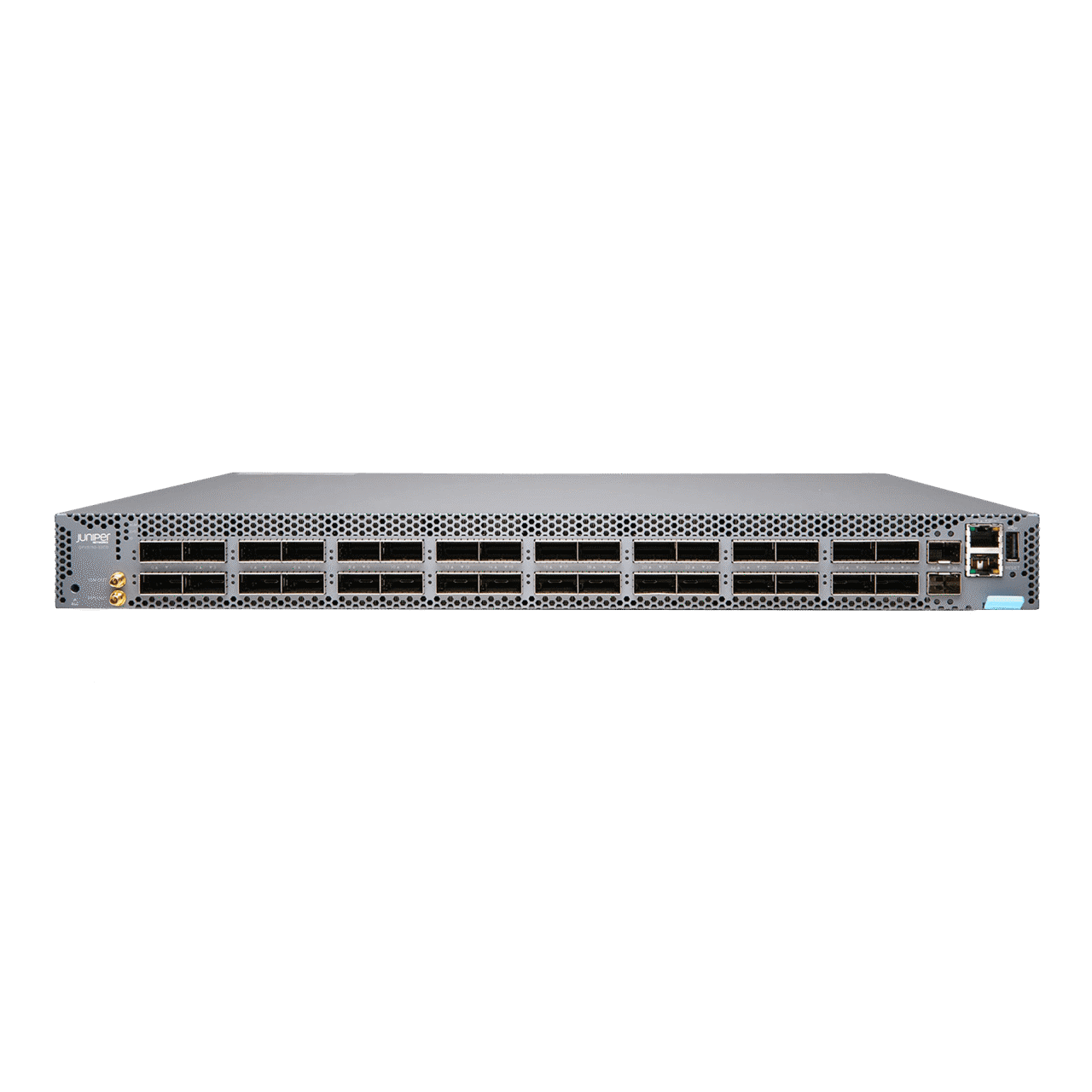
QFX5130
The QFX5130 line offers high-density, cost-optimized, 1-U, 400GbE and 100GbE fixed-configuration switches based on the Broadcom Trident 4 processor. It’s ideal for environments where cloud services are being added. With 10/25/40/100/400GbE interface options, the QFX5130 is an optimal choice for spine-and-leaf deployments in enterprise, service provider, and cloud provider environments.
Use Cases: Data Center Fabric Spine Port Density:
|
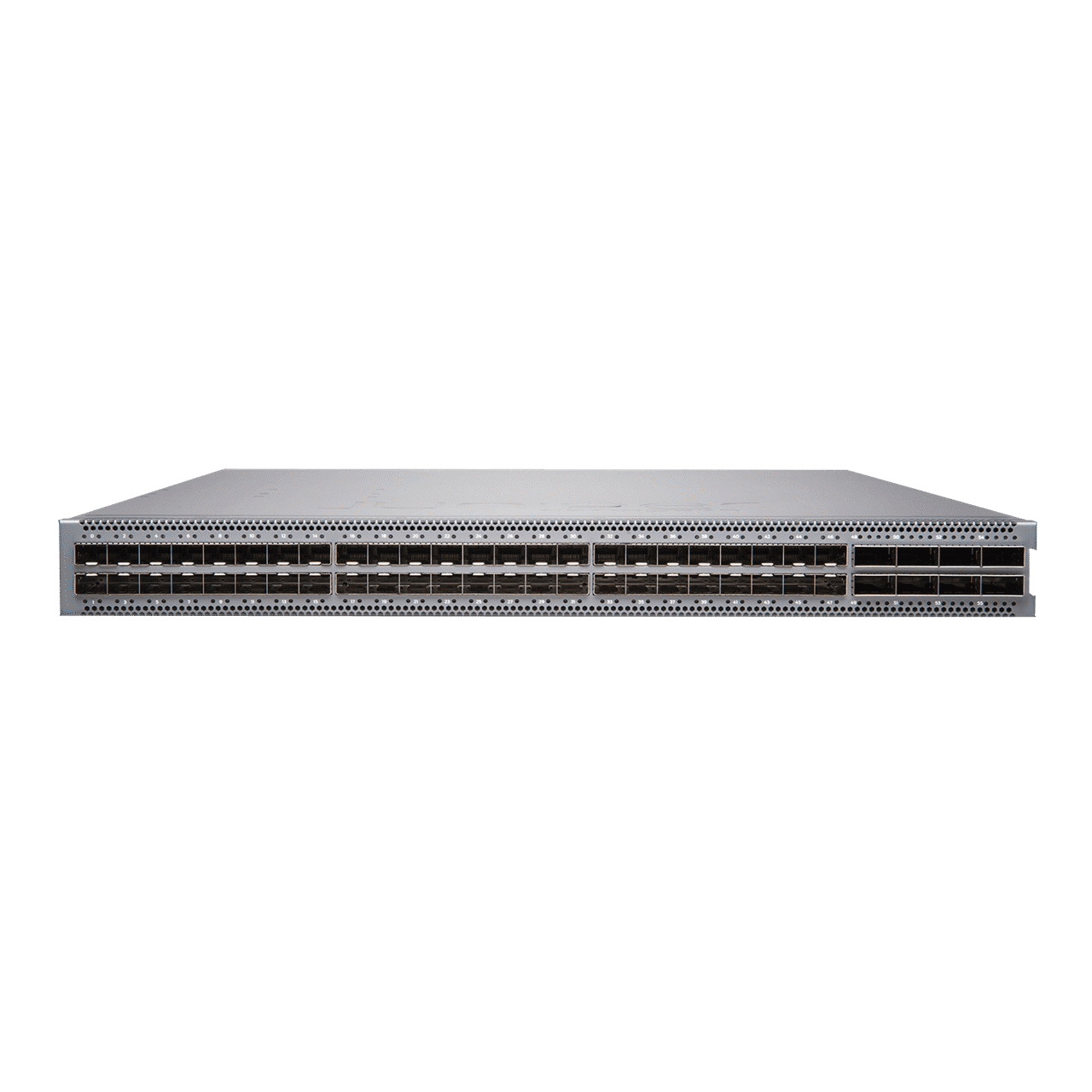
QFX5120
The QFX5120 line offers 1/10/25/40/100GbE switches designed for data center, data center edge, data center interconnect and campus deployments with requirements for low-latency Layer 2/Layer 3 features and advanced EVPN-VXLAN capabilities.
Use Case: Data Center Fabric Leaf/Spine, Campus Distribution/Core, applications requiring MACsec Port Density:
Throughput: Up to 2.16/4/6.4 Tbps (bidirectional) MACsec: AES-256 encryption on all ports (QFX5120-48YM) |
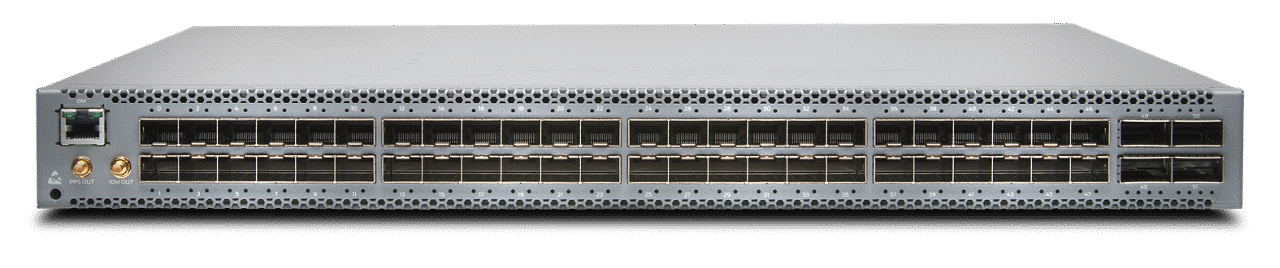
QFX5110
QFX5110 10/40GbE switches offer flexible deployment options and rich automation features for data center and campus deployments that require low-latency Layer 2/Layer 3 features and advanced EVPN-VXLAN capabilities. The QFX5110 provides universal building blocks for industry-standard architectures such as spine-and-leaf fabrics.
Use Case: Data Center Fabric Leaf Port Density:
Throughput: Up to 1.76/2.56 Tbps
|

QFX5220
The QFX5220 line offers up to 400GbE interfaces for very large, dense, and fast standards-based fabrics based on proven internet-scale technology. QFX5220 switches are an optimal choice for spine-and-leaf data center fabric deployments as well as metro use cases.
Use Case: Data Center Fabric Spine Port Density:
Throughput: Up to 25.6 Tbps (bidirectional)
|
QFX5210
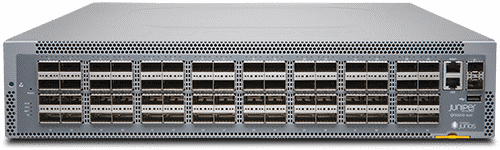
The QFX5210 line offers line-rate, low-latency 10/25/40/100GbE switches for building large, standards-based fabrics. QFX5210 Switches are an optimal choice for spine-and-leaf data center fabric deployments as well as metro use cases.
Use Case: DC fabric leaf/spine Port Density:
Throughput: Up to 12.8 Tbps (bidirectional) |
QFX5200
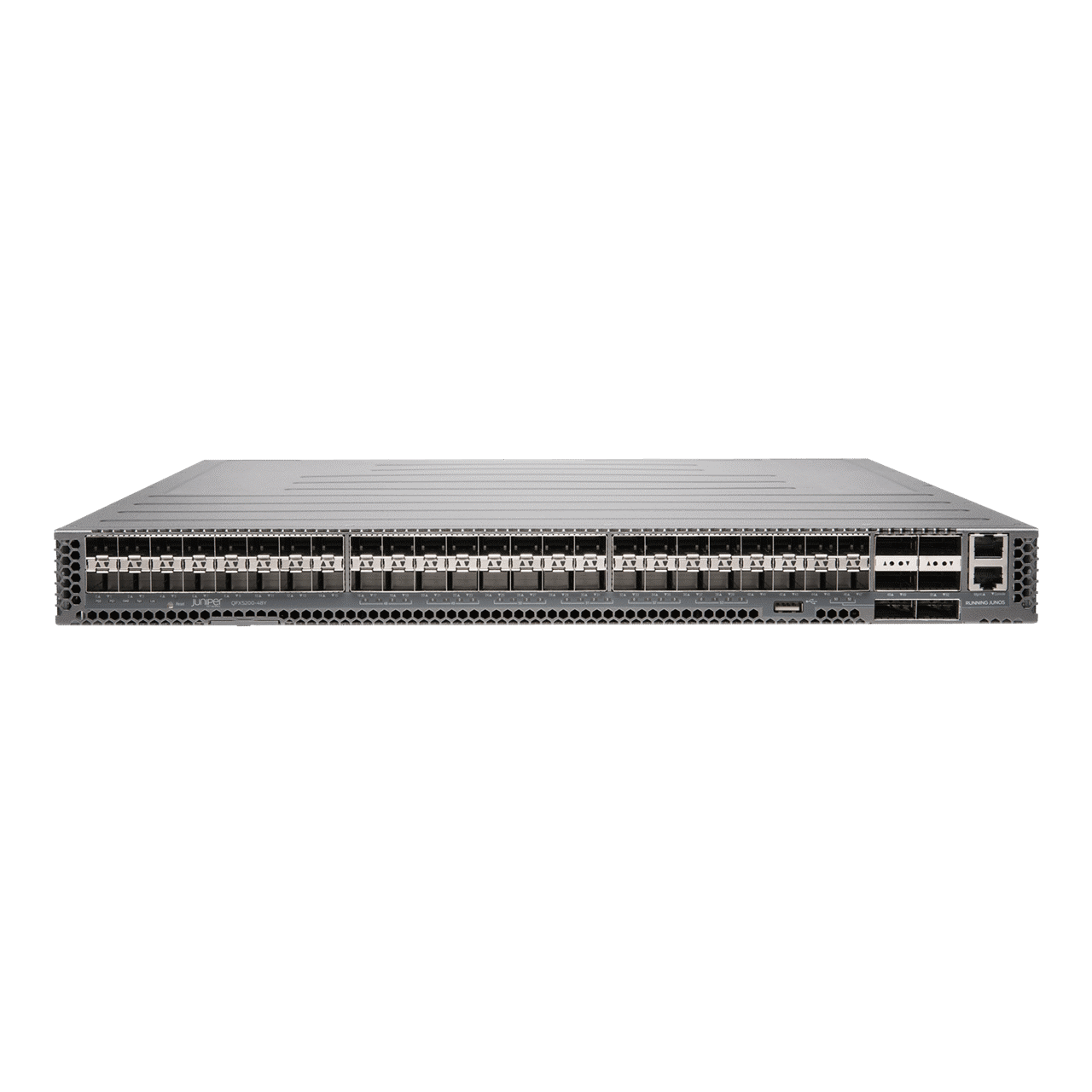
The QFX5200 line offers line-rate, low-latency 10/25/40/50/100GbE switches for building large, standards-based fabrics. QFX5200 Switches are an optimal choice for spine-and-leaf fabric deployments in the data center as well as metro use cases.
Use Case: Data Center Fabric Leaf/Spine Port Density:
Throughput: Up to 3.6/6.4 Tbps (bidirectional)
|
QFX10008 and QFX10016
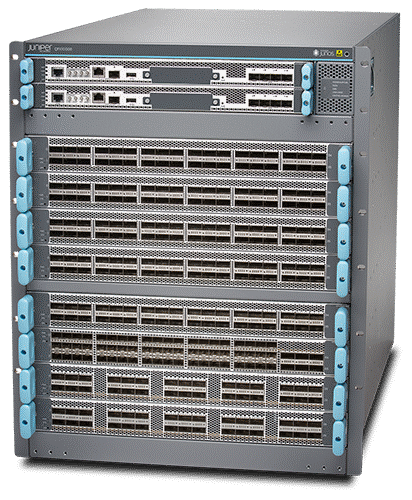
QFX10008 and QFX10016 Switches support the most demanding data center, campus, and routing environments. With our custom silicon Q5 ASICs, deep buffers, and up to 96 Tbps throughput, these switches deliver flexibility and capacity for long-term investment protection.
Use Case: Data Center Fabric Spine Chassis Options:
Port Density:
Throughput: Up to 96 Tbps (bidirectional) |
QFX10002
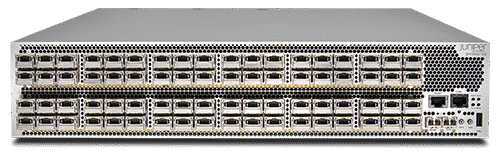
QFX10002 fixed-configuration switches are very dense, highly scalable platforms designed for today’s most demanding data center, campus, and routing environments. They’re loaded with power and functionality, all housed in a compact, 2 U form factor.
Use Case: Data Center Fabric Leaf/Spine Port Density:
Throughput: Up to 2.88/5.76/12 Tbps (bidirectional) Deep Buffers: 100 ms per port |
CUSTOMER SUCCESS
Data Consolidation and Modernization Bolster T‑Systems’ IT Service Delivery
T‑Systems offers a wide range of digital services in 20 countries. The provider ran 45 global data centers and decided to consolidate and modernize them to simplify operations and meet new performance, availability, and scalability requirements.
See other stories


Try it. Right now.
Live Events and On-Demand Demos
Find the QFX Series in these solutions
Simplify operations and ensure reliability with the modern, automated data center. Juniper helps you automate and continuously validate the entire network lifecycle to ease design, deployment, and operations.
Our wired portfolio—coupled with wireless—combines performance and simplicity at scale while delivering optimized experiences to users and devices via AI-native insights and automation.

Juniper offers the industry’s most comprehensive and high-performing 400GbE and 800GbE routing and switching platforms: PTX Series Packet Transport Routers, MX Series Universal Routing Platforms, ACX Series Routers, and QFX Series Switches. These platforms increase efficiencies throughout your infrastructure while keeping your network secure and highly customizable.
Juniper Support Insights delivers holistic operational health visibility across all Junos OS devices. Now included with Juniper Care, Support Insights easily and securely connects devices to the cloud and provides actionable intelligence to help organizations optimize their networks.

Reduce data storage complexity and boost data center performance with all-IP storage networks. Use the latest technologies, such as NVMe/RoCEv2 with 100G/400G switching or NVMe/TCP, to build high-performance storage or converge your storage and data into a single network.

Deploy high-performing AI training, inference, and storage clusters with speed and flexibility. Juniper Validated Designs (JVDs) offer confidence and speed, giving you up to 10x better reliability.
Related Products
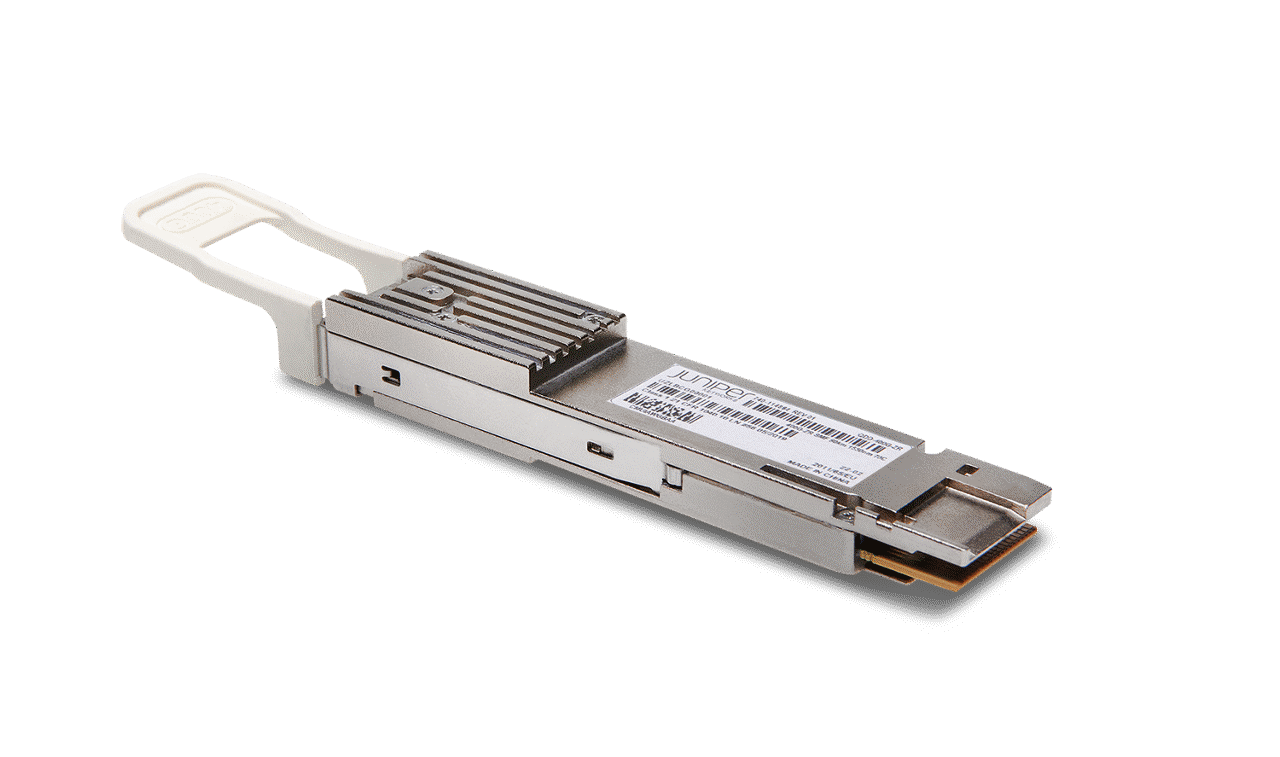
Juniper offers a complete portfolio of standards-compliant optics, including direct-detect and coherent optical transceivers, application-specific pluggables, and optical and electrical cables. Our broad portfolio of standards-compliant optics delivers leading performance and operational simplicity for deployments across WAN, data center, and enterprise networks.
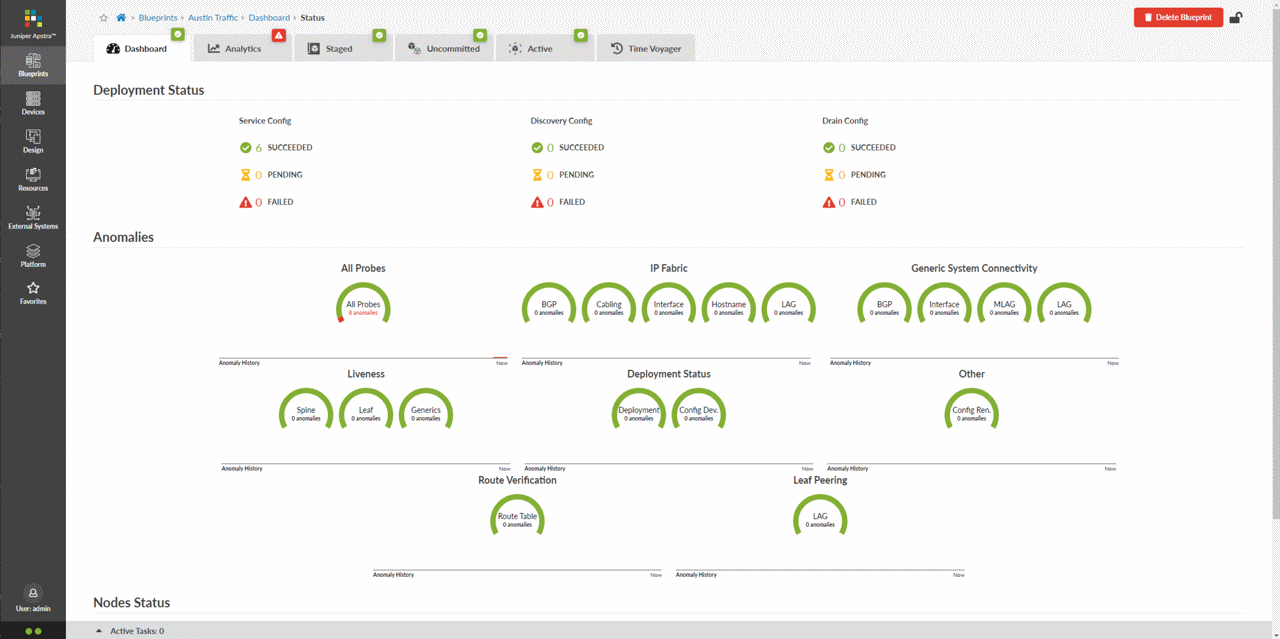
Apstra Data Center Director
Data center fabric management and full lifecycle automation—from Day 0 design through Day 2 operations—across multivendor data centers with intent-based networking, continuous validation, comprehensive visibility, and AIOps integration, powered by Mist™, Juniper’s AI-native networking platform.